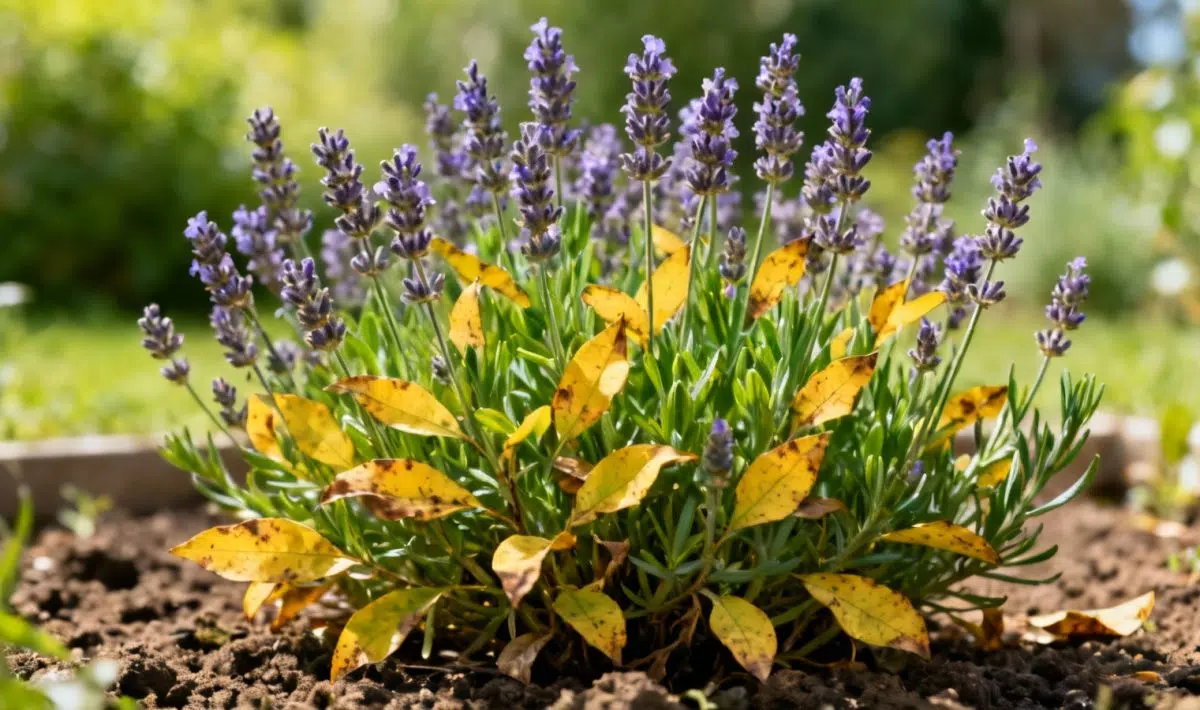
Why are my english lavender leaves turning yellow – common causes and solutions
Nothing’s more frustrating than watching your beloved English lavender develop yellow leaves, especially when you’ve been caring for it with such dedication. As someone who’s dealt with this issue countless times in Mediterranean gardens, I can tell you that yellow leaves on lavender are often a cry for help that’s completely fixable once you understand what’s going wrong.
The good news is that most causes of yellowing leaves are related to environmental factors you can control. Whether it’s a watering issue, soil problem, or seasonal stress, your plant is simply telling you it needs a change in care routine.
From my experience with Mediterranean plants, the most frequent culprit behind yellow leaves is watering issues. English lavender is particularly sensitive to both overwatering and underwatering, which can stress the plant and cause those telltale yellow leaves to appear seemingly overnight.
Poor drainage stands out as the number one problem I encounter in gardens. When soil stays wet for too long, lavender roots can’t breathe properly, leading to root rot and subsequent yellowing of the foliage. This is especially common during autumn and winter when evaporation rates are lower and rainfall may be more frequent.
Nutrient deficiencies can also trigger yellowing, particularly nitrogen deficiency which typically shows up as yellow leaves starting from the bottom of the plant. However, lavender doesn’t need very rich soil, so this is less common than water-related issues.
Soil and drainage problems
The type of soil your lavender grows in makes a huge difference to its health. These plants are naturally adapted to rocky, well-draining soils that dry out quickly between waterings. Heavy clay soils or any soil that retains moisture for extended periods can quickly spell trouble for your lavender.
I always recommend checking your soil drainage by digging a small hole about 6 inches deep and filling it with water. If water is still sitting there after 24 hours, you’ve got a drainage problem that needs addressing. Good soil should drain within a few hours, allowing air to reach the roots.
Adding coarse sand, gravel, or perlite to heavy soils can dramatically improve drainage. For container plants, ensure your pot has multiple drainage holes and consider adding a layer of gravel at the bottom to prevent waterlogging.
Improving soil composition
The ideal soil mix for lavender should be slightly alkaline with a pH between 6.5 and 7.5. If your soil is too acidic, the plant may struggle to absorb nutrients properly, which can manifest as yellowing leaves. You can easily test your soil pH with an inexpensive kit from any garden center.
Creating a suitable growing medium doesn’t require expensive amendments. A simple mixture of regular potting soil with added perlite and a handful of lime to raise pH works wonders for most lavender plants. The key is ensuring the soil drains quickly while still retaining some moisture.
Watering practices that affect leaf health
Getting the watering schedule right is crucial for preventing yellow leaves on your lavender. These plants prefer deep, infrequent watering rather than frequent light watering. During summer, I typically water my lavender once or twice a week, allowing the soil to dry out completely between waterings.
Overwatering is by far the most common mistake I see gardeners make with lavender. When roots sit in constantly moist soil, they can’t access the oxygen they need, leading to root rot and yellowing foliage. The leaves may appear yellow or brown, and the plant often develops a musty smell if the problem persists.
Interestingly, the issue can be similar to what you might experience with causes of yellowing walnut leaves, where water stress plays a major role in leaf discoloration. Both plants require careful attention to soil moisture levels to maintain healthy foliage.
On the flip side, severe underwatering during hot summer months can also cause yellowing, though this is less common. Signs include dry, crispy leaves that feel papery to the touch, and soil that pulls away from the edges of containers.
Seasonal watering adjustments
Your watering routine should change with the seasons to match your plant’s needs. During winter, lavender enters a semi-dormant state and requires much less water. I reduce watering to perhaps once every two weeks or even less, depending on rainfall and temperature.
Spring brings new growth and increased water needs, but it’s important to gradually increase watering rather than suddenly switching to a summer schedule. This gradual transition helps prevent shock that could trigger yellowing leaves during the growing season.
Environmental stress factors
Temperature extremes can definitely cause yellowing in English lavender, though it’s generally quite hardy. Sudden cold snaps in winter or unusually hot, humid conditions in summer can stress the plant and trigger leaf yellowing as a protective response.
Insufficient sunlight is another factor that many gardeners overlook. Lavender needs at least 6 hours of direct sunlight daily to thrive. Plants grown in too much shade often develop weak, spindly growth with pale yellow leaves that lack the vibrant green color of healthy foliage.
Similarly to understanding yellowing pomegranate leaves, environmental stress often compounds other issues, making proper diagnosis and treatment essential for plant recovery.
✅ Quick Checklist
Is the soil too wet or too dry?
Is the plant getting 6+ hours of sunlight daily?
Have you fertilized in the last 2 months?
Are there visible pests under the leaves?
Does the pot have adequate drainage?
🔥 FREE
📱
Diagnose your plant in one click!
AI instant diagnosis • Personalized solutions • 50,000+ species
While lavender is naturally resistant to most pests thanks to its aromatic oils, certain insects can still cause problems that manifest as yellowing leaves. Spider mites are particularly troublesome during hot, dry conditions, creating tiny yellow spots on leaves that eventually turn the entire leaf yellow.
Aphids occasionally target new growth, sucking plant juices and causing leaves to yellow and curl. These small, soft-bodied insects are usually green or white and cluster on the undersides of leaves and on young shoots.
Fungal diseases like root rot or powdery mildew can also cause yellowing, especially when combined with poor growing conditions. Root rot typically starts with yellowing of lower leaves and progresses upward, while powdery mildew creates a distinctive white coating on leaves before they turn yellow.
Natural treatment methods
For pest control, I prefer starting with natural methods before resorting to chemical treatments. A strong spray of water can dislodge aphids and spider mites, while beneficial insects like ladybugs provide ongoing pest control in the garden.
Neem oil serves as an effective organic treatment for both pests and fungal issues. Apply it in the early morning or evening to avoid leaf burn, and always test on a small area first to ensure your plant tolerates the treatment well.
Solutions for healthy lavender leaves
Once you’ve identified the cause of yellowing leaves, recovery usually happens quite quickly with proper care adjustments. Start by removing any severely damaged yellow leaves to redirect the plant’s energy toward healthy growth and to improve air circulation around the remaining foliage.
If drainage is the issue, consider relocating your lavender to a raised bed or container with better drainage. For plants already established in the ground, you can improve drainage by working coarse sand or gravel into the soil around the root zone.
Adjusting your watering schedule is often the most important step. Remember that lavender prefers to be slightly dry rather than too wet, so when in doubt, wait an extra day or two before watering. The soil should feel dry about an inch below the surface before you water again.
Long-term plant care
Preventing future yellowing involves establishing good cultural practices from the start. Choose a sunny location with excellent drainage, water deeply but infrequently, and avoid heavy fertilization which can actually harm lavender plants.
Regular pruning after flowering helps maintain plant shape and vigor while improving air circulation. Cut back about one-third of the plant’s height, being careful not to cut into old woody stems which may not regrow readily.
With these adjustments and a bit of patience, your English lavender should return to its characteristic gray-green color and continue producing those wonderful fragrant flowers throughout the growing season. The key is consistent care that mimics the plant’s natural Mediterranean habitat where it thrives with minimal intervention.
Allan is a lifelong gardening enthusiast who still gets excited when the first seedlings pop up in spring. With a deep love for nature and a hands-in-the-soil approach, he shares practical tips, plant discoveries, and clever tricks picked up over years of digging, planting, and observing. Whether you’re a new gardener or have a shed full of tools, Allan writes like a neighbor who’s always happy to swap cuttings and stories over the fence.
You can find more about Allan’s work on Malt or connect with him on LinkedIn.