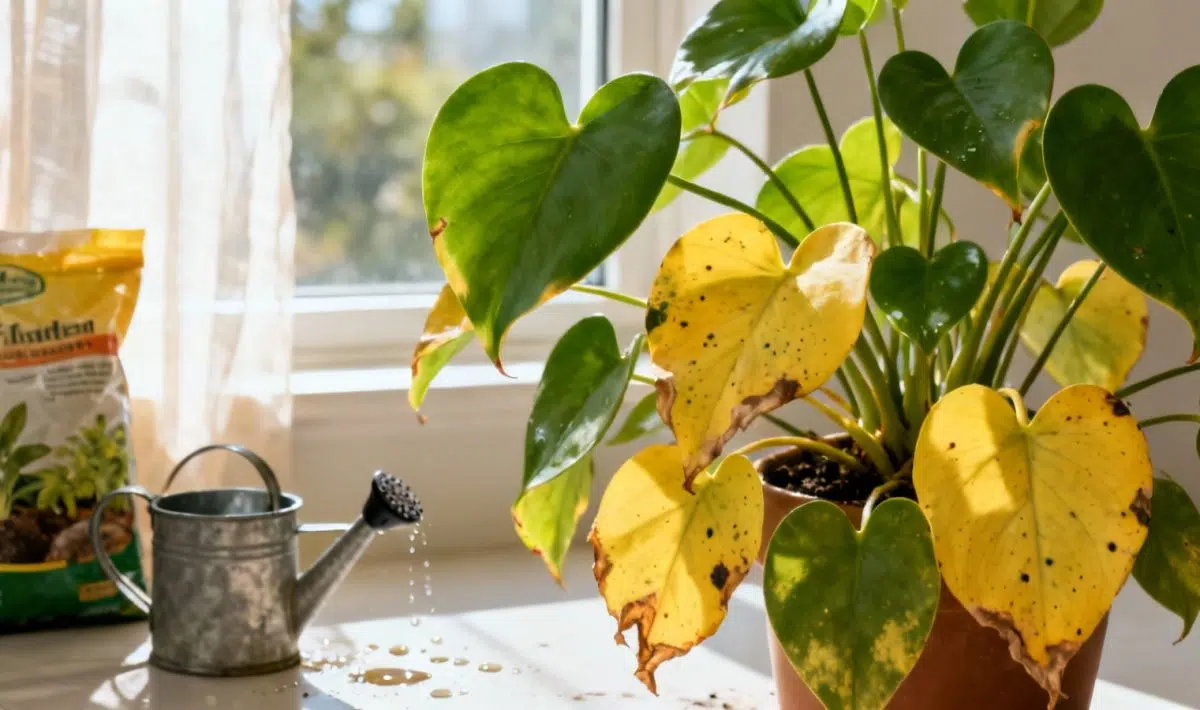
Why are my heartleaf philodendron leaves turning yellow – common causes and solutions
Nothing’s more frustrating than watching your beautiful heartleaf philodendron develop yellow leaves when you’ve been caring for it diligently. As someone who’s dealt with this exact issue multiple times, I can tell you that yellow leaves on your philodendron are usually your plant’s way of telling you something needs adjusting in its care routine.
The good news is that yellowing leaves are rarely a death sentence for your plant. Most of the time, it’s a fixable problem once you identify what’s causing the stress. Let me walk you through the most common culprits and how to get your philodendron back to its lush, green glory.
The most common causes of yellow philodendron leaves
Your philodendron’s leaves can turn yellow for several reasons, but the big three are usually watering issues, lighting problems, or nutrient deficiencies. Understanding which one is affecting your plant makes all the difference in choosing the right solution.
Overwatering – the silent plant killer
Here’s what I’ve learned from years of growing philodendrons: more plants die from too much water than too little. When you overwater your heartleaf philodendron, the roots can’t breathe properly, leading to root rot and those telltale yellow leaves starting from the bottom of the plant.
Check your soil by sticking your finger about two inches deep. If it’s soggy or stays wet for days after watering, you’re likely overdoing it. Your philodendron prefers its soil to dry out slightly between waterings, especially during cooler months when growth slows down.
✅ Quick Checklist
Is the soil too wet or too dry?
Is the plant getting 6+ hours of sunlight daily?
Have you fertilized in the last 2 months?
Are there visible pests under the leaves?
Does the pot have adequate drainage?
🔥 FREE
📱
Diagnose your plant in one click!
AI instant diagnosis • Personalized solutions • 50,000+ species
Even if you’re watering correctly, poor drainage can create the same problems as overwatering. Make sure your pot has drainage holes and use a well-draining potting mix. I always add some perlite to regular potting soil to improve drainage – it’s made a huge difference in my plant care success.
If water sits in the saucer for more than 30 minutes after watering, dump it out. Standing water is an invitation for root problems that will definitely lead to yellow leaves.
Lighting issues that stress your philodendron
Your heartleaf philodendron loves bright, indirect light but can be surprisingly picky about getting just the right amount. Too little light causes the plant to struggle with photosynthesis, while too much direct sun can actually burn the leaves, causing them to yellow and develop brown spots.
Finding the sweet spot for light
Place your philodendron near a window where it gets plenty of bright light but not direct sunbeams hitting the leaves. East or north-facing windows work perfectly, or you can place it a few feet back from a south-facing window with sheer curtains.
During winter months, you might need to move your plant closer to the light source as days get shorter and dimmer. Just like causes of yellowing honeysuckle leaves can be related to seasonal light changes, your philodendron may show stress through yellowing when light conditions shift dramatically.
Nutrient deficiencies and feeding problems
A hungry philodendron will often show its distress through yellowing leaves, particularly older leaves at the bottom of the plant. These plants are moderate feeders, meaning they need regular nutrition during their growing season but can be damaged by too much fertilizer.
Feed your heartleaf philodendron with a balanced liquid fertilizer diluted to half strength every 2-4 weeks during spring and summer. In fall and winter, reduce feeding to once a month or stop altogether, as the plant’s growth naturally slows down.
Signs of over-fertilization
Interestingly, too much fertilizer can also cause yellowing leaves, along with brown tips and edges. If you suspect you’ve been heavy-handed with the plant food, flush the soil with plain water several times to wash out excess nutrients.
Similar to how reasons for yellowing pomegranate leaves often involve nutrient imbalances, your philodendron needs the right balance of nutrients to maintain its vibrant green color.
Pest problems and disease issues
Sometimes yellow leaves indicate unwanted visitors. Spider mites, aphids, and scale insects all love philodendrons and can cause significant stress that shows up as yellowing foliage. Check the undersides of leaves regularly for tiny moving specks, sticky residue, or small bumps.
Fungal issues from overwatering can also manifest as yellowing leaves, often accompanied by a musty smell from the soil or black spots on the stems near the soil line.
Quick pest treatment options
For minor pest infestations, wiping leaves with a damp cloth weekly often does the trick. For more serious problems, insecticidal soap or neem oil applied every few days usually resolves the issue within a couple of weeks.
✅ Quick Checklist
Is the soil too wet or too dry?
Is the plant getting 6+ hours of sunlight daily?
Have you fertilized in the last 2 months?
Are there visible pests under the leaves?
Does the pot have adequate drainage?
🔥 FREE
📱
Diagnose your plant in one click!
AI instant diagnosis • Personalized solutions • 50,000+ species
It’s worth mentioning that some yellowing is completely normal. Older leaves naturally age and turn yellow before dropping off, especially the lowest leaves on the plant. This is just your philodendron making room for new growth and nothing to worry about.
However, if multiple leaves are yellowing rapidly, or if new leaves are emerging yellow, that’s a sign something needs immediate attention. The pattern and speed of yellowing can give you clues about what’s going wrong.
When to take action
Take immediate action if you notice yellowing accompanied by mushy stems, foul odors, or rapid leaf drop. These symptoms suggest serious problems like root rot that require quick intervention to save your plant.
On the other hand, if just one or two bottom leaves slowly turn yellow over several weeks, simply remove them and continue your regular care routine. Your philodendron is likely just doing some natural housekeeping.
Prevention tips for healthy philodendron leaves
The best approach to yellow leaves is preventing them in the first place. Establish a consistent care routine that includes checking soil moisture before watering, rotating your plant quarterly for even light exposure, and keeping an eye out for early signs of pest problems.
I’ve found that philodendrons respond beautifully to consistency. Once you find the right watering schedule, lighting situation, and feeding routine for your specific plant and environment, stick with it. These plants appreciate predictability and will reward you with steady growth and gorgeous green foliage.
Remember, addressing yellow leaves early gives you the best chance of success. Most philodendron problems are reversible if caught quickly, so don’t panic if you spot a few yellow leaves – just investigate the cause and adjust your care accordingly.
Allan is a lifelong gardening enthusiast who still gets excited when the first seedlings pop up in spring. With a deep love for nature and a hands-in-the-soil approach, he shares practical tips, plant discoveries, and clever tricks picked up over years of digging, planting, and observing. Whether you’re a new gardener or have a shed full of tools, Allan writes like a neighbor who’s always happy to swap cuttings and stories over the fence.
You can find more about Allan’s work on Malt or connect with him on LinkedIn.