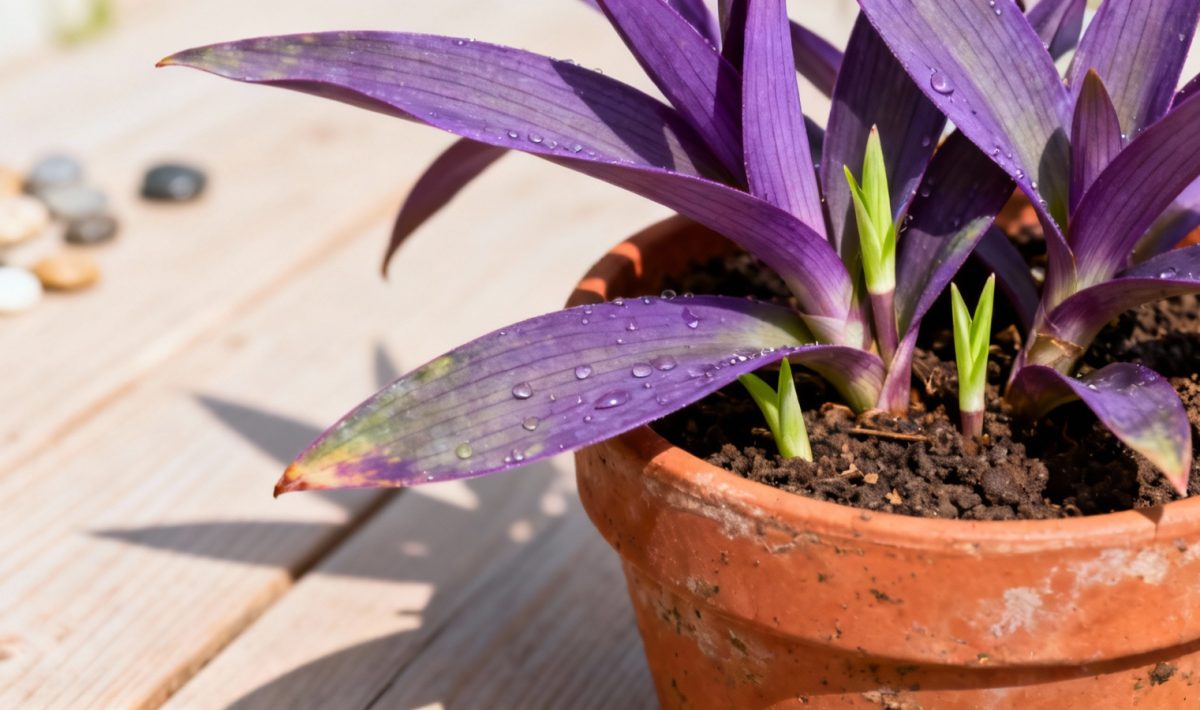
Purple heart – Tradescantia pallida: care essentials for healthy growth and propagation
The Purple Heart, scientifically known as Tradescantia pallida, has captured the hearts of plant enthusiasts worldwide with its stunning purple foliage and incredibly forgiving nature. This beautiful trailing plant brings a splash of vibrant color to any space, whether you’re growing it indoors as a houseplant or outdoors in your garden. What makes this Tradescantia particularly special is its ability to thrive with minimal fuss, making it perfect for both beginners and experienced gardeners alike.
Originally from Mexico, this remarkable plant has adapted beautifully to various growing conditions around the globe. Its cascading stems create an elegant display that works wonderfully in hanging baskets, as ground cover, or spilling over the edges of containers. The secret to its popularity lies in its resilience and the way its purple leaves seem to glow when placed in the right lighting conditions.
The most striking feature of Purple Heart is undoubtedly its intense purple feuillage that can reach up to 6 inches in length. These lance-shaped leaves grow along succulent-like tiges that trail gracefully as the plante matures. The purple coloration becomes more vibrant with adequate lumière exposure, while insufficient light can cause the leaves to fade to a greenish-purple hue.
During the warmer months, you might notice small pink fleurs appearing along the stems. While these blooms are delicate and short-lived, they add an extra touch of charm to an already beautiful plant. The entire plante typically grows to about 12-18 inches in height with a spreading habit that can extend several feet when given the space to roam.
What sets Tradescantia pallida apart from other variétés in the Tradescantia family is its robust purple coloration and slightly thicker leaves. Unlike some of its more delicate cousins, this plant can handle a bit more neglect and still maintain its stunning appearance throughout the growing season.
Essential growing conditions for purple heart
Getting the lighting right is crucial for maintaining that gorgeous purple color we all love. Your Tradescantia thrives in bright, indirect lumière for most of the day, though it can tolerate some direct morning soleil. If you’re growing it indoors, place it near a south or east-facing window where it can soak up plenty of light without getting scorched by harsh afternoon rays.
Temperature-wise, Purple Heart is quite adaptable, preferring ranges between 65-75°F (18-24°C). During hiver months, it’s important to keep the plant away from cold drafts and heating vents that could stress the feuillage. The plant appreciates moderate to high humidité levels, which you can maintain by grouping it with other plantes or using a pebble tray filled with eau.
When it comes to soil, well-draining terreau is absolutely essential. A quality potting mix combined with some perlite or sand works perfectly. The key is ensuring excess eau can escape freely through drainage holes in your pot. Poor drainage is one of the quickest ways to run into problems with root rot, which can quickly kill an otherwise healthy plant.
Proper watering and care techniques
Mastering the arrosage schedule is perhaps the most important aspect of Purple Heart care. During the active croissance période from spring through early fall, water thoroughly when the top inch of soil feels dry to the touch. This typically means watering every 7-10 days, depending on your home’s humidité and temperature conditions.
As hiver approaches and growth naturally slows down, reduce your arrosages to about every 2-3 semaines. The plant enters a semi-dormant state during colder months, so it needs significantly less eau. Always check the soil moisture before watering, as overwatering during this période can lead to serious problems with the racines.
For optimal nutrition, feed your Tradescantia with a balanced, diluted engrais every 4-6 semaines during the growing season. A half-strength liquid fertilizer works wonderfully, providing the nutrients needed for vigorous croissance without overwhelming the plant. Just like many gardeners find success with a care guide for Ti plants, Purple Heart responds well to consistent, gentle feeding rather than heavy fertilization.
Propagation methods and techniques
One of the most delightful aspects of growing Purple Heart is how easily it propagates. The simplest method involves taking boutures from healthy tiges during the active growing season. Cut 4-6 inch sections just below a node, making sure each cutting has several leaves attached.
You can root these boutures directly in eau or moist terreau. If using the water method, place the cuttings in a clear jar with about 2 inches of eau, changing the water every few days to prevent bacterial growth. Within 1-2 semaines, you’ll see new racines beginning to develop from the nodes.
Once the racines reach about an inch in length, transplant the young plantes into small pots filled with well-draining soil. Keep the newly transplanted boutures in bright, indirect light and maintain consistent moisture as they establish themselves. This propagation technique is remarkably reliable, with success rates often exceeding 90% when done during optimal growing conditions.
Seasonal care and maintenance
Throughout the année, your Purple Heart will have different needs that change with the seasons. During printemps and summer, this is when the plant puts on its most dramatic croissance, often doubling in size during peak growing months. Regular pinching of the growing tips encourages bushier growth and prevents the plant from becoming too leggy.
As temperatures begin to cool in fall, gradually reduce watering frequency and stop fertilizing altogether. If you’re growing your Tradescantia outdoors in areas where temperatures drop below 50°F, consider bringing containers indoors or treating the plant as an annual. While it can tolerate brief cold snaps, prolonged exposure to freezing temperatures will damage or kill the plant.
Winter culture involves finding the right balance between providing enough lumière to maintain color while protecting the plant from harsh conditions. Many gardeners find that a bright, cool room works perfectly for overwintering Purple Heart, similar to how growing rutabagas effectively requires seasonal adjustments.
Common problems and solutions
Even though Purple Heart is generally trouble-free, a few common issues can arise with improper care. Yellowing feuilles typically indicate overwatering or poor drainage, while fading purple color suggests insufficient light exposure. Both problems are easily corrected by adjusting your care routine accordingly.
Spider mites and aphids occasionally target Tradescantia, especially when grown indoors with low humidité. Regular misting and maintaining good air circulation help prevent these parasites from establishing themselves. If you do notice pest activity, a gentle spray of insecticidal soap usually resolves the problem quickly.
Leggy growth is another common concern, particularly when plants don’t receive adequate lumière. Regular pinching and occasional pruning help maintain a compact, bushy appearance. Don’t hesitate to cut back overgrown tiges – this actually encourages healthier, more vigorous growth from the base of the plant.
Advanced growing tips
For those looking to get the most out of their Purple Heart, consider creating mixed containers with complementary plantes. The trailing nature of Tradescantia makes it an excellent thriller-spiller combination partner. Its purple feuillage pairs beautifully with plants that have contrasting colors or textures, much like how tips for caring for begonias can enhance mixed plantings.
Seasonal rempotage every 2-3 years helps maintain healthy croissance and prevents the plant from becoming rootbound. Spring is the ideal time for this task, just as the plant begins its active growing période. Use a pot only slightly larger than the previous one, as Purple Heart actually prefers being somewhat pot-bound.
For outdoor culture in suitable climates, Purple Heart makes an excellent ground cover or border plant. Its rapid spreading habit can quickly fill empty spaces, and its décorative purple color provides year-round interest. However, be mindful that in ideal conditions, it can become quite vigorous and may need occasional containment to prevent it from overwhelming neighboring plantes, particularly those requiring more specialized care like caring for the Pontic rhododendron.
Allan is a lifelong gardening enthusiast who still gets excited when the first seedlings pop up in spring. With a deep love for nature and a hands-in-the-soil approach, he shares practical tips, plant discoveries, and clever tricks picked up over years of digging, planting, and observing. Whether you’re a new gardener or have a shed full of tools, Allan writes like a neighbor who’s always happy to swap cuttings and stories over the fence.
You can find more about Allan’s work on Malt or connect with him on LinkedIn.