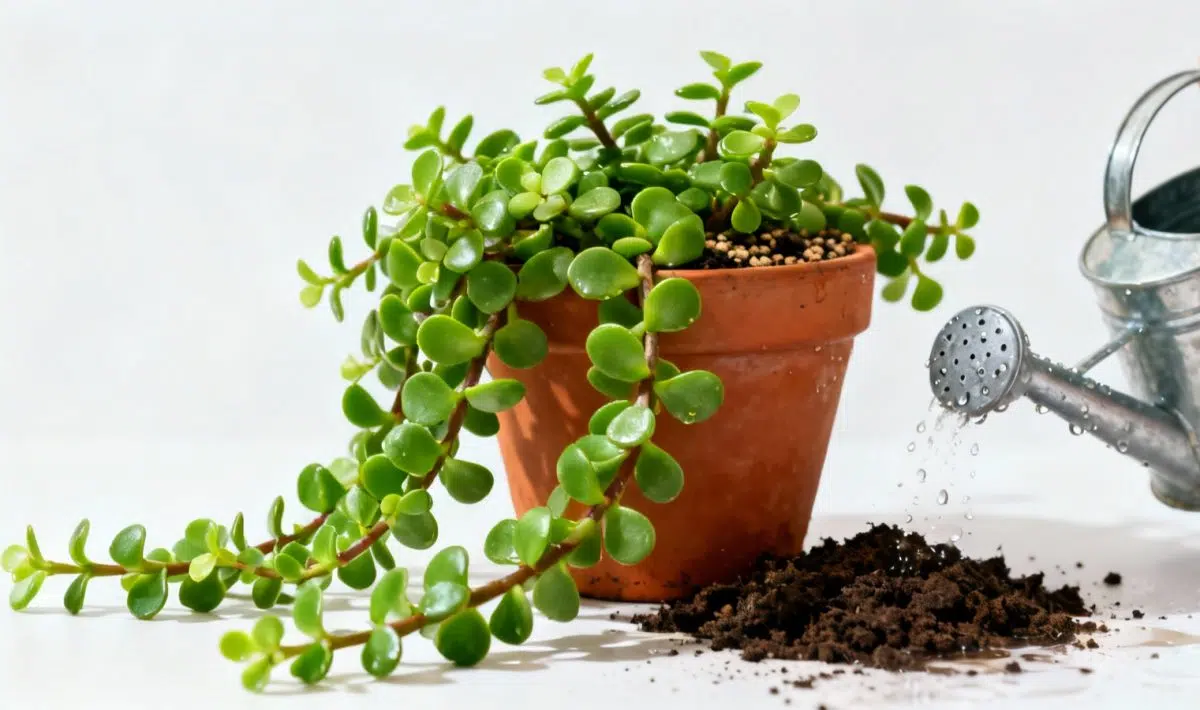
How often should you water your trailing jade for healthy growth
Taking care of your trailing jade is one of the most rewarding experiences you can have with indoor plants. This beautiful succulent, with its cascading stems and plump leaves, brings a touch of nature into any space. However, knowing exactly how often to water your trailing jade can make the difference between a thriving plant and one that struggles to survive.
Your trailing jade is a succulent that stores water in its thick leaves, which means it can tolerate periods without watering much better than other houseplants. The key is understanding that these plants prefer a “soak and dry” approach rather than frequent light watering. When you water, you should water thoroughly until you see drainage from the bottom, then allow the soil to dry completely before the next watering session.
The frequency depends largely on your home’s environment. In bright, indirect light conditions with good air circulation, your plant will use water more quickly. Conversely, in lower light conditions or during winter months, your trailing jade will need water less frequently. Just like when you’re properly watering aloe vera plants, the goal is to mimic the natural dry periods these succulents experience in their native habitat.
Seasonal watering schedules
During the growing season from spring through early fall, your trailing jade will typically need water every 7-10 days. This is when your plant is actively growing and using more water for new growth. You’ll notice the soil drying out more quickly during these warmer months, especially if your plant is positioned near a south-facing window with bright light.
Winter changes everything for your trailing jade. During the colder months, reduce watering to every 2-3 weeks or even less frequently. Your plant enters a dormant period where growth slows significantly, and overwatering during this time can lead to root rot. Some experienced growers wait until they see slight wrinkling in the leaves before watering during winter.
Environmental factors that affect watering frequency
Humidity plays a crucial role in determining how often you should water your trailing jade. In low humidity environments, which are common in heated homes during winter, the soil will dry out faster. You might find yourself watering more frequently than expected. Conversely, in more humid conditions, your plant will need water less often.
The type of lighting your plant receives also impacts its water needs. Plants growing in bright, indirect light near south or west-facing windows will use water more quickly than those in lower light conditions. If you’re using grow lights to supplement natural light, monitor your soil moisture more carefully as these can increase water usage.
Temperature fluctuations in your home can also affect watering needs. Warmer temperatures increase evaporation and plant metabolism, while cooler temperatures slow everything down. Keep this in mind when adjusting your watering schedule throughout the year.
Signs your plant needs water
Learning to read your trailing jade’s signals is essential for proper care. The most reliable indicator is checking the soil moisture about 2 inches deep with your finger. If it feels dry at this depth, it’s time to water. You can also lift the pot – a significantly lighter pot usually indicates dry soil.
Watch for slight softening or wrinkling in the leaves, which indicates your plant is using its stored water reserves. However, don’t wait until the leaves are severely wrinkled, as this can stress the plant unnecessarily. Healthy trailing jade leaves should feel firm and plump to the touch.
Similar to other water-wise plants, understanding these visual cues helps you develop better timing. For instance, when watering chives for healthy growth, you also need to pay attention to plant signals rather than following a rigid schedule.
Proper watering techniques for success
When it’s time to water your trailing jade, technique matters as much as timing. Water slowly and thoroughly, allowing the water to penetrate the soil evenly. Stop when you see water draining from the bottom holes – this ensures the entire root system gets moisture without creating waterlogged conditions.
Using distilled water or filtered water can benefit your plant, especially if your tap water is high in minerals or chemicals. Hard water can leave mineral deposits in the soil over time, which may affect nutrient uptake. Room temperature water is always preferable to cold water, which can shock the roots.
Never let your trailing jade sit in standing water. Empty any drainage tray after 20-30 minutes to prevent root rot. Good drainage is absolutely critical for these plants – if your pot doesn’t have adequate drainage holes, consider repotting into a container that does.
Avoiding common watering mistakes
Overwatering is the number one killer of trailing jade plants. Many new plant parents think more water equals better care, but succulents operate on the opposite principle. If you notice yellowing leaves, soft stems, or a musty smell from the soil, you may be watering too frequently.
Inconsistent watering can also stress your plant. While trailing jades are forgiving, dramatic swings between bone dry and soaking wet conditions can cause leaf drop and poor growth. Establishing a routine based on your plant’s actual needs rather than a calendar schedule will yield better results.
Another common mistake is watering during the hottest part of the day, especially for plants near windows. This can cause rapid evaporation and potentially scorch the leaves if water droplets act as magnifying glasses in bright sun. Early morning or evening watering is generally better.
Adjusting care for different growing conditions
If your trailing jade is in a hanging planter, it may dry out faster than plants in regular pots due to increased air circulation around the container. You might need to increase watering frequency slightly, but still maintain the “soak and dry” principle. Check these plants more frequently, especially during hot weather.
For trailing jades growing in terracotta or clay pots, expect faster drying times compared to plastic or ceramic containers. These porous materials allow moisture to evaporate through the pot walls, which can actually benefit your plant by preventing overwatering but requires more frequent monitoring.
Plants positioned near heating vents, radiators, or frequently opened doors will experience more variable moisture conditions. These locations may require more frequent watering checks and possibly adjustments to your schedule based on seasonal heating or cooling patterns.
Keep a simple log of when you water and any observations about your plant’s condition. Note environmental changes like moving to a new location, seasonal transitions, or changes in your home’s heating and cooling. This information helps you fine-tune your watering schedule over time.
Pay attention to your plant’s growth patterns. During active growing periods, you may notice new shoots, fuller foliage, or increased trailing growth. These are signs your current care routine is working well. Slow growth isn’t necessarily bad, especially during winter, but combined with other symptoms might indicate adjustments are needed.
Remember that each plant is individual, even within the same species. What works perfectly for one trailing jade might need slight modifications for another, depending on factors like pot size, soil type, location, and your specific home environment. The key is developing a routine that keeps your specific plant healthy and thriving.
Allan is a lifelong gardening enthusiast who still gets excited when the first seedlings pop up in spring. With a deep love for nature and a hands-in-the-soil approach, he shares practical tips, plant discoveries, and clever tricks picked up over years of digging, planting, and observing. Whether you’re a new gardener or have a shed full of tools, Allan writes like a neighbor who’s always happy to swap cuttings and stories over the fence.
You can find more about Allan’s work on Malt or connect with him on LinkedIn.