
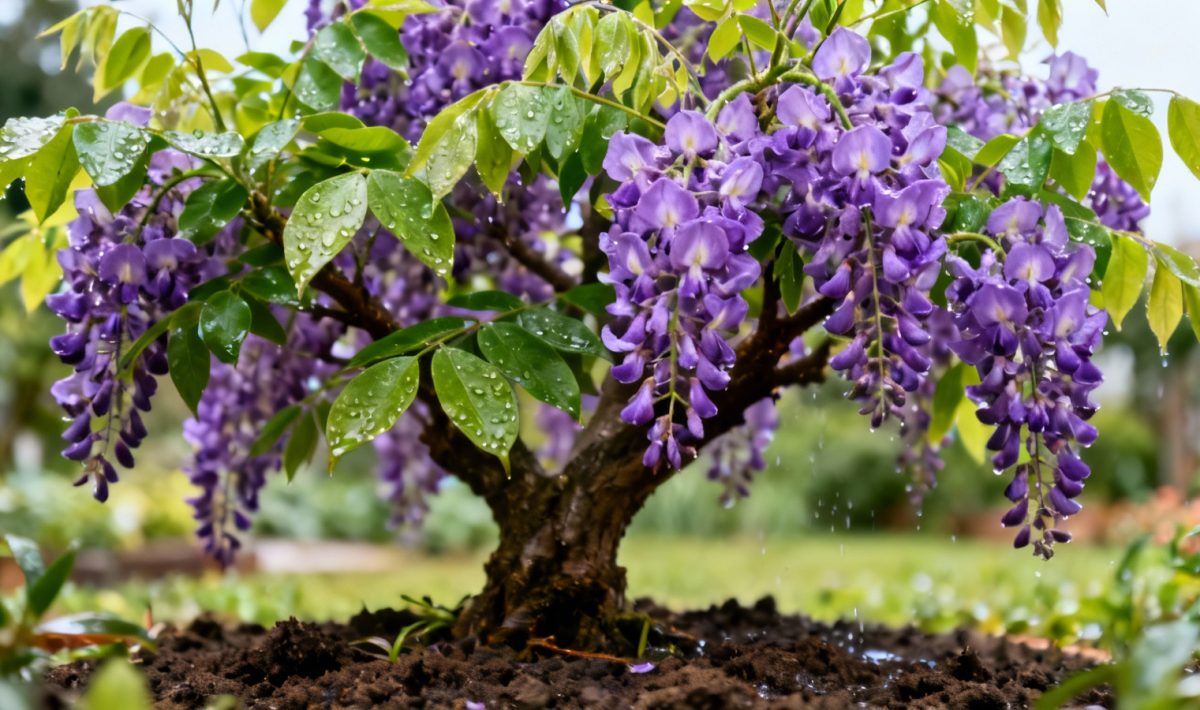
Understanding your chinese wisteria’s water needs
Watering your Chinese wisteria correctly can make the difference between a stunning flowering display and a disappointing season. This beautiful climbing vine has specific water requirements that change depending on its age, location, and the time of year. Understanding these needs will help you create the perfect conditions for those magnificent purple cascades that make wisteria so beloved.
Chinese wisteria is known for being relatively drought-tolerant once established, but this doesn’t mean you can ignore its water needs entirely. The key lies in finding the right balance – providing enough moisture to support healthy growth while avoiding overwatering that can lead to poor flowering.
How often should you water your chinese wisteria based on plant age
Young wisteria plants (first 2-3 years)
During the early years after planting, your Chinese wisteria will need more frequent watering to establish a strong root system. Water deeply once or twice per week during the growing season, providing approximately 5-10 liters per watering session. The soil should remain consistently moist but never waterlogged.
Check the soil moisture by inserting your finger about 5 cm deep near the base of the plant. If the soil feels dry at this depth, it’s time to water. This method ensures you’re not just watering the surface while the roots remain thirsty below.
Established wisteria plants (over 3 years old)
Once your wisteria has been in place for more than three years, you can significantly reduce watering frequency. Mature plants typically only need supplemental watering during prolonged dry spells or extreme heat. The established root system can access moisture from deeper in the soil, making the plant much more self-sufficient.
For established plants, you might only need to water every 2-3 weeks during hot summer months, and even less frequently during cooler periods. However, always let the soil conditions guide your decision rather than sticking rigidly to a schedule.
Seasonal watering adjustments for optimal growth
Spring and early summer care
Spring is when your Chinese wisteria will show its most vigorous growth, and adequate water during this period supports both leaf development and flower bud formation for the following year. Water more frequently if spring rains are insufficient, typically once per week for young plants and every 10-14 days for established ones.
Early summer watering is crucial as this is when next year’s flower buds are developing. Consistent moisture during this period helps ensure abundant blooms the following spring. Just as you would consider the specific needs of other flowering plants, like understanding optimal watering for peony blooms, wisteria benefits from attentive care during bud formation.
Late summer and fall considerations
As temperatures begin to cool and growth slows, reduce watering frequency. This natural reduction in water availability actually encourages the plant to focus energy on flower bud development rather than excessive vegetative growth. Too much water in late summer can result in lush foliage but fewer flowers the following spring.
Stop regular watering by early fall, allowing the plant to enter dormancy naturally. The old saying “wisteria must suffer to flower” has some truth – mild stress from reduced water encourages blooming.
Soil type and drainage considerations
Clay soil watering approach
If your wisteria grows in clay soil, you’ll need to water less frequently but more deeply. Clay holds moisture longer than sandy soils, so check soil moisture carefully before watering. Overwatering in clay soil can lead to root rot and poor plant health.
Water slowly and deeply to allow proper penetration through clay layers. Consider creating a small basin around young plants to help direct water to the root zone rather than having it run off the surface.
Sandy soil requirements
Sandy soils drain quickly, requiring more frequent watering sessions. You may need to water twice as often as you would in clay soil, but each session can be shorter. Monitor moisture levels more closely, as sandy soil can go from adequately moist to dry very quickly during warm weather.
Adding organic matter like compost around your wisteria can help sandy soil retain moisture longer, reducing your watering workload while supporting plant health.
Recognizing when your wisteria needs water
Visual signs of water stress
Your Chinese wisteria will give you clear signals when it needs water. Look for slightly wilted or drooping leaves during the hottest part of the day. However, don’t panic if leaves appear somewhat wilted in extreme heat – this is often a natural protective response rather than a sign of severe water stress.
More concerning signs include persistent wilting in morning or evening hours, yellowing leaves starting from the bottom of the plant, or reduced growth during the active growing season. These symptoms indicate the plant has been without adequate water for too long.
Soil moisture testing techniques
The most reliable way to determine watering needs is checking soil moisture directly. Use a long screwdriver or soil probe to test moisture levels 15-20 cm deep around the root zone. If the tool comes out clean and dry, your wisteria likely needs water.
For a more high-tech approach, consider using a soil moisture meter. These inexpensive tools give you precise readings and take the guesswork out of watering decisions. Similar precision in monitoring is helpful for many garden plants, whether you’re managing watering tips for healthy watermelon plants or caring for your wisteria.
Effective watering techniques and best practices
Deep watering methods
When you do water your Chinese wisteria, make it count by watering deeply rather than giving frequent light sprinkles. Deep watering encourages roots to grow downward, creating a more drought-resistant plant over time.
Use a soaker hose or drip irrigation system for the most efficient water delivery. These methods apply water slowly, allowing it to penetrate deeply without runoff. If using a regular hose, water at the base of the plant rather than over the foliage, and apply water slowly for 15-20 minutes.
Mulching for moisture retention
A 5-7 cm layer of organic mulch around your wisteria can significantly reduce watering needs by conserving soil moisture and moderating soil temperature. Use materials like shredded bark, wood chips, or compost, keeping mulch a few inches away from the plant stem to prevent rot issues.
Mulch also suppresses weeds that compete with your wisteria for water, making your irrigation efforts more effective. Replace mulch annually to maintain its moisture-retaining benefits and improve soil quality as it decomposes.
Common watering mistakes to avoid
Overwatering problems
More wisteria plants suffer from too much water than too little. Constantly soggy soil leads to root rot, yellowing leaves, and poor flowering. If your plant sits in waterlogged conditions, it may develop fungal diseases that can seriously damage or kill the vine.
Signs of overwatering include yellowing leaves that feel soft or mushy, a musty smell from the soil, or fungal growth around the base of the plant. If you notice these symptoms, immediately reduce watering frequency and improve drainage around the plant.
Timing and frequency errors
Avoid watering during the hottest part of the day, as much of the water will evaporate before reaching the roots. Early morning is ideal, allowing plants to absorb moisture before daily heat stress begins. Evening watering is acceptable but can sometimes promote fungal diseases if foliage stays wet overnight.
Don’t stick rigidly to a watering schedule without considering weather conditions. After significant rainfall, you may not need to water for weeks. Conversely, during heat waves or drought conditions, even established plants may need extra attention. The principles that apply to understanding watering guidelines for dandelions also apply here – let plant and soil conditions guide your decisions rather than following a rigid calendar.
Special considerations for container-grown wisteria
Potted plant watering needs
If you’re growing Chinese wisteria in containers, your watering schedule will be quite different from ground-planted specimens. Container plants dry out much faster and require more frequent attention, often needing water every day or two during hot weather.
Check container moisture daily by inserting your finger into the top 5 cm of soil. When this layer feels dry, it’s time to water thoroughly until water drains from the bottom holes. Ensure containers have adequate drainage to prevent waterlogging.
Transitioning container plants to garden
When moving a container-grown wisteria to your garden, gradually adjust your watering approach over the first season. Initially, the plant’s root system will be confined to the original root ball size, requiring more frequent watering similar to container culture.
As roots spread into surrounding soil over the growing season, you can gradually reduce watering frequency. This transition period typically takes a full growing season for the plant to become truly established in its new location. Just as you might research best practices for watering rutabaga before growing vegetables, taking time to understand your wisteria’s changing needs ensures successful establishment.
Coordinating watering with fertilization
Water and nutrient uptake
Your watering schedule should coordinate with fertilization for maximum effectiveness. Apply fertilizer to moist soil and water lightly after application to help nutrients reach the root zone. However, avoid heavy watering immediately after fertilizing, as this can wash nutrients away before plants absorb them.
Chinese wisteria typically needs minimal fertilization once established, but young plants benefit from light feeding during the growing season. Always water thoroughly before applying fertilizer to prevent root burn, especially during hot weather.
The relationship between proper watering and plant health extends beyond wisteria to many garden plants. Whether you’re learning about watering instructions for butterfly bushes or caring for other flowering vines, consistent moisture management supports overall plant vitality and flowering performance.
Monitoring plant response
Pay attention to how your wisteria responds to your watering routine and adjust as needed. Healthy plants show steady growth during the growing season, develop good flower bud formation by late summer, and maintain attractive foliage color throughout the season.
Keep notes about watering frequency, weather conditions, and plant performance to develop the perfect routine for your specific growing conditions. Every garden location has unique characteristics that influence plant water needs, so what works perfectly for your neighbor might require adjustment for your situation.

Allan is a lifelong gardening enthusiast who still gets excited when the first seedlings pop up in spring. With a deep love for nature and a hands-in-the-soil approach, he shares practical tips, plant discoveries, and clever tricks picked up over years of digging, planting, and observing. Whether you’re a new gardener or have a shed full of tools, Allan writes like a neighbor who’s always happy to swap cuttings and stories over the fence.
You can find more about Allan’s work on Malt or connect with him on LinkedIn.


