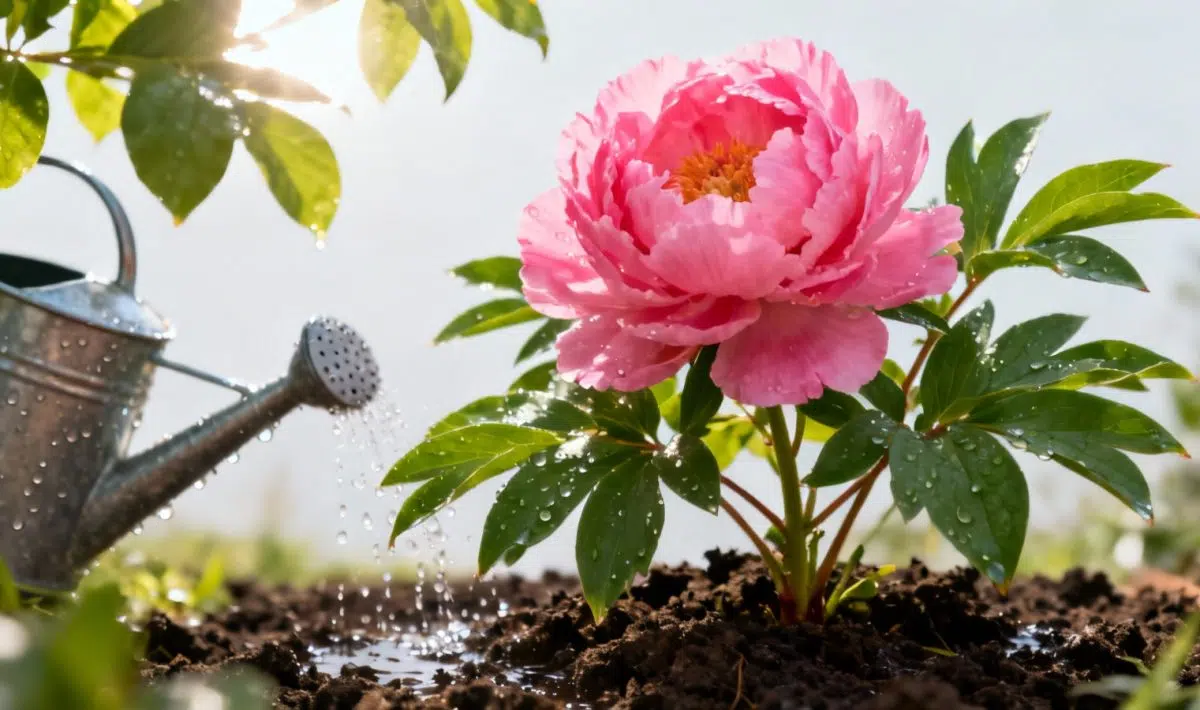
How often should you water your common peony for healthy blooms
Watering your common peony correctly makes the difference between stunning blooms and disappointing results. These magnificent perennials require careful attention to moisture levels throughout their growing cycle. Understanding how often should you water your common peony depends on several factors including season, soil type, and weather conditions.
Common peonies thrive with consistent moisture but absolutely detest waterlogged conditions. During the active growing season from spring through early summer, these plants need approximately 2.5 to 5 cm of water weekly. This translates to deep watering sessions once or twice per week rather than frequent shallow watering.
The key lies in maintaining soil moisture at the root zone, which extends 15-20 cm deep. You can check soil moisture by inserting your finger into the earth near the plant base. If the soil feels dry at 5-10 cm depth, it’s time for watering.
Young peonies and newly planted specimens require more frequent attention. For the first growing season, monitor soil moisture every few days and water when the top layer begins to dry. Just like understanding the watering needs of sycamore trees, peonies benefit from consistent care during establishment.
Seasonal watering schedule for optimal growth
Spring represents the most critical period for peony watering. As new shoots emerge and flower buds develop, increase watering frequency to 2-3 times weekly if temperatures exceed 25°C. During peak blooming season in May and June, ensure plants receive 5-7 cm of water weekly.
Summer watering requires careful balance. After blooming ends, peonies begin storing energy for next year’s display. Reduce watering to once weekly, allowing soil to dry slightly between sessions. This prevents root rot while maintaining plant health.
Fall and winter demand minimal intervention. As plants enter dormancy, reduce watering to once every 2-3 weeks or less. Excessive autumn moisture can interfere with the natural vernalization process essential for spring blooming.
Weather-based adjustments
Hot, windy conditions increase water loss through transpiration. During heat waves, provide extra moisture while ensuring good drainage. Conversely, cool, humid weather requires less frequent watering to prevent fungal issues.
Rainfall significantly impacts your watering schedule. After substantial precipitation, delay watering until soil moisture drops to appropriate levels. Installing a rain gauge helps track natural water input and adjust accordingly.
Proper watering techniques that work
Deep soaking proves far superior to light sprinkling. Water slowly at the soil level, avoiding foliage contact which promotes disease. Apply water in a wide circle around the plant, extending beyond the drip line to encourage root expansion.
Drip irrigation systems provide excellent results for established peony beds. These systems deliver consistent moisture directly to root zones while keeping foliage dry. Soaker hoses offer a budget-friendly alternative with similar benefits.
Morning watering allows plants to dry before evening, reducing disease risk. This timing also ensures maximum water uptake during peak photosynthetic periods. Similar principles apply when considering optimal watering for common dandelions and other garden plants.
Soil considerations for success
Soil type dramatically affects watering frequency. Sandy soils drain quickly, requiring more frequent watering sessions. Clay soils retain moisture longer but need careful monitoring to prevent waterlogging.
Well-draining soil with good organic content provides ideal conditions. Amend heavy clay with compost and coarse sand to improve drainage. For sandy soils, add organic matter to increase water retention capacity.
Common watering mistakes to avoid
Overwatering represents the biggest threat to peony health. Constantly soggy soil leads to crown rot, a fatal condition that destroys entire plants. Signs include yellowing leaves, soft crowns, and poor flowering.
Shallow, frequent watering encourages surface roots rather than deep, drought-resistant root systems. This makes plants more vulnerable to stress during dry periods. Instead, water deeply but less frequently to promote robust root development.
Watering directly onto crowns and foliage creates conditions for botrytis blight and other fungal diseases. Always direct water to soil level, maintaining dry crowns and leaves whenever possible.
For gardeners managing multiple plant types, understanding species-specific needs proves crucial. While learning about watering common sage effectively differs from peony care, both require attention to drainage and timing.
Signs of watering problems
Underwatered peonies exhibit wilting leaves, especially during afternoon heat. Flower buds may fail to open properly, resulting in smaller, less vibrant blooms. Leaves often develop brown edges and premature yellowing.
Overwatered plants show different symptoms including soft, mushy stems and blackened leaf bases. Fungal growth may appear on soil surface or plant crowns. Root inspection reveals brown, rotted sections instead of healthy white roots.
Maximizing bloom quality through proper hydration
Consistent moisture during bud development ensures larger, more colorful flowers. Stress from irregular watering produces smaller blooms with faded colors and shorter vase life when cut.
Proper hydration extends flowering periods and improves plant resilience against pests and diseases. Well-watered peonies also produce more energy for root storage, resulting in stronger growth the following season.
The relationship between water management and plant health extends across many garden species. Understanding best watering practices for sunflowers can complement your overall garden care knowledge.
Successful peony cultivation ultimately depends on finding the sweet spot between adequate moisture and proper drainage. Monitor your plants closely, adjust for seasonal changes, and remember that consistency trumps perfection. With proper watering practices, your common peonies will reward you with spectacular blooms year after year, creating the stunning garden display these remarkable perennials are famous for producing.
Allan is a lifelong gardening enthusiast who still gets excited when the first seedlings pop up in spring. With a deep love for nature and a hands-in-the-soil approach, he shares practical tips, plant discoveries, and clever tricks picked up over years of digging, planting, and observing. Whether you’re a new gardener or have a shed full of tools, Allan writes like a neighbor who’s always happy to swap cuttings and stories over the fence.
You can find more about Allan’s work on Malt or connect with him on LinkedIn.