Understanding your sage plant’s water needs
When it comes to common sage (Salvia officinalis), many gardeners make the mistake of treating it like other herbs that crave moisture. However, this Mediterranean native has evolved to thrive in dry conditions, making it one of the most drought-tolerant herbs you can grow. Understanding how often should you water your common sage starts with recognizing that these plants actually prefer periods of drought between watering sessions.
Sage plants develop deep root systems that allow them to access water from lower soil layers. This natural adaptation means that frequent, shallow watering can actually harm the plant by encouraging weak surface roots and increasing the risk of root rot. Most successful gardeners find that their sage plants perform best when watered deeply but infrequently.
Key factors that influence watering frequency
Several environmental conditions affect how often your sage needs water. Hot weather naturally increases evaporation rates, while high humidity can slow down the plant’s water uptake. The type of soil you use plays a crucial role as well – well-draining sandy or loamy soils dry out faster than heavy clay soils.
Container-grown sage plants require more frequent attention than those planted directly in garden beds. Pots tend to dry out more quickly, especially during summer months when temperatures soar. Similarly, young plants with developing root systems need more consistent moisture than established specimens.
For gardeners dealing with different plant species, it’s worth noting that watering schedules vary significantly. For instance, while sage prefers infrequent watering, you might find that watering frequency for sycamore trees follows a completely different pattern due to their size and water demands.
Soil drainage and its importance
Good drainage is absolutely essential for sage health. These plants cannot tolerate waterlogged conditions, which quickly lead to fungal diseases and root problems. Before planting, ensure your soil drains well by digging a test hole and filling it with water – it should drain within a few hours.
If you’re working with heavy clay soil, consider amending it with sand, perlite, or organic matter to improve drainage. Raised beds or containers filled with a well-draining potting mix offer excellent alternatives for areas with poor natural drainage.
Recommended watering schedule for common sage
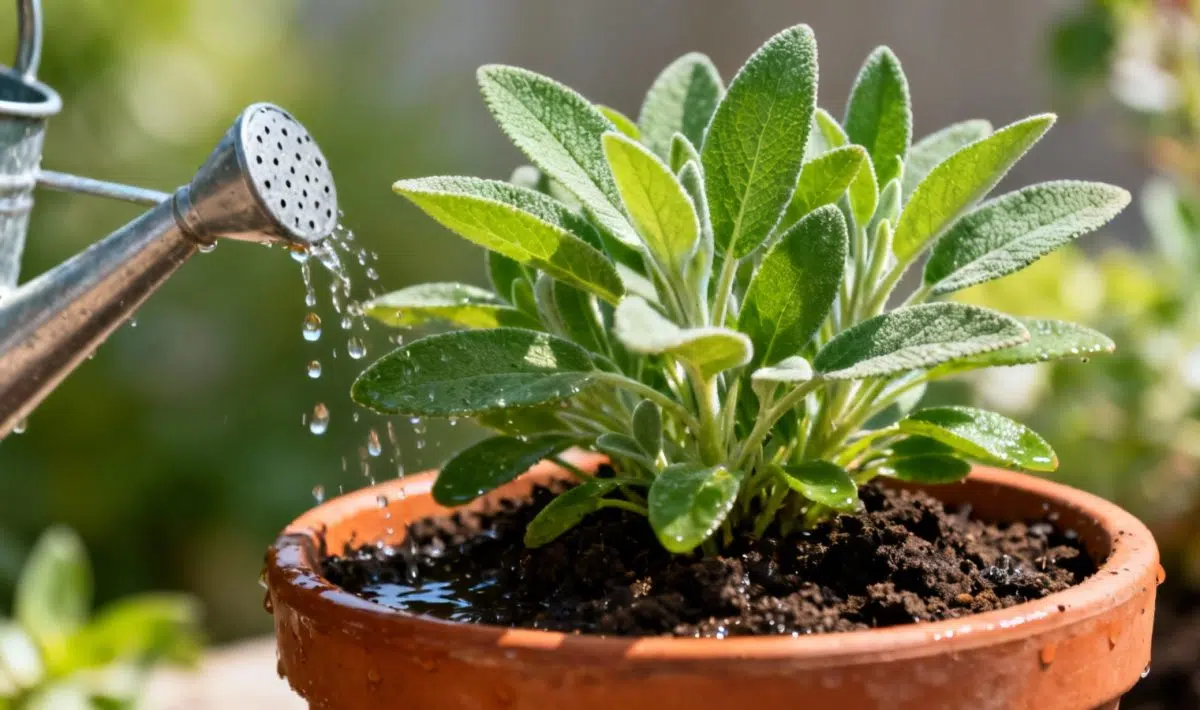
The golden rule for sage is to water deeply and then wait for the soil to dry out completely before the next watering session. During the growing season, this typically translates to watering once every 7-10 days, though this can vary based on your local climate and soil conditions.
In spring when new growth appears, you can water slightly more frequently to support fresh leaves development. However, as temperatures rise and the plant becomes established, reduce watering frequency. Many experienced growers find that their mature sage plants thrive with watering every 10-14 days during summer.
Seasonal adjustments for optimal care
Spring marks the beginning of active growth, so your sage will appreciate regular water as it produces fresh leaves. However, avoid overwatering during this period as the plant is still building its tolerance to dry conditions.
Summer is when sage truly shines with minimal water requirements. Once established, these hardy plants can often survive on rainfall alone in many climates. If you notice the soil becoming extremely dry or the leaves showing stress, a deep watering session every two weeks should suffice.
Fall requires gradually reducing water as the plant prepares for dormancy. This helps the sage develop better cold tolerance and prevents winter damage from excess moisture in the soil.
Signs your sage needs water
Learning to read your plant’s signals is more reliable than following a rigid schedule. Sage leaves will begin to look slightly wilted or develop a grayish tinge when the plant experiences water stress. However, don’t panic at the first sign of wilting – sage is remarkably resilient and can recover quickly from mild drought.
The most accurate method is the finger test: insert your finger 2-3 inches into the soil near the plant. If it feels completely dry at this depth, it’s time to water. This technique is much more reliable than surface observations, as soil can appear dry on top while still retaining moisture below.
Other herbs may show different water stress indicators, and their needs can vary dramatically. For example, watering needs of common sunflowers are quite different from sage, as these annual plants require more consistent moisture throughout their growing cycle.
Warning signs of overwatering
Overwatering is far more dangerous to sage than underwatering. Watch for yellowing leaves, especially those that start from the bottom of the plant and work their way up. Soft, mushy stems or a foul smell from the soil indicate root rot, which can quickly kill the plant.
If you notice these symptoms, immediately reduce watering and improve drainage around the plant. In severe cases, you may need to dig up the plant, trim away affected roots, and replant in fresh, well-draining soil.
Watering techniques that keep sage thriving
When you do water, aim for the soil around the base of the plant rather than wetting the leaves. Overhead watering can promote fungal diseases, especially in humid conditions. A soaker hose or drip irrigation system works excellently for sage, delivering water directly to the root zone.
Water early in the morning when possible, allowing any moisture on the leaves to evaporate quickly. This timing also ensures the plant can utilize the water throughout the day as temperatures rise. Avoid evening watering, which can leave the plant wet overnight and increase disease risk.
For those growing multiple herb varieties, understanding that each plant has unique requirements helps create a more successful garden. While sage prefers infrequent watering, you might discover that optimal watering for Russian sage follows similar principles but with slight variations due to its different growth habits.
Container growing considerations
Potted sage plants dry out more quickly than those in garden beds, so you’ll need to monitor them more closely. Choose containers with drainage holes and use a well-draining potting mix specifically designed for herbs or Mediterranean plants.
During hot summer days, container plants may need water every 3-5 days, but always check the soil moisture first. Small pots dry out faster than large ones, so consider using bigger containers if you want to water less frequently.
Special care for different varieties
While common sage (Salvia officinalis) is the most widely grown variety, other types may have slightly different water requirements. White sage and purple sage generally follow similar watering patterns, but ornamental varieties might need more consistent moisture during their flowering periods.
Young seedlings and recently transplanted sage require more frequent watering until their root systems establish. During this period, keep the soil consistently moist but not waterlogged, gradually reducing frequency as the plant matures.
Different plants in your garden will have varying water needs, and it’s useful to group plants with similar requirements together. For instance, water requirements for common selfheal may complement your sage watering schedule if these plants share similar drought tolerance characteristics.
Troubleshooting common watering problems
If your sage appears stunted despite proper watering, consider factors like soil pH, nutrient levels, or pest issues. Sometimes what appears to be a watering problem is actually related to other growing conditions that affect the plant’s ability to absorb water effectively.
Poor growth can also result from compacted soil that prevents proper root development. Gently loosening the soil around established plants can improve both drainage and root expansion, leading to healthier growth patterns.
Creating the ideal growing environment
Beyond watering frequency, successful sage cultivation depends on providing the right overall environment. These plants thrive in full sun with at least six hours of direct sunlight daily. Good air circulation around the plant helps prevent fungal issues and supports healthy growth.
Mulching around sage plants helps retain soil moisture and suppress weeds, but avoid placing mulch directly against the plant stems. A thin layer of gravel or small stones makes an excellent mulch for sage, as it improves drainage while still providing some moisture retention.
Understanding the water needs of various plants helps create a more efficient garden layout. Some gardeners find success grouping drought-tolerant plants together, which might include learning about best practices for watering chicory to see if it complements sage in a water-wise garden design.
With proper watering practices, your common sage will reward you with aromatic leaves perfect for culinary use and beautiful flowers that attract beneficial insects. Remember that less is often more when it comes to watering this resilient herb – your sage will thank you for allowing it to experience the dry conditions it naturally craves.

Allan is a lifelong gardening enthusiast who still gets excited when the first seedlings pop up in spring. With a deep love for nature and a hands-in-the-soil approach, he shares practical tips, plant discoveries, and clever tricks picked up over years of digging, planting, and observing. Whether you’re a new gardener or have a shed full of tools, Allan writes like a neighbor who’s always happy to swap cuttings and stories over the fence.
You can find more about Allan’s work on Malt or connect with him on LinkedIn.