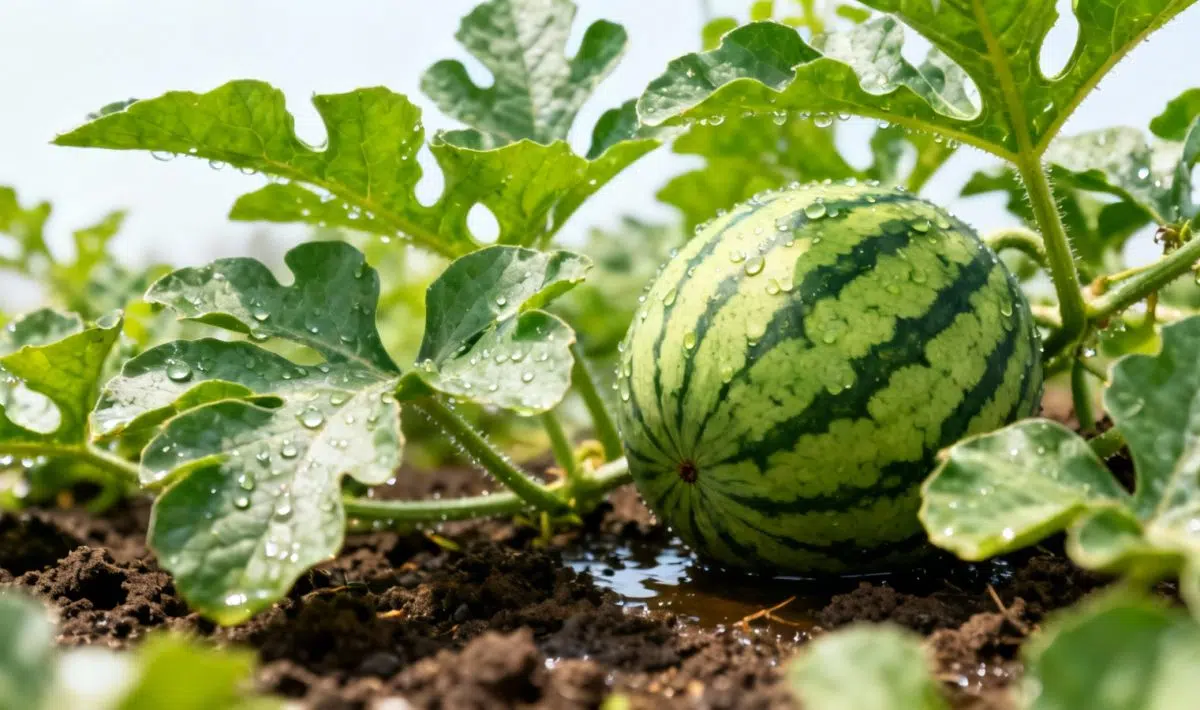
Growing watermelons successfully starts with understanding their unique hydration needs. These remarkable fruits are composed of over 90% water, which makes proper irrigation absolutely critical for their development. Without consistent moisture, your watermelons will struggle to reach their full potential, often resulting in smaller, less sweet fruits that lack that refreshing juiciness we all crave.
The key to success lies in providing steady, controlled watering rather than sporadic heavy irrigation. Watermelon plants have extensive root systems that spread both deep and wide, allowing them to access moisture from various soil layers when properly managed.
How often should you water your watermelon plants
During the growing season, aim to water your watermelon plants 2 to 3 times per week, adjusting based on weather conditions and soil type. In hot, dry periods, daily irrigation becomes necessary, preferably in the early morning or evening hours to minimize evaporation losses.
For sandy soils that drain quickly, you’ll need more frequent watering sessions with smaller amounts each time. Clay soils retain moisture longer, so spacing irrigation sessions 2 to 3 days apart prevents waterlogging while maintaining adequate soil moisture.
Research indicates that applying 6 liters of water four times per week produces the highest yields. However, this should serve as a starting point rather than a rigid rule, since local conditions vary significantly.
Watering during different growth stages
Young watermelon plants require gentle, frequent watering to establish their root systems. After planting seeds or transplants, keep the soil consistently moist but never soggy for the first two weeks.
Once plants are established and begin vining, you can transition to deeper, less frequent watering sessions. This encourages roots to grow deeper into the soil, making plants more drought-resistant during hot summer months.
During fruit development, maintain steady moisture levels to prevent fruit cracking or bitter flavors. However, reduce watering frequency as harvest approaches to concentrate sugars and improve flavor.
Recognizing when watermelons need water
Learning to read your plants’ signals prevents both under and over-watering issues. Wilted leaves in the morning indicate insufficient moisture, while yellowing lower leaves often suggest overwatering or poor drainage.
The most reliable method involves testing soil moisture at a depth of 2-3 inches. If the soil feels dry at this level, it’s time to water. Digital soil moisture meters provide accurate readings and take the guesswork out of irrigation scheduling.
Just as understanding watering your sycamore tree effectively requires attention to soil conditions, watermelon irrigation depends heavily on monitoring your specific growing environment.
Soil preparation for optimal drainage
Proper soil preparation prevents many watering-related problems before they start. Watermelons thrive in well-draining soils with good organic matter content that retains moisture without becoming waterlogged.
Adding compost or aged manure improves soil structure, helping sandy soils retain moisture while improving drainage in clay soils. Raised beds or mounded planting areas ensure excellent drainage during rainy periods.
Effective irrigation techniques
Drip irrigation systems provide the most efficient water delivery method for watermelons. These systems deliver water directly to the root zone, minimizing evaporation and reducing disease risk by keeping foliage dry.
Soaker hoses offer a budget-friendly alternative that delivers water slowly and evenly along the plant row. Position hoses 2-3 inches from plant stems to encourage proper root development.
Overhead sprinklers work but waste more water through evaporation and can promote fungal diseases when used frequently. If using sprinklers, water early in the morning so foliage dries before evening.
Similar to proper care for your money plant, watermelons benefit from consistent moisture delivery rather than irregular flooding.
Mulching for moisture conservation
Organic mulches like straw, grass clippings, or shredded leaves help retain soil moisture while suppressing weeds that compete for water. Apply a 3-4 inch layer around plants, keeping mulch several inches away from stems to prevent pest issues.
Black plastic mulch warms soil temperatures and conserves moisture effectively, though it requires careful irrigation placement underneath. This method works particularly well in cooler climates where extra soil warming benefits plant growth.
Common watering mistakes to avoid
Inconsistent watering schedules stress watermelon plants and reduce fruit quality. Establishing a regular irrigation routine, even if frequency varies with weather, helps plants develop properly.
Watering too close to harvest dilutes fruit flavors and can cause splitting. Begin reducing irrigation frequency about two weeks before expected harvest to concentrate sugars naturally.
Shallow, frequent watering encourages shallow root development, making plants more susceptible to drought stress. Instead, provide deep soaking sessions that encourage roots to grow downward into cooler, more stable soil layers.
Understanding proper watering techniques extends beyond watermelons – ensuring your smoketree thrives requires similar attention to soil moisture and drainage considerations.
Disease prevention through proper irrigation
Many watermelon diseases thrive in overly wet conditions or when foliage remains damp for extended periods. Fungal issues like powdery mildew and bacterial wilt spread rapidly in humid environments with poor air circulation.
Water at soil level rather than overhead whenever possible to keep leaves dry. If using overhead irrigation, time applications so foliage dries quickly in morning sunlight.
Seasonal adjustments for optimal growth
Spring watering focuses on establishing young plants with gentle, frequent applications that keep root zones moist without creating soggy conditions. As temperatures rise and plants mature, transition to deeper, less frequent irrigation sessions.
Summer requires the most intensive watering schedule, particularly during fruit development when water stress severely impacts final fruit quality. Monitor soil moisture daily during hot spells and adjust irrigation frequency accordingly.
Late season watering should gradually decrease as fruits approach maturity, allowing natural sugar concentration to occur while preventing fruit splitting from sudden moisture influxes.
Just as tips for watering your wintercreeper vary with seasonal changes, watermelon irrigation needs constant adjustment throughout the growing season.
Water quality considerations
Water quality affects plant health and fruit development significantly. Hard water with high mineral content can build up salts in soil over time, potentially damaging roots and reducing nutrient uptake.
Rainwater provides ideal irrigation when available, as it’s naturally soft and free of chemicals. Collecting rainwater in barrels during wet periods provides excellent irrigation water for dry spells.
If using municipal water high in chlorine, let it sit in open containers for 24 hours before application to allow chlorine to dissipate naturally.
Troubleshooting irrigation problems
Yellow leaves often indicate overwatering or poor drainage rather than nutrient deficiencies. Improve soil drainage and reduce watering frequency if this occurs, particularly during cool weather when evaporation rates are low.
Cracked fruits result from irregular watering patterns where drought stress is followed by heavy irrigation. Maintaining consistent soil moisture prevents this common problem that ruins otherwise perfect watermelons.
Bitter or bland flavors typically indicate either too much water near harvest or insufficient water during fruit development. Balance is key – steady moisture during growth with reduced irrigation before harvest.
Like best watering practices for pomegranates, successful watermelon irrigation requires understanding each plant’s specific needs and environmental conditions.
Maximizing water efficiency
Installing timers on irrigation systems ensures consistent watering even during busy periods. Programmable controllers adjust for seasonal changes and provide reliable moisture delivery throughout the growing season.
Grouping plants with similar water needs together improves irrigation efficiency and prevents over or under-watering different crop types. This zoning approach works particularly well in mixed vegetable gardens.
Regular maintenance of irrigation equipment prevents leaks and ensures even water distribution. Check hoses, emitters, and connections monthly during the growing season to maintain system efficiency.
Understanding proper irrigation techniques benefits all garden plants – caring for your common sunflower shares many principles with watermelon cultivation, particularly regarding deep watering and moisture consistency.
Allan is a lifelong gardening enthusiast who still gets excited when the first seedlings pop up in spring. With a deep love for nature and a hands-in-the-soil approach, he shares practical tips, plant discoveries, and clever tricks picked up over years of digging, planting, and observing. Whether you’re a new gardener or have a shed full of tools, Allan writes like a neighbor who’s always happy to swap cuttings and stories over the fence.
You can find more about Allan’s work on Malt or connect with him on LinkedIn.