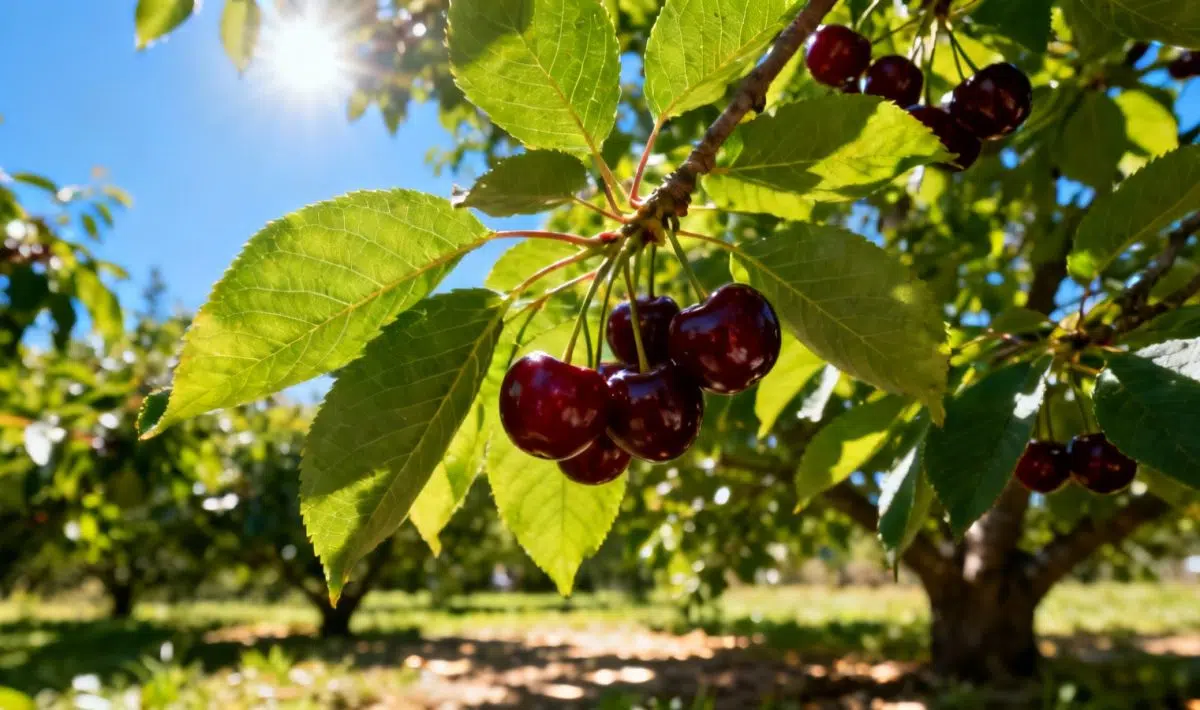
When you’re planning to grow sweet cherry trees, understanding their sunlight needs is absolutely crucial for success. These beautiful fruit trees require a minimum of 6 hours of direct sunlight daily, though 8-10 hours is ideal for optimal fruit production. The amount of sunlight your cherry tree receives directly impacts flower formation, fruit quality, and overall tree health.
Sweet cherry trees are sun-loving plants that thrive in full sun conditions. Without adequate light exposure, you’ll notice reduced flowering, smaller fruit size, and decreased sugar content in the cherries. This makes proper site selection essential from the very beginning of your planting journey.
Essential sunlight conditions for sweet cherry cultivation
The perfect growing environment for sweet cherry trees includes morning sun exposure that continues throughout most of the day. South or southwest-facing locations are typically recommended, as they provide the most consistent light. Temperature and sunlight work together to create the ideal conditions for these fruit trees to flourish.
Just like understanding sunlight requirements for sweet william, knowing your cherry tree’s specific needs helps ensure successful cultivation. Full sun exposure not only promotes healthy growth but also helps prevent many common diseases that affect cherry trees in shadier conditions.
Daily sunlight recommendations
For commercial and home growers alike, the recommended daily sunlight exposure includes:
Minimum 6 hours of direct sunlight
Preferably 8-10 hours for optimal fruit production
Consistent morning sun exposure
Protection from harsh afternoon winds while maintaining light access
Impact of insufficient sunlight on cherry trees
When sweet cherry trees don’t receive adequate sunlight, several problems can develop. Poor flowering is often the first sign, followed by reduced fruit set and smaller, less flavorful cherries. The color development in the fruit also suffers, resulting in pale or unevenly colored cherries that lack the vibrant appearance customers expect.
Trees grown in partial shade often become more susceptible to fungal diseases and pest problems. This is because the reduced air circulation and lower light levels create conditions that favor disease development. Additionally, the overall vigor of the tree decreases, making it less resilient to environmental stresses.
Signs of inadequate light exposure
Watch for these indicators that your sweet cherry tree needs more sunlight:
Sparse or delayed flowering
Small, poorly colored fruit
Leggy growth patterns
Increased susceptibility to diseases
Reduced fruit sweetness
Choosing the perfect location for your sweet cherry tree
Site selection is worth careful consideration when planting sweet cherry trees. The ideal spot combines full sun exposure with good drainage and protection from strong winds. Much like ideal sunlight for growing oregano, proper placement ensures your plants receive the light they need while being protected from harsh conditions.
Consider the mature size of your cherry tree when selecting a planting location. These trees can grow quite large, so ensure they won’t be shaded by buildings or other trees as they develop. The planting area should also have adequate space for root development and easy access for maintenance.
Maximizing sunlight exposure
To optimize light conditions for your sweet cherry tree:
Remove competing vegetation that might create shade
Prune nearby trees to increase light penetration
Consider the seasonal sun path when planning
Avoid planting near structures that block morning sun
Varieties and their specific sunlight needs
Different sweet cherry varieties may have slightly varying sunlight requirements, though most need full sun conditions. Popular varieties like Bing, Lambert, and Royal Ann all perform best with maximum sun exposure. When selecting seeds or young trees, always choose varieties that are recommended for your climate zone and growing conditions.
The processus of selecting the right variety involves considering not just sunlight needs but also pollination requirements, as many sweet cherries are not self-fertile. This means you’ll often need multiple trees, which increases the importance of having adequate space and sunlight for all plants.
Growing tips for successful sweet cherry cultivation
Beyond sunlight requirements, successful sweet cherry growing involves several key factors. Proper soil preparation, adequate spacing, and regular maintenance all contribute to healthy tree development. Understanding sunlight needs for pineapple plants can provide insights into tropical fruit cultivation, though cherry trees have different specific needs as temperate fruit trees.
Water management is particularly important during the first few years after planting. Young trees need consistent moisture but not waterlogged conditions. The combination of proper irrigation and full sun exposure creates optimal growing conditions for establishing strong root systems.
Care recommendations after planting
Once your sweet cherry tree is planted in its sunny location:
Maintain consistent watering during establishment
Apply appropriate fertilizer based on soil tests
Prune for optimal light penetration and air circulation
Monitor for pests and diseases regularly
Protect young trees from extreme weather
Seasonal considerations for sunlight exposure
Sweet cherry trees have different sunlight needs throughout the growing season. Spring flowering requires adequate light to ensure proper bloom development and pollinator activity. Summer fruit development benefits from maximum sun exposure to achieve perfect color and sweetness levels.
During autumn, reduced daylight hours are natural, but the tree should still receive available sunlight to support proper dormancy preparation. Winter sunlight, while less intense, still contributes to overall tree health when combined with proper dormancy conditions.
Similar to how watermelon sunlight requirements explained demonstrates the importance of consistent light exposure for fruit crops, cherry trees benefit from reliable sunlight patterns throughout their growing season.
Where to find quality sweet cherry seeds and plants
When you’re ready to start your sweet cherry growing journey, selecting high-quality, non-GMO seeds or plants is essential. Many reputable suppliers offer free shipping on orders, making it convenient to access the best varieties for your specific growing conditions.
Look for suppliers that provide detailed growing information and support. The best sources will offer guidance on variety selection, planting techniques, and ongoing care. This type of comprehensive support is particularly valuable for new growers who want to ensure success from the beginning.
Consider also exploring other sun-loving plants for your garden, such as learning about sunlight needs for spearmint cultivation to create a diverse, thriving garden ecosystem.
What to look for when purchasing
When selecting sweet cherry seeds or plants:
Choose varieties suited to your climate zone
Verify the supplier’s reputation and reviews
Look for detailed growing instructions
Consider pollination requirements
Check for any guarantees or support offered
Final thoughts on sweet cherry sunlight requirements
Success with sweet cherry cultivation always comes back to providing adequate sunlight exposure. These trees are an investment in your garden’s future, and proper site selection ensures you’ll enjoy years of beautiful blooms and delicious fruit. Remember that 6 hours of direct sunlight is the absolute minimum, with 8-10 hours being ideal for the best results.
The combination of proper sunlight, good soil conditions, and appropriate care creates the perfect environment for sweet cherry trees to thrive. With careful planning and attention to their specific needs, you can look forward to enjoying homegrown cherries that are worth the wait and effort required for successful cultivation.
Allan is a lifelong gardening enthusiast who still gets excited when the first seedlings pop up in spring. With a deep love for nature and a hands-in-the-soil approach, he shares practical tips, plant discoveries, and clever tricks picked up over years of digging, planting, and observing. Whether you’re a new gardener or have a shed full of tools, Allan writes like a neighbor who’s always happy to swap cuttings and stories over the fence.
You can find more about Allan’s work on Malt or connect with him on LinkedIn.