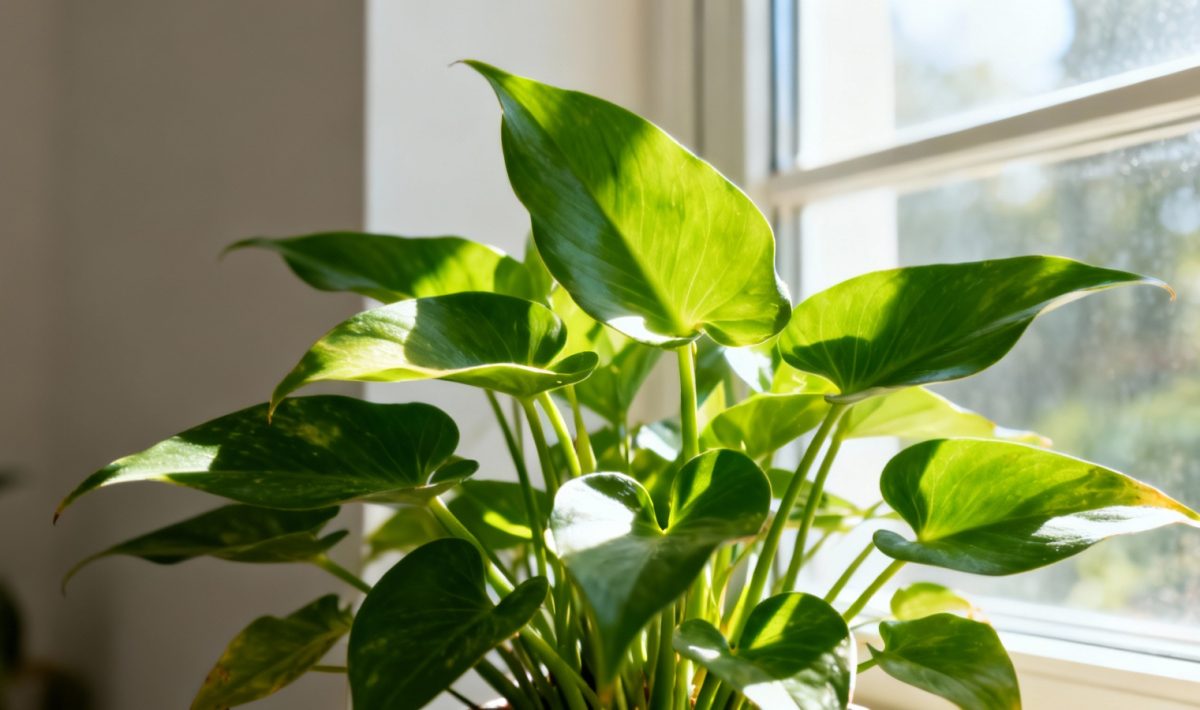
How much sunlight does arrowhead plant need for healthy indoor growth
The arrowhead plant has become one of my favorite houseplants, and honestly, understanding its light needs was a game-changer for keeping mine thriving. This tropical beauty doesn’t demand much fuss, but getting the lighting right makes all the difference between a plant that just survives and one that truly flourishes with those gorgeous arrow-shaped leaves.
Your arrowhead plant comes from the tropical understory, which means it’s naturally adapted to bright but filtered light conditions. In nature, these plants grow beneath larger trees where sunlight gets diffused through the canopy above. This background explains why direct sunlight can actually harm your plant rather than help it grow.
The sweet spot for arrowhead plants is bright, indirect light. Think of a room that feels bright and airy to you, but where the plant won’t get hit by direct sun rays. This type of lighting provides enough energy for photosynthesis without overwhelming the delicate foliage that can easily burn.
Types of light conditions for your plant
Indirect light benefits
Bright indirect light is what your arrowhead plant craves most. You can achieve this by placing your plant near a window with sheer curtains, or positioning it a few feet away from a south-facing window. The light should be strong enough that you can comfortably read a book without additional lighting, but gentle enough that it won’t cast harsh shadows.
This lighting setup encourages healthy growth while protecting those beautiful green leaves from scorching. Your plant will maintain its vibrant coloration and develop that full, bushy appearance that makes arrowhead plants so appealing. Much like understanding sunlight requirements for spider plants, getting the balance right is essential for long-term plant health.
Direct sunlight challenges
Direct sunlight poses real risks for your arrowhead plant. Those arrow-shaped leaves are relatively thin and can quickly develop brown, crispy edges or yellow patches when exposed to intense sun. Morning sun might be tolerable for short periods, but afternoon sun is typically too harsh and should be avoided completely.
If you notice your plant’s leaves developing brown spots or losing their vibrant green color, direct sun exposure is likely the culprit. The plant’s natural instinct is to protect itself, but this often results in damaged foliage that won’t recover.
Environmental factors affecting light needs
Seasonal lighting changes
Winter brings unique challenges for indoor plants, including your arrowhead plant. The shorter days and weaker sunlight mean you might need to move your plant closer to a window or consider supplemental lighting. I’ve found that plants that thrive in summer can become leggy and pale during winter months without adequate light adjustment.
During summer, you might need to pull your plant back from windows as the sun becomes more intense. The key is observing how your specific plant responds to seasonal changes and adjusting accordingly. Just as different plants have varying needs – for instance, optimal sunlight for ghost plants differs significantly from tropical houseplants – your arrowhead plant’s needs may shift with the seasons.
Temperature and humidity considerations
Light and temperature work together to create the perfect growing conditions. Your arrowhead plant prefers temperatures between 65-75°F, and bright light helps maintain these optimal conditions. However, direct sunlight can create hot spots that stress the plant even when room temperature seems perfect.
Humidity also plays a role in how your plant processes light. Higher humidity levels help the plant cope with brighter conditions, while low humidity makes it more susceptible to light damage.
Practical placement strategies
Best window locations
East-facing windows provide excellent morning light that’s gentle enough for your arrowhead plant. The soft morning sun won’t burn the leaves, and the plant gets bright indirect light for the rest of the day. North-facing windows work well too, offering consistent but gentle light throughout the day.
West and south-facing windows require more careful positioning. You’ll want to place your plant at least three feet away from these windows or use sheer curtains to diffuse the intense afternoon sun. The goal is capturing that bright ambient light without exposing your plant to direct rays.
Understanding these placement principles applies to many houseplants, much like knowing sunlight needs of lady’s thumb helps with outdoor gardening decisions.
Using artificial lighting
LED grow lights can be a fantastic supplement, especially during darker months. Position them about 12-18 inches above your arrowhead plant and run them for 10-12 hours daily. The key is choosing full-spectrum LEDs that provide the right wavelengths without generating excessive heat.
Fluorescent lights work too, though they need to be closer to the plant – about 6-12 inches away. Watch for signs that your plant is getting too much artificial light, such as leaves losing their deep green color or developing a bleached appearance.
Recognizing light-related problems
Signs of insufficient light
When your arrowhead plant doesn’t get enough light, it becomes quite vocal about its needs. The most obvious sign is leggy growth – those lovely compact stems start stretching toward any available light source, creating a sparse, elongated appearance that’s far from the plant’s natural bushy form.
You’ll also notice the leaves losing their vibrant green color, becoming pale or even yellowish. New growth may be smaller than usual, and the plant might stop producing those characteristic arrow-shaped leaves altogether. These symptoms develop gradually, so regular observation helps catch problems early.
Interestingly, light requirements vary dramatically between plant types – while arrowhead plants need gentle indirect light, cultivation tips for oregano plants reveal they thrive in much more direct sunlight conditions.
Symptoms of excessive light exposure
Too much light creates its own set of problems that are often more immediate and dramatic than insufficient light issues. Brown, crispy leaf edges are the classic sign – they typically start at the tips and work their way inward. You might also see yellow patches or bleached areas where the sun has been particularly intense.
The leaves may curl or develop a generally stressed appearance, losing their natural glossy finish. In severe cases, entire leaves can turn brown and drop off. Unlike gradual nutrient deficiencies, light damage often appears within days of exposure.
Optimizing your plant’s light environment
Creating the perfect balance
The secret to success lies in finding that sweet spot where your arrowhead plant gets enough light to photosynthesize efficiently without suffering damage. I like to think of it as creating a bright reading nook – comfortable for extended periods but not harsh or overwhelming.
Monitor your plant’s response over several weeks after any lighting changes. Healthy growth should be steady but not explosive, with new leaves maintaining good color and size. The plant should look content rather than stressed, with foliage that feels firm and looks vibrant.
Your arrowhead plant’s lighting needs aren’t static – they change with the seasons and your plant’s growth cycle. During active growing periods in spring and summer, your plant can handle slightly brighter conditions and will actually benefit from the extra energy for producing new foliage.
Winter requires a more conservative approach. The combination of shorter days, weaker sunlight, and typically drier indoor air means your plant becomes more sensitive to both too much and too little light. This is when those supplemental grow lights really prove their worth.
Remember that consistency matters more than perfection. Your arrowhead plant will adapt to stable conditions much better than it will handle frequent dramatic changes, even if those changes are theoretically improvements. The key is making gradual adjustments and observing how your specific plant responds to different lighting conditions throughout the year.
Allan is a lifelong gardening enthusiast who still gets excited when the first seedlings pop up in spring. With a deep love for nature and a hands-in-the-soil approach, he shares practical tips, plant discoveries, and clever tricks picked up over years of digging, planting, and observing. Whether you’re a new gardener or have a shed full of tools, Allan writes like a neighbor who’s always happy to swap cuttings and stories over the fence.
You can find more about Allan’s work on Malt or connect with him on LinkedIn.