
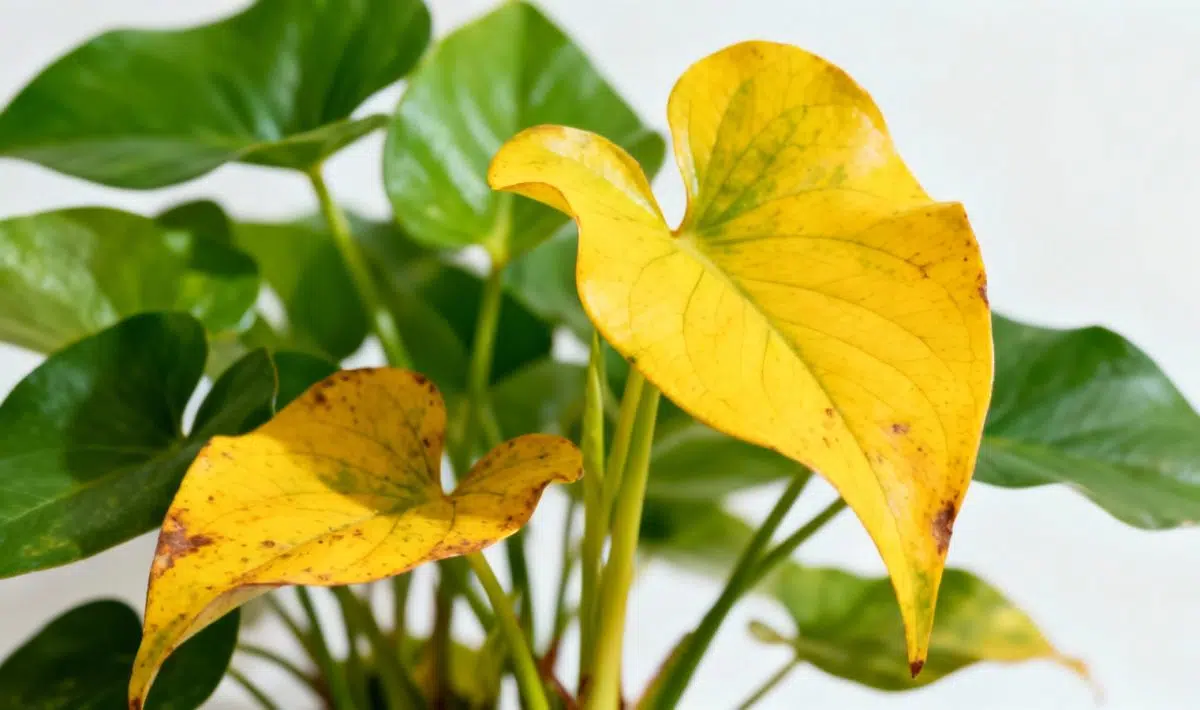
Watching your beloved arrowhead plant’s vibrant green leaves slowly turn yellow can feel heartbreaking. As someone who’s nurtured these gorgeous tropical beauties for years, I understand that sinking feeling when you notice those first telltale yellow spots appearing. The good news is that yellowing leaves on your Syngonium are often a cry for help that’s completely fixable once you know what to look for.
Your arrowhead plant is essentially communicating with you through its changing leaf color. These stunning plants, native to tropical rainforests, have specific needs that must be met for them to thrive indoors. When something’s off in their environment, yellowing leaves are usually the first warning sign.
Understanding your arrowhead plant’s natural behavior
Before we dive into problem-solving, it’s worth understanding that Syngonium plants naturally shed older leaves as they mature. However, when multiple leaves start turning yellow simultaneously or the yellowing spreads rapidly, there’s definitely an underlying issue that needs addressing.
These tropical natives belong to the Araceae family and are incredibly popular houseplants due to their striking arrow-shaped foliage and relatively easy care requirements. In their natural habitat, they climb trees and receive filtered sunlight while their roots stay consistently moist but never waterlogged.
✅ Quick Checklist
- Is the soil too wet or too dry?
- Is the plant getting 6+ hours of sunlight daily?
- Have you fertilized in the last 2 months?
- Are there visible pests under the leaves?
- Does the pot have adequate drainage?
Diagnose your plant in one click!
AI instant diagnosis • Personalized solutions • 50,000+ species
The most common culprits behind yellowing leaves
Watering woes – too much or too little
In my experience, improper watering is hands down the number one reason why arrowhead plant leaves turn yellow. These plants prefer consistently moist soil, but they absolutely despise being waterlogged. Overwatering creates anaerobic conditions that suffocate the roots, leading to root rot and yellowing foliage.
On the flip side, underwatering stresses the plant and causes it to sacrifice older leaves to conserve energy. Stick your finger about two inches into the soil – it should feel slightly damp but not soggy. If it’s bone dry or feels like a swamp, you’ve found your problem.
Lighting issues affecting leaf health
Arrowhead plants thrive in bright, indirect light but can struggle in both extremely low light and harsh direct sunlight. Too little light causes the plant to become leggy and weak, while too much direct sun can scorch the leaves, causing them to yellow and brown.
Place your Syngonium near a north or east-facing window where it receives plenty of filtered light throughout the day. If you notice yellowing accompanied by brown crispy edges, your plant might be getting too much direct sunlight.
Nutrient deficiencies and feeding schedule
Like all living things, arrowhead plants need proper nutrition to maintain their gorgeous green coloring. Nitrogen deficiency often manifests as yellowing leaves, starting with the older foliage at the bottom of the plant. During the growing season (spring and summer), feed your plant with a balanced liquid fertilizer diluted to half strength every 2-3 weeks.
However, be careful not to over-fertilize, as this can cause salt buildup in the soil and lead to root burn. Similar yellowing issues occur in many other plants, such as the causes of yellowing marigold leaves which often stem from comparable care mistakes.
Environmental factors that stress your plant
Temperature and humidity requirements
Arrowhead plants are tropical natives that prefer temperatures between 65-75°F and humidity levels around 50-60%. Sudden temperature drops, cold drafts, or extremely dry air can shock the plant and cause yellowing. If your home has central heating or air conditioning, consider using a humidifier or placing your plant on a pebble tray filled with water.
Pot size and drainage considerations
A pot that’s either too small or lacks proper drainage can contribute to yellowing leaves. When roots become pot-bound, they struggle to absorb nutrients and water efficiently. Ensure your container has drainage holes and repot your arrowhead plant every 2-3 years or when you notice roots circling the bottom.
✅ Quick Checklist
- Is the soil too wet or too dry?
- Is the plant getting 6+ hours of sunlight daily?
- Have you fertilized in the last 2 months?
- Are there visible pests under the leaves?
- Does the pot have adequate drainage?
Diagnose your plant in one click!
AI instant diagnosis • Personalized solutions • 50,000+ species
Step-by-step solutions to restore healthy foliage
Adjusting your watering routine
Start by checking the soil moisture level and adjusting accordingly. If the soil is waterlogged, stop watering immediately and ensure proper drainage. For severely overwatered plants, you might need to repot with fresh, well-draining soil. Water only when the top inch of soil feels dry to the touch.
Create a consistent watering schedule based on your home’s environment. In most homes, watering every 7-10 days during growing season works well, but always check the soil first rather than following a rigid schedule.
Optimizing light conditions
Move your plant to a location with bright, indirect light if it’s currently in a dark corner or under harsh direct sunlight. An ideal spot receives morning sun or filtered light throughout the day. If natural light is limited, consider supplementing with a grow light placed 12-18 inches above the plant.
Addressing nutrient needs
Begin a regular feeding schedule using a balanced liquid fertilizer during the growing season. Dilute the fertilizer to half the recommended strength to avoid burning the roots. During winter months, reduce feeding to once monthly or stop altogether as the plant’s growth slows down.
Prevention tips for long-term plant health
The best approach to preventing yellowing leaves is maintaining consistent care practices. Check your plant weekly for signs of stress, including soil moisture, leaf condition, and overall appearance. Keep a plant care journal to track watering dates, fertilizing schedule, and any changes you notice.
Similar preventive care principles apply to many flowering plants as well. For instance, understanding the reasons for yellow leaves on cockscomb can help you recognize patterns across different plant species and become a more attentive plant parent overall.
Regular maintenance tasks like wiping leaves clean, rotating the plant for even growth, and inspecting for pests will keep your arrowhead plant thriving. Remember that healthy plants are more resilient and better able to recover from minor care mistakes.
When to seek additional help
Sometimes despite our best efforts, plants continue to struggle. If yellowing persists after addressing watering, lighting, and nutrition, consider factors like pest infestations, soil quality, or underlying root problems. Don’t hesitate to consult local garden centers or online plant communities for additional advice.
Your arrowhead plant’s yellowing leaves are definitely fixable with the right care adjustments. These resilient tropical beauties want to thrive in your home – they just need you to understand their language and provide the consistent care they’re asking for. With patience and attention to their specific needs, you’ll soon see new healthy growth replacing those troublesome yellow leaves.

Allan is a lifelong gardening enthusiast who still gets excited when the first seedlings pop up in spring. With a deep love for nature and a hands-in-the-soil approach, he shares practical tips, plant discoveries, and clever tricks picked up over years of digging, planting, and observing. Whether you’re a new gardener or have a shed full of tools, Allan writes like a neighbor who’s always happy to swap cuttings and stories over the fence.
You can find more about Allan’s work on Malt or connect with him on LinkedIn.


