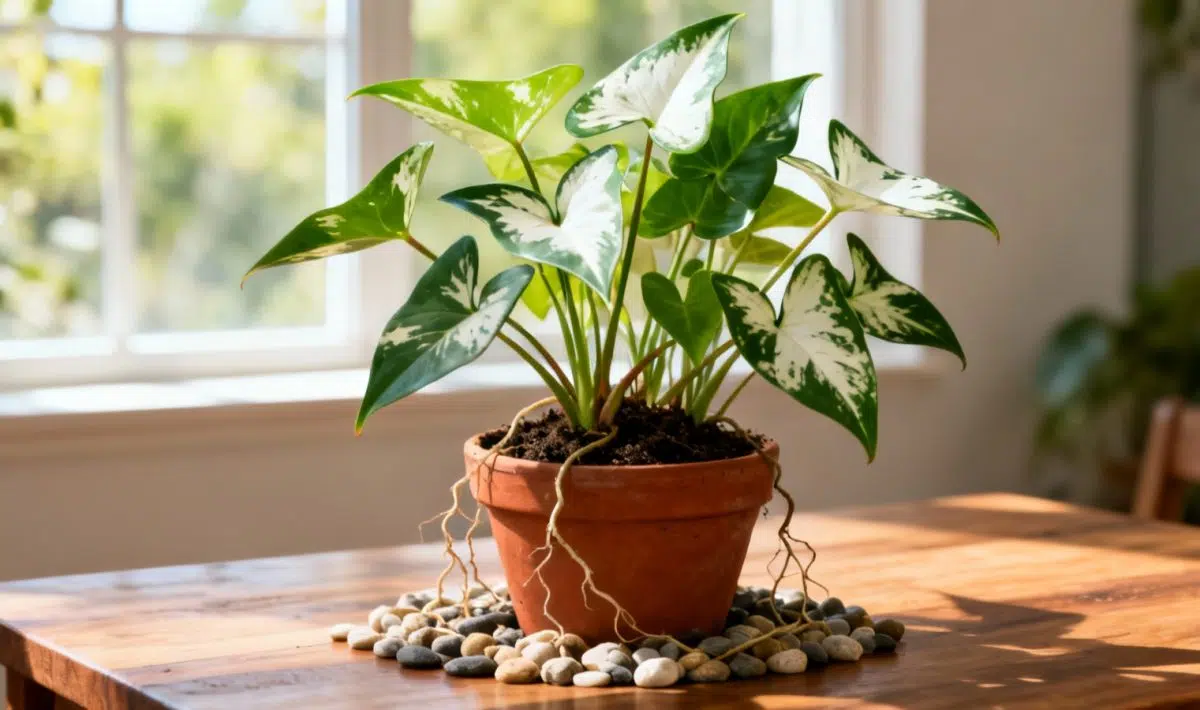
Arrowhead plant – Syngonium podophyllum: care, characteristics, culture, propagation
The arrowhead plant, scientifically known as Syngonium podophyllum, stands out as one of nature’s most adaptable houseplants. With its distinctive arrow-shaped leaves that evolve beautifully as the plant matures, this tropical vine brings both elegance and air-purifying benefits to any indoor space. Originally from South America’s rainforests, this charming climber has captured hearts worldwide with its low-maintenance nature and stunning foliage variations.
The Syngonium podophyllum belongs to the Araceae family, sharing relatives with philodendrons and pothos. Young plants display compact, heart-shaped leaves that gradually transform into their signature arrow formation as they mature. This fascinating leaf evolution makes watching your plant grow an absolute joy.
These remarkable plants can reach impressive sizes, typically spreading 90-180 cm in diameter when given proper support. The natural growth pattern shifts from bushy to climbing as the plant develops, creating stunning vertical displays when provided with moss poles or trellises. The vine-like nature allows for creative positioning throughout your garden or home.
Available varieties showcase incredible diversity in leaf patterns and colors. Classic green varieties offer timeless appeal, while variegated cultivars feature striking combinations of cream, pink, and silver markings. Each variety maintains the characteristic arrow-shaped leaves while expressing unique personality through coloration.
Essential care requirements
Light preferences lean toward bright, indirect illumination rather than harsh direct sunlight. Windows facing east or north typically provide ideal conditions, allowing the foliage to maintain vibrant colors without scorching. Too much direct light can fade variegated patterns, while insufficient light causes leggy growth and diminished leaf quality.
Watering schedules should follow the “moist but not waterlogged” principle. Check soil moisture regularly by inserting your finger about an inch deep. When the top layer feels dry, it’s time for a thorough watering session. During growing seasons, this typically means watering weekly, while winter months require less frequent attention.
Humidity plays a crucial role in keeping leaves healthy and vibrant. Aim for 40-60% humidity levels through grouping plants together, using pebble trays, or running a humidifier nearby. Brown leaf tips often signal insufficient humidity, which is easily correctable with these simple adjustments.
Culture and growing conditions
Soil composition should prioritize drainage while retaining adequate moisture. A quality potting mix combining peat, perlite, and vermiculite creates the perfect foundation for healthy root development. The soil pH can range from slightly acidic to alkaline without causing problems, making this plant wonderfully forgiving.
Temperature preferences hover around typical household ranges of 65-75°F (18-24°C). These tropical beauties appreciate consistent temperatures and should be protected from cold drafts or sudden temperature fluctuations. Avoid placing them near heating vents or air conditioning units that create environmental stress.
Fertilization during the growing season supports vigorous development and lush foliage. A balanced, diluted liquid fertilizer applied monthly from spring through early fall provides adequate nutrition. Reduce feeding frequency during winter months when growth naturally slows down.
Hydroponic cultivation methods
Hydroponic systems offer exciting possibilities for growing Syngonium podophyllum without traditional soil. Water culture allows for easier root monitoring and eliminates soil-borne pest issues. Simply transfer established plants to water-filled containers, ensuring roots remain submerged while leaves stay above water level.
Nutrient solutions should be changed weekly to prevent bacterial buildup and maintain optimal growing conditions. Use diluted hydroponic fertilizers specifically designed for foliage plants, following manufacturer recommendations for concentration levels. The natural adaptability of arrowhead plants makes them excellent candidates for hydroponic experiments.
For enthusiasts interested in expanding their plant collection, you might find tips for growing garlic mustard useful for diversifying your indoor garden with different species that share similar care principles.
Propagation techniques
Stem cutting propagation remains the most reliable method for multiplying your arrowhead plant collection. Select healthy stems with at least 2-3 nodes, making clean cuts just below leaf joints where roots naturally develop. These cuttings root easily in water or directly in moist potting medium.
Water propagation allows you to observe root development firsthand, which typically begins within 1-2 weeks under proper conditions. Once roots reach 2-3 inches long, transplant cuttings into small pots with well-draining soil. Keep newly planted cuttings in bright, indirect light while they establish.
Division methods work well for mature plants that have developed multiple growth points. Carefully separate root systems during repotting, ensuring each division retains adequate roots and foliage. This technique instantly creates multiple plants while rejuvenating the parent specimen.
Common care challenges and solutions
Yellowing leaves often indicate watering issues, either too much or too little moisture. Examine soil conditions and adjust watering frequency accordingly. Poor drainage can lead to root rot, while drought stress causes leaf drop and poor growth performance.
Pest management typically involves dealing with common houseplant insects like spider mites, aphids, or scale insects. Regular inspection helps catch problems early when they’re easier to manage. Gentle insecticidal soap treatments effectively control most pest issues without harming the plant.
Similar care approaches work well for other tropical houseplants, and you might benefit from learning about care for Japanese pieris plants to understand how different plant families respond to comparable growing conditions.
Long-term plant management
Pruning helps maintain desired shape and encourages bushy growth patterns. Pinch or cut growing tips to promote branching, especially on young plants that you want to keep compact. Remove any damaged or yellowing leaves promptly to maintain plant health and appearance.
Repotting becomes necessary every 2-3 years or when roots begin circling the pot bottom. Choose containers one size larger and refresh the soil completely during this process. Spring timing works best for repotting activities when plants are actively growing.
Support systems become important as plants mature and develop climbing tendencies. Moss poles, bamboo stakes, or decorative trellises provide structure while enhancing visual appeal. The natural clinging ability helps plants attach to supports without additional ties.
Creating optimal growing environments
Indoor placement should consider both light requirements and visual impact. Corner locations with bright, filtered light often work perfectly, allowing the plant to serve as a living sculpture while receiving adequate illumination. Avoid high-traffic areas where branches might get damaged.
Seasonal adjustments help maintain consistent care throughout the year. Reduce watering frequency during winter months when growth slows, and increase humidity during dry indoor periods. Monitor plants closely during heating season when indoor air tends to become excessively dry.
For those expanding their knowledge of diverse plant families, understanding growing Dieffenbachia seguine successfully provides insights into managing other tropical foliage plants with similar environmental needs.
Maximizing plant potential
Companion planting with other tropical species creates stunning indoor displays while providing mutual benefits through increased humidity and visual interest. Group plants with similar care requirements to simplify maintenance routines while creating lush, jungle-like environments.
Advanced techniques include training vines along walls or ceiling-mounted supports for dramatic vertical gardens. The flexible nature of arrowhead plant stems allows for creative positioning that maximizes space utilization while creating living art installations.
Regular monitoring and engagement with your plant develops intuitive understanding of its needs. Notice how leaf color, growth rate, and overall appearance respond to care adjustments, building confidence in your gardening skills while ensuring optimal plant health.
For gardeners interested in exploring fruit-bearing plants alongside decorative foliage, learning essential tips for common persimmon care offers knowledge about managing plants with entirely different growth habits and care requirements.
The journey of growing Syngonium podophyllum rewards patience and attention with years of beautiful foliage and the satisfaction of successfully nurturing a living companion. Whether displayed as a compact table plant or allowed to climb dramatic supports, this versatile species brings tropical elegance and natural air purification to any indoor environment.
Allan is a lifelong gardening enthusiast who still gets excited when the first seedlings pop up in spring. With a deep love for nature and a hands-in-the-soil approach, he shares practical tips, plant discoveries, and clever tricks picked up over years of digging, planting, and observing. Whether you’re a new gardener or have a shed full of tools, Allan writes like a neighbor who’s always happy to swap cuttings and stories over the fence.
You can find more about Allan’s work on Malt or connect with him on LinkedIn.