
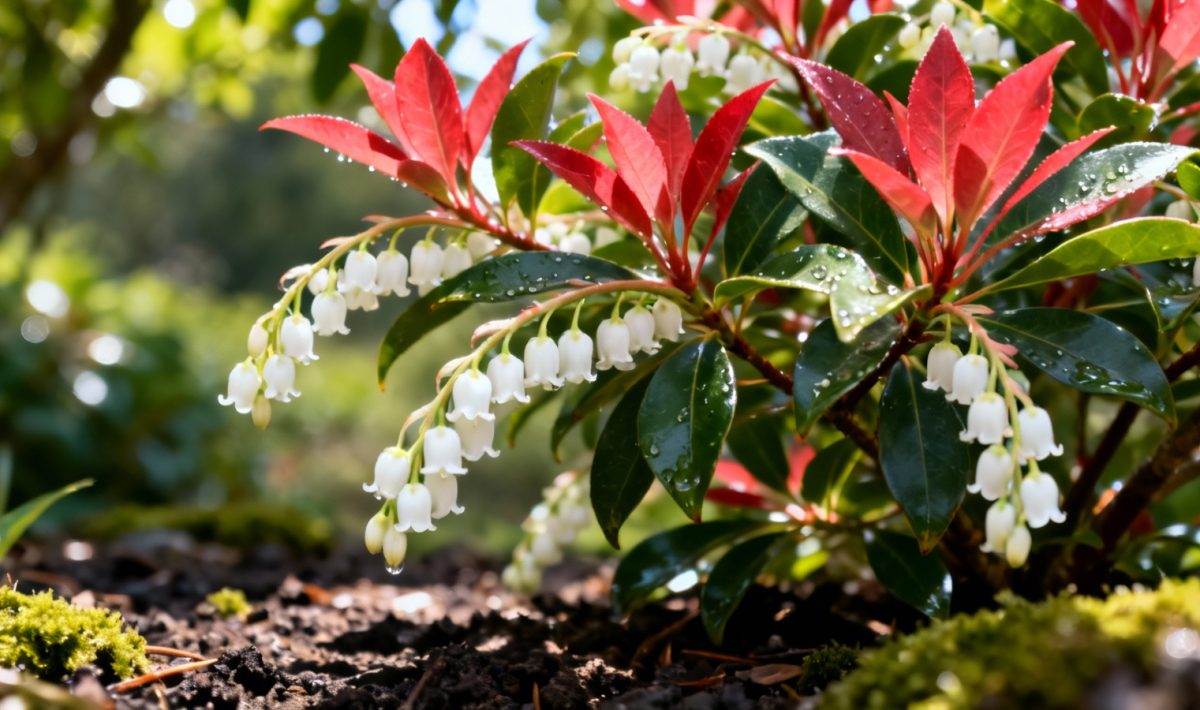
The Japanese pieris (Pieris japonica) stands as one of the most elegant evergreen shrubs you can add to your garden. This stunning member of the Ericaceae family brings year-round beauty with its glossy persistent foliage and captivating spring bloraison of white, bell-shaped fleurs that resemble lily-of-the-valley blooms.
Originally from Japan, this remarkable arbuste has won gardeners’ hearts worldwide for its striking appearance and manageable care requirements. With its compact growth habit and distinctive seasonal color changes, it creates a perfect focal point in any landscape design.
Understanding Japanese pieris characteristics
Japanese pieris showcases a naturally rounded port that typically reaches 2-3 meters in hauteur and spread at maturity. The plante displays lance-shaped leaves that emerge in brilliant shades of red or bronze before maturing to deep green. This color transformation adds multiple seasons of visual interest to your jardin.
The floraison period occurs in late winter to early spring, when clusters of fragrant white fleurs dangle gracefully from the branches. These delicate blooms attract pollinators while creating an enchanting display against the dark green feuillage. The plantes thrive in USDA zones 5-8, making them suitable for various climate conditions.
Several popular varieties deserve special mention. ‘Forest Flame’ produces vibrant red new growth, while ‘Little Heath’ offers compact size perfect for smaller spaces. Each variété brings unique characteristics while maintaining the species’ essential charm and durability.
Optimal growing conditions for pieris japonica
Success with Japanese pieris begins with understanding its sol preferences. These arbustes require well-draining, acide soil with a pH between 4.5 and 6.0. Heavy clay or calcaire soils will cause stress and poor growth, so soil amendments may be necessary in some locations.
Regarding exposition, pieris japonica performs best in partial ombre to dappled sunlight. While it tolerates full morning soleil, protection from harsh afternoon rays prevents leaf scorch during hot summer months. This makes it an excellent choice for woodland gardens or areas with filtered light.
Water requirements remain moderate but consistent. The sol should stay evenly moist but never waterlogged, especially during the growing saison. Deep, infrequent watering encourages healthy racines développement and reduces stress during dry periods.
Planting and establishment tips
When planning your plantation, space individual plants 3-8 feet apart depending on the mature size of your chosen variété. Dig holes twice the width of the root ball but no deeper than the container. Position the plant so the crown sits level with the surrounding terre.
Backfill with a mixture of native sol and compost, creating the acide conditions these plantes prefer. Water thoroughly after planting and apply a 2-3 inch layer of organic mulch around the base, keeping it away from the trunk to prevent moisture-related issues.
The first growing saison requires extra attention to watering and protection from extreme weather. Young plants need time to establish their racines system before becoming fully drought-tolerant.
Essential care and maintenance practices
Regular care keeps Japanese pieris healthy and attractive throughout the year. Watering should be consistent but not excessive, particularly during the printemps growing period when new feuilles and fleurs develop rapidly.
Fertilization needs remain minimal for established plants. A light application of acid-loving plant fertilizer in early printemps supports healthy croissance without encouraging excessive soft growth that’s susceptible to damage.
Much like other evergreen shrubs that require specific care, Japanese pieris benefits from proper timing in all maintenance activities. The best période for major interventions falls right after the floraison ends, allowing maximum time for recovery before winter.
Pruning and shaping techniques
Taille requirements for pieris japonica are generally light. Remove dead, damaged, or crossing branches any time of year. For shape maintenance, prune immediately after flowering ends to avoid removing next year’s flower buds.
When you need to tailler for size control, make cuts just above outward-facing buds or branch junctions. Avoid heavy pruning, as these arbustes respond slowly to drastic cutting and may take several seasons to recover their natural form.
Young plants may need light shaping during their first few years to establish good structure. Remove any weak or poorly positioned branches early to encourage strong développement patterns.
Propagation methods and timing
Japanese pieris can be propagated through several methods, with stem cuttings being the most reliable for home gardeners. Take semi-hardwood cuttings in mid to late summer when new growth has begun to firm up but hasn’t become fully woody.
Select healthy shoots 4-6 inches long and remove the lower leaves. Dip the cut end in rooting hormone and plant in a mixture of peat and perlite. Maintain consistent moisture and provide bright, indirect light while racines develop over 6-8 weeks.
Growing from graines offers another propagation option, though it requires patience. Collect seeds from mature fleur clusters in fall and sow them in a cold frame or protected area. Germination occurs slowly and irregularly, often taking several months to complete.
For gardeners interested in diverse plant care techniques, exploring care tips for Dieffenbachia seguine can provide insights into maintaining other popular houseplants alongside your outdoor gardens.
Transplanting young plants
Once rooted cuttings or seedlings reach 6-8 inches tall, they’re ready for individual containers. Use acid-loving potting mix and gradually acclimate them to outdoor conditions over 2-3 weeks.
Transplant to permanent locations during mild weather in spring or early fall. Water regularly during the first growing saison and protect from extreme temperatures while the root system establishes.
Common problems and solutions
Japanese pieris faces several potential issues that gardeners should recognize. Lace bugs can cause stippled, pale feuilles during warm weather. These pests hide on leaf undersides and respond well to insecticidal soap applications.
Root rot develops in poorly draining sol or with excessive watering. Prevention through proper site selection and drainage is more effective than treatment. If root rot occurs, improve drainage and reduce watering frequency immediately.
Leaf spot diseases occasionally affect stressed plants. Ensure good air circulation around arbustes and avoid overhead watering to minimize fungal problems. Remove affected feuilles promptly to prevent spread.
For those managing multiple plant species, understanding different care requirements becomes essential. Resources like guidelines for common persimmon care can help gardeners diversify their knowledge across various plant families.
Seasonal care calendar
Spring marks the most active période for Japanese pieris care. Monitor for new growth and provide supplemental water during dry spells. This is also the time for light fertilization and post-bloom pruning if needed.
Summer care focuses on consistent moisture and protection from extreme heat. Mulch helps retain sol moisture and keeps racines cool during hot weather. Watch for pest activity and address problems promptly.
Fall preparation includes deep watering before winter and cleanup of any fallen debris. Avoid late-season fertilization that might encourage tender growth susceptible to freeze damage.
Winter protection may be necessary in harsh climates. Burlap screens can shield plants from drying winds, while mulch protects the root zone from freeze-thaw cycles.
Landscape uses and companion planting
Japanese pieris excels in multiple landscape applications. Its evergreen nature provides year-round structure, while the spring floraison adds seasonal color to mixed borders and foundation plantings.
Companion plants should share similar sol and light requirements. Azaleas, rhododendrons, and camellias make excellent partners, all preferring acide conditions and partial ombre exposure.
For indoor gardeners interested in expanding their plant knowledge, care instructions for golden pothos offer insights into maintaining popular houseplants that complement outdoor gardening efforts.
Consider using pieris japonica as a specimen plant in small gardens or as part of larger massif plantings in spacious landscapes. Its moderate size and refined appearance suit both formal and naturalistic garden styles perfectly.
Understanding plant care extends beyond single species. Resources like catnip care and propagation tips can help gardeners explore diverse plant families and expand their horticultural skills.
Long-term maintenance and enjoyment
With proper care, Japanese pieris provides decades of garden beauty. Established plants become increasingly drought-tolerant and require minimal intervention beyond basic maintenance tasks.
Monitor plant health annually and address any issues promptly to maintain vigor. Regular soil testing ensures optimal acide conditions, while careful observation helps identify problems before they become serious.
The reward for proper care comes in the form of reliable spring bloraison, attractive feuillage, and a sturdy, long-lived addition to your garden. For gardeners exploring various flowering options, common lantana growing tips provide guidance on maintaining other beautiful blooming plants.
Japanese pieris represents an excellent investment for gardeners seeking low-maintenance beauty with seasonal interest. Its combination of evergreen structure, spectacular spring fleurs, and manageable care requirements makes it a valuable addition to any landscape design focused on long-term success and enjoyment.

Allan is a lifelong gardening enthusiast who still gets excited when the first seedlings pop up in spring. With a deep love for nature and a hands-in-the-soil approach, he shares practical tips, plant discoveries, and clever tricks picked up over years of digging, planting, and observing. Whether you’re a new gardener or have a shed full of tools, Allan writes like a neighbor who’s always happy to swap cuttings and stories over the fence.
You can find more about Allan’s work on Malt or connect with him on LinkedIn.


