
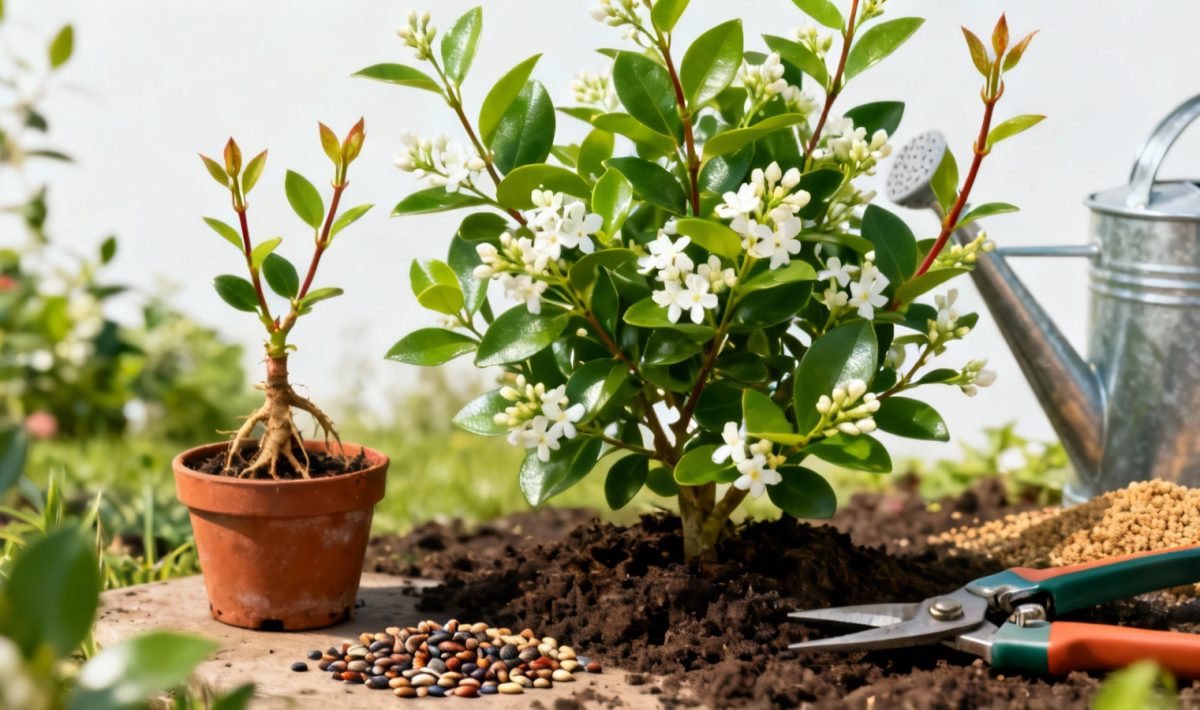
The glossy privet, scientifically known as Ligustrum lucidum, stands out as one of the most versatile and attractive evergreen shrubs for modern gardens. This Chinese native brings year-round elegance with its lustrous dark green foliage and adaptable growing characteristics. Whether you’re planning a privacy hedge or seeking an ornamental focal point, understanding the proper care and cultivation techniques will ensure your glossy privet thrives for years to come.
Understanding glossy privet characteristics
The glossy privet originates from southern China and Korea, where it naturally develops into a robust evergreen specimen. In its native habitat, this plant demonstrates remarkable adaptability to various soil types and climate conditions. The characteristic glossy leaves measure 4-6 inches long, creating a dense canopy that provides excellent screening properties throughout all seasons.
Mature plants typically reach heights between 12-15 feet when grown as shrubs, though they can achieve 25-30 feet when trained as trees. The growth rate remains consistently moderate to fast, making it an excellent choice for gardeners seeking relatively quick establishment. During late spring and early summer, clusters of small white flowers appear, followed by dark blue-black berries that attract various bird species.
The plant’s natural vigor and dense growth pattern make it particularly valuable for landscaping projects requiring reliable screening or windbreak protection. Much like other robust plants such as those covered in our care tips for garlic mustard plants, proper understanding of basic characteristics leads to more successful cultivation outcomes.
Essential care requirements for optimal growth
Successful glossy privet cultivation begins with understanding its fundamental water and nutrition needs. These plants prefer consistently moist but well-draining soil conditions. During establishment periods, regular watering becomes crucial, particularly during dry spells or prolonged heat waves.
Watering and moisture management
The frequency of watering depends heavily on soil type, climate conditions, and plant maturity. Newly planted specimens require more frequent attention, typically needing water 2-3 times weekly during their first growing season. Established plants develop deeper root systems that access groundwater more effectively, reducing irrigation requirements significantly.
Proper drainage prevents root rot and other moisture-related problems. Signs of overwatering include yellowing leaves, wilting despite moist soil, and fungal growth around the base. Conversely, underwatering manifests through leaf browning, premature leaf drop, and stunted growth patterns.
Nutrition and fertilization
Glossy privet responds well to balanced nutrition programs that support both foliage quality and root development. Organic fertilizers provide slow-release nutrition that promotes steady growth without encouraging excessive soft growth vulnerable to pest problems.
Application timing proves critical for maximum efficacy. Early spring applications support new growth emergence, while mid-summer feeding sustains plants through peak growing periods. The duration of fertilizer effectiveness varies by product type, with organic amendments typically lasting 6-8 weeks compared to 4-6 weeks for synthetic alternatives.
Cultivation techniques and planting considerations
Successful glossy privet cultivation requires attention to site selection, soil preparation, and proper planting techniques. These elements work together to create optimal growing conditions that support long-term plant health and vigor.
Soil preparation and site selection
Glossy privet adapts to various soil types but performs best in well-draining, slightly acidic to neutral soils with pH levels between 6.0-7.5. Heavy clay soils benefit from organic matter additions that improve drainage and root penetration. Sandy soils require amendments that enhance water retention and nutrient capacity.
Site preparation involves removing weeds, incorporating compost or aged manure, and ensuring adequate drainage. Poor drainage areas may require raised planting beds or French drain installation to prevent waterlogged conditions. The quality of soil preparation directly impacts establishment success and long-term plant performance.
Sunlight exposure significantly influences growth patterns and flowering. While glossy privet tolerates partial shade, full sun locations produce denser foliage and more abundant blooms. Similar considerations apply to many ornamental shrubs, as discussed in our growing Japanese pieris successfully resource.
Spacing and layout planning
Proper spacing ensures adequate air circulation while allowing plants to reach their natural mature size without overcrowding. For hedge applications, plant spacing typically ranges from 3-5 feet on center, depending on desired density and establishment timeline.
Individual specimen plantings require 8-12 feet spacing to accommodate full canopy development. This spacing allows each plant to develop its characteristic rounded form without competition from neighboring plants. Consider mature size when planning layouts, as insufficient spacing leads to pruning requirements and reduced plant vigor over time.
Propagation methods and techniques
Glossy privet propagation offers several reliable methods for expanding your plantings or sharing with fellow gardeners. Each technique has specific timing requirements and success factors that influence outcomes.
Cutting propagation
Softwood cuttings taken in late spring or early summer provide the highest success rates for glossy privet propagation. Select healthy, non-flowering shoots 4-6 inches long with several nodes for optimal rooting potential.
Preparation involves removing lower leaves, making clean cuts below nodes, and applying rooting hormone to encourage rapid root development. Place cuttings in well-draining propagation medium such as perlite-peat mixtures or commercial rooting compounds.
Maintaining consistent moisture and humidity levels proves crucial during the rooting period. Misting systems or plastic covering help maintain optimal conditions while preventing cutting desiccation. Most cuttings develop adequate root systems within 6-8 weeks under proper conditions.
Layering and division methods
Ground layering provides an alternative propagation method that maintains parent plant connection during root development. Select flexible lower branches that can be bent to ground level without breaking or excessive stress.
Create shallow trenches where branches contact soil, secure with landscape pins, and cover with soil mixture. Keep layered areas consistently moist throughout the growing season. Root development typically occurs within one growing season, allowing separation the following spring.
This method proves particularly useful for gardeners wanting guaranteed success, as the parent plant continues providing nutrition during root establishment. Similar techniques work well with many shrubs, as detailed in our tips for caring for Dieffenbachia guide.
Common challenges and solutions
Despite its general hardiness, glossy privet can encounter specific problems that require prompt attention and appropriate responses. Understanding these challenges helps maintain healthy, vigorous plants throughout their lifespan.
Pest management
Scale insects and aphids represent the most common pest problems affecting glossy privet. These insects feed on plant sap, causing yellowing leaves, stunted growth, and honeydew secretions that attract sooty mold.
Early detection through regular plant inspection allows for targeted treatment approaches. Horticultural oils provide effective control while minimizing environmental impact. Systemic treatments may be necessary for severe infestations, though organic approaches often prove sufficient for most situations.
Encouraging beneficial insects through diverse plantings helps maintain natural pest control. Many gardeners find success combining glossy privet with companion plants that attract predatory insects, similar to strategies used with care guidelines for common persimmon cultivation.
Disease prevention
Fungal diseases occasionally affect glossy privet, particularly in humid conditions with poor air circulation. Leaf spot diseases and powdery mildew represent the most frequent problems, especially during prolonged wet periods.
Prevention focuses on proper spacing, adequate pruning for air circulation, and avoiding overhead watering during evening hours. Organic fungicides provide treatment options for established infections, while cultural practices prevent most disease problems from developing.
Seasonal maintenance and pruning
Regular maintenance ensures glossy privet remains attractive and healthy throughout changing seasons. Timing these activities correctly maximizes plant response while minimizing stress.
Pruning requirements vary by intended use and desired appearance. Formal hedges require frequent trimming to maintain shape, while naturalized plantings need minimal intervention. Late winter or early spring represents optimal pruning timing, allowing plants to recover before active growing periods begin.
Remove dead, damaged, or crossing branches first, followed by selective thinning to improve air circulation. Avoid heavy pruning during active growing periods, as this can stimulate excessive tender growth vulnerable to early frost damage.
Seasonal feeding programs support vigorous growth and flowering. Spring applications of balanced fertilizers provide nutrition for initial growth, while summer feeding sustains plants through peak growing periods. Many successful gardeners apply similar principles to various plants, including those covered in our advice on golden pothos care recommendations.
Landscape applications and design considerations
Glossy privet’s versatility makes it suitable for numerous landscape applications. Its dense growth habit provides excellent screening properties, while attractive foliage adds year-round interest to garden designs.
Privacy hedges represent one of the most popular uses, as plants respond well to regular trimming and maintain dense growth from ground level upward. Spacing plants 3-4 feet apart creates solid screens within 2-3 growing seasons under proper care.
Specimen plantings showcase the plant’s natural form and seasonal changes. When allowed to develop naturally, glossy privet creates an attractive small tree with interesting branching patterns and seasonal flowering displays. This versatility extends to various growing conditions, making it adaptable to different garden styles and requirements.
Companion planting enhances landscape impact while supporting overall garden health. Combining glossy privet with perennials, bulbs, and smaller shrubs creates layered plantings that provide extended seasonal interest. Consider pairing with plants that have different blooming periods and foliage textures for maximum visual appeal, similar to combinations discussed in our growing and caring for catnip article.
With proper understanding of its characteristics and requirements, glossy privet delivers reliable performance across diverse landscape applications. Whether grown for privacy, ornamental value, or wildlife habitat, this adaptable plant rewards careful attention with years of attractive, low-maintenance service in your garden.

Allan is a lifelong gardening enthusiast who still gets excited when the first seedlings pop up in spring. With a deep love for nature and a hands-in-the-soil approach, he shares practical tips, plant discoveries, and clever tricks picked up over years of digging, planting, and observing. Whether you’re a new gardener or have a shed full of tools, Allan writes like a neighbor who’s always happy to swap cuttings and stories over the fence.
You can find more about Allan’s work on Malt or connect with him on LinkedIn.


