
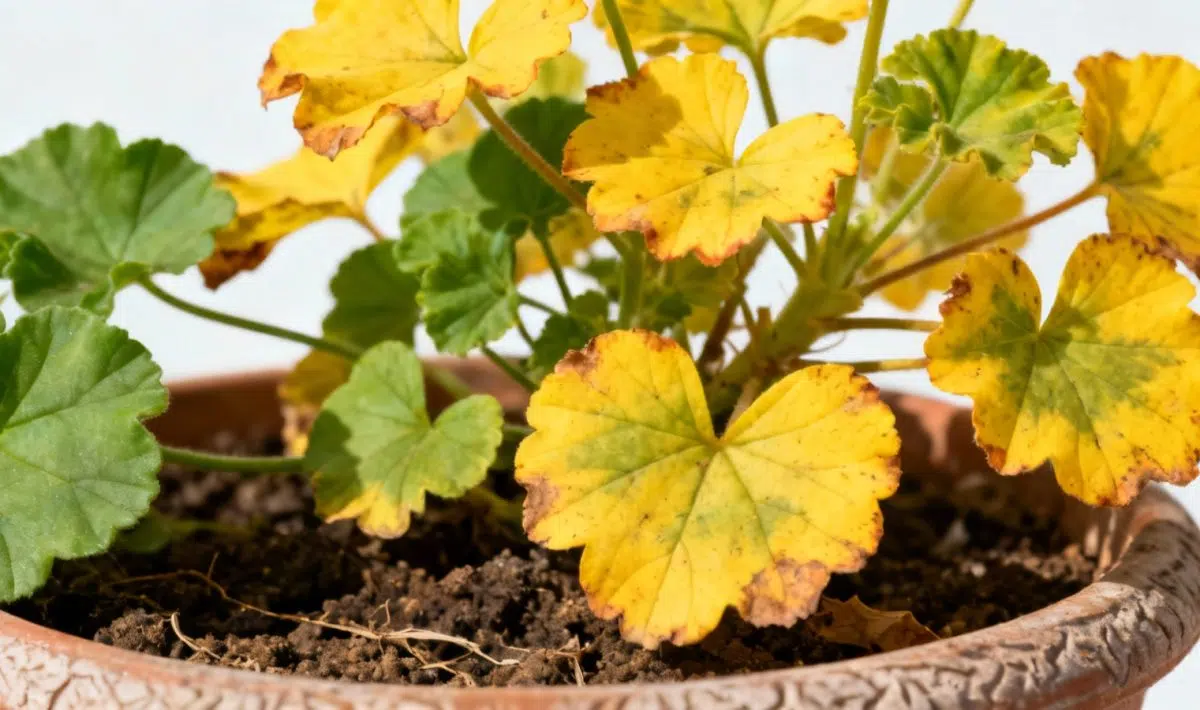
Nothing’s more frustrating than watching your beautiful zonal geraniums develop yellow leaves when they should be thriving. If you’re wondering why are my zonal geranium leaves turning yellow, you’re not alone – this common issue affects many gardeners, but the good news is that it’s usually fixable once you identify the underlying cause.
Yellow leaves on geraniums can signal various problems, from simple watering issues to nutrient deficiencies or even pest infestations. Understanding these causes will help you take the right steps to restore your plants’ health and prevent future problems.
Main environmental factors affecting your geraniums
Environmental stress is often the primary culprit when geranium leaves start yellowing. These Mediterranean plants have specific needs that, when not met, quickly show up as leaf discoloration.
Watering problems and soil moisture
Improper arrosage is the most common reason for yellowing leaves in geraniums. These plants prefer soil that’s moist but never waterlogged. When the sol stays too wet for extended periods, root rot develops, preventing the plant from absorbing nutrients properly.
On the flip side, drought stress also causes yellowing, typically starting with the lower leaves. Check your soil moisture by inserting your finger about two inches deep – it should feel slightly damp but not soggy. Water thoroughly when the top inch feels dry, allowing excess eau to drain completely.
✅ Quick Checklist
- Is the soil too wet or too dry?
- Is the plant getting 6+ hours of sunlight daily?
- Have you fertilized in the last 2 months?
- Are there visible pests under the leaves?
- Does the pot have adequate drainage?
Diagnose your plant in one click!
AI instant diagnosis • Personalized solutions • 50,000+ species
Light and temperature requirements
Geraniums need at least six hours of direct soleil daily to maintain their vibrant foliage. When they don’t get enough light, the plant redirects energy away from older leaves, causing them to yellow and drop. This natural response helps the plant conserve resources for new growth.
Temperature fluctuations also stress geraniums significantly. These plants prefer temperatures between 65-70°F (18-21°C) and struggle when exposed to sudden temperature changes or prolonged heat above 85°F (29°C). Cold drafts and frost will quickly cause yellowing and leaf drop.
Nutrient deficiencies and fertilization issues
A well-nourished pélargonium displays rich green foliage and abundant blooms. When essential nutrients become unavailable, yellowing leaves are often the first symptom you’ll notice.
Nitrogen and iron deficiencies
Nitrogen deficiency typically causes yellowing that starts with older, lower leaves and progresses upward. The leaf veins may remain green initially while the areas between them turn yellow. This pattern indicates your plant needs a balanced fertilizer with adequate nitrogen content.
Iron deficiency, known as chlorosis, causes yellowing between the leaf veins while the veins themselves stay green. This problem often occurs in alkaline soil where iron becomes unavailable to the plant, even when present in the soil. Similar yellowing patterns can be seen in other plants, such as the causes of yellowing pomegranate leaves, where nutrient availability plays a crucial role.
Overfertilization problems
While nutrient deficiencies cause yellowing, too much fertilizer can be equally problematic. Overfertilization leads to salt buildup in the soil, which burns roots and prevents proper nutrient uptake. Signs include yellowing leaf edges, stunted growth, and reduced flowering.
Any experienced jardinier will tell you that geraniums prefer light, regular feeding rather than heavy applications. Use a balanced, water-soluble fertilizer diluted to half strength every two weeks during the growing season.
Several diseases and pests can cause yellowing in geranium feuilles, often accompanied by other symptoms that help identify the specific problem.
Fungal diseases
Root rot, caused by overwatering and poor drainage, leads to yellowing that typically starts with lower leaves. The affected leaves may also develop brown spots or become mushy. Bacterial blight causes similar symptoms but often includes dark, water-soaked spots on the foliage.
Rust disease creates yellow spots on leaf undersides, eventually causing entire leaves to yellow and drop. This fungal infection thrives in humid conditions and spreads quickly between plantes in crowded conditions.
Common pests
Aphids, spider mites, and whiteflies all cause yellowing by sucking plant juices from the leaves. These tiny pests are often found on the undersides of leaves and may be accompanied by sticky honeydew or fine webbing. Yellowing from pest damage is often similar to what affects other plants, including reasons for yellow wild bergamot leaves, where insects can cause significant stress.
Check your plants regularly by lifting leaves and examining the undersides. Early detection makes treatment much more effective and prevents the spread to other plants in your jardin.
Practical solutions and prevention
Once you’ve identified the cause of yellowing, taking prompt action will help restore your geraniums’ health and prevent future problems.
Adjusting care practices
Start by evaluating your watering routine and drainage. Ensure pots have drainage holes and use well-draining potting soil. Water deeply but less frequently, allowing the soil to dry slightly between waterings. This practice encourages strong root development and prevents waterlogged conditions.
Move plants to locations with adequate morning sun and afternoon shade in hot climates. Good air circulation helps prevent fungal diseases while maintaining the proper growing environment these Mediterranean natives prefer.
✅ Quick Checklist
- Is the soil too wet or too dry?
- Is the plant getting 6+ hours of sunlight daily?
- Have you fertilized in the last 2 months?
- Are there visible pests under the leaves?
- Does the pot have adequate drainage?
Diagnose your plant in one click!
AI instant diagnosis • Personalized solutions • 50,000+ species
Treatment and recovery steps
Remove all yellowed and damaged feuilles promptly to prevent disease spread and redirect the plant’s energy to healthy growth. Use clean, sharp scissors to make clean cuts and avoid tearing the plant tissue.
For nutrient deficiencies, apply appropriate fertilizers based on your soil test results. Iron chelate works well for iron deficiency, while a balanced fertilizer addresses nitrogen shortages. Always follow package directions and avoid overfertilizing.
When dealing with pests or diseases, remove affected plant parts and treat with appropriate organic or chemical controls. Neem oil works well for many pest problems, while copper-based fungicides help control bacterial and fungal diseases.
With proper diagnosis and treatment, your geraniums should recover within 2-4 weeks, producing new healthy growth to replace the damaged foliage. Consistent care and monitoring will keep them thriving throughout the growing season.

Allan is a lifelong gardening enthusiast who still gets excited when the first seedlings pop up in spring. With a deep love for nature and a hands-in-the-soil approach, he shares practical tips, plant discoveries, and clever tricks picked up over years of digging, planting, and observing. Whether you’re a new gardener or have a shed full of tools, Allan writes like a neighbor who’s always happy to swap cuttings and stories over the fence.
You can find more about Allan’s work on Malt or connect with him on LinkedIn.


