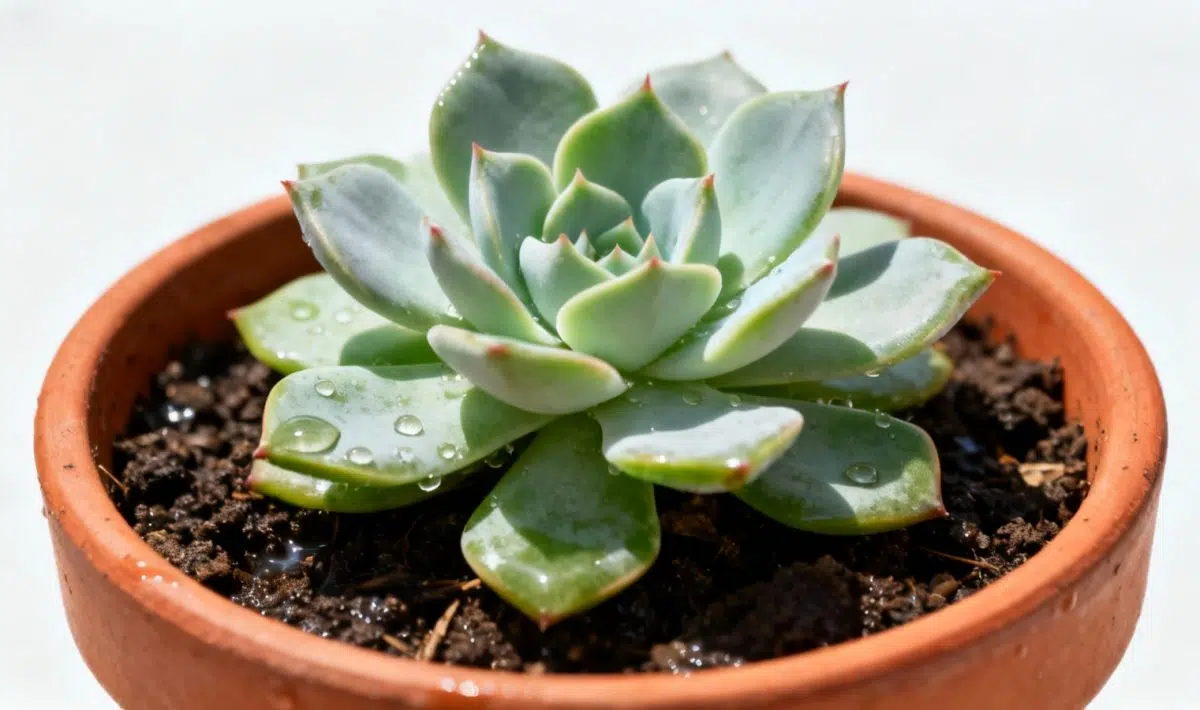
The Ghost plant, scientifically known as Graptopetalum paraguayense, is one of those perfect succulents that forgives you for being a bit forgetful with the watering can. This charming plant with its ghostly pale, waxy leaves has adapted beautifully to survive with minimal water, making it an ideal choice for busy plant parents who want something stunning without the fuss.
How often should you water your Ghost plant? The simple answer is every 10 to 15 days during its growing season, but let me share the complete picture with you. Your Ghost plant stores water in those thick, fleshy leaves, which means it’s naturally equipped to handle drought conditions far better than your average houseplant.
During spring and summer, when your plant is actively growing, you’ll want to water thoroughly but infrequently. Think of it this way – you’re mimicking the natural rainfall patterns from its native habitat. The key is allowing the soil to dry out completely between waterings, which prevents the dreaded root rot that can quickly kill your beautiful succulent.
Seasonal watering schedule for optimal Ghost plant care
Let me break down the watering schedule that will keep your Ghost plant thriving year-round. From March through September, you’ll be watering more frequently as this is when your plant is putting on new growth and needs that extra hydration to fuel its development.
During these active months, check your plant every week by sticking your finger about 2-3 inches into the soil. If it feels dry, it’s time for a good drink. In hot weather above 75°F, you might find yourself watering once a week, but in cooler conditions, every 10-15 days is perfect.
Winter changes everything for your Ghost plant. From October through February, your succulent enters a dormancy period where it barely grows at all. During this time, you’ll dramatically reduce watering to perhaps once a month or even less. The plant is essentially living off the water stored in its leaves, so resist the urge to coddle it with frequent waterings.
Temperature plays a huge role in determining your watering frequency. Just like with optimal watering for tomatoes in heatwaves, extreme heat affects how quickly your Ghost plant uses water. During summer heat waves, you might need to water slightly more often, but always check the soil first.
Signs your Ghost plant needs water
Your Ghost plant will actually tell you when it’s thirsty if you know what to look for. The leaves will start to feel softer and less plump when the plant needs water. You might also notice the lower leaves beginning to wrinkle slightly or the overall color becoming a bit more muted.
However, don’t panic at the first sign of a wrinkled leaf. Ghost plants naturally shed their lower leaves as they grow, and this is completely normal. The difference is that water-stressed leaves will feel soft and deflated, while naturally aging leaves simply dry up and fall off.
Proper watering technique for Ghost plants
The method you use to water your Ghost plant is just as important as the frequency. I always recommend the “soak and dry” method, which means giving your plant a thorough watering until water runs out the drainage holes, then waiting until the soil is completely dry before watering again.
When you do water, aim for the soil rather than the leaves. Getting water trapped in the crown or between leaves can lead to fungal issues, especially in humid conditions. Use room temperature water and water slowly, allowing it to penetrate the soil rather than running straight through.
Make sure your Ghost plant is potted in well-draining soil – a cactus and succulent mix works perfectly. Regular potting soil holds too much moisture and will quickly lead to root rot. If you’re unsure about drainage, add some perlite or coarse sand to improve it.
Similar care principles apply to other succulents and trailing plants, much like the watering frequency for turtle vine care where soil drainage remains crucial for plant health.
Common watering mistakes to avoid
One of the biggest mistakes I see with Ghost plant care is the tendency to water on a strict schedule rather than checking the soil conditions. Your plant doesn’t care that it’s Tuesday – it cares whether the soil is dry and ready for water.
Another common error is using a spray bottle for watering. While misting might seem gentler, it doesn’t provide the deep watering that succulents need and can actually encourage fungal problems on the leaves. Your Ghost plant wants a good drink, not a light sprinkle.
Overwatering is by far the most deadly mistake you can make with Ghost plants. These tough little survivors can handle drought, but they absolutely cannot tolerate soggy conditions. If you’re someone who likes to fuss over your plants, redirect that energy into observing rather than watering.
Environmental factors that affect watering needs
Your home environment significantly impacts how often you’ll need to water your Ghost plant. Air conditioning, heating, humidity levels, and air circulation all play a role in how quickly the soil dries out and how much water your plant actually needs.
In winter, heated indoor air can be quite dry, which might mean slightly more frequent watering than you’d expect for the dormant season. Conversely, if you live in a naturally humid climate, you might find your plant needs water less often than the general guidelines suggest.
The size and type of pot also matter tremendously. Terracotta pots dry out faster than plastic ones, and smaller pots need water more frequently than larger ones. Just like understanding the specific needs for tips for watering English ivy, container choice affects your watering schedule.
Light exposure affects water usage too. A Ghost plant in bright, direct sunlight will use water more quickly than one in lower light conditions. If you move your plant to a different location, be prepared to adjust your watering schedule accordingly.
Tools that make watering easier
A few simple tools can make caring for your Ghost plant much easier and more precise. A moisture meter takes the guesswork out of determining when to water – stick it into the soil and get an instant reading of moisture levels.
A watering can with a narrow spout helps you direct water exactly where you want it, avoiding the crown and leaves. For those who prefer a more hands-on approach, simply using your finger as a moisture gauge works perfectly well.
Keep a small notebook or phone app to track your watering dates. This helps you identify patterns and adjust your schedule based on what actually works for your specific plant and environment, rather than following generic advice.
Troubleshooting water-related problems
Despite your best efforts, sometimes things go wrong with watering. If you notice your Ghost plant’s leaves becoming yellow, mushy, or translucent, you’re likely dealing with overwatering and possible root rot. Stop watering immediately and check the roots – healthy roots should be white or light colored, not black or mushy.
On the flip side, severely underwatered Ghost plants will have shriveled, deflated leaves and may drop leaves excessively. The good news is that these resilient plants bounce back quickly from underwatering once you give them a proper drink.
If you’re struggling to find the right balance, err on the side of underwatering rather than overwatering. Your Ghost plant can survive weeks without water, but it may not recover from root rot caused by too much moisture.
For those growing multiple succulent varieties, understanding individual needs becomes important, much like knowing the specific requirements for watering tips for Indian shot plants helps create better care routines.
Seasonal care adjustments
As seasons change, your Ghost plant’s needs will shift accordingly. Spring is the perfect time to resume regular watering after the winter dormancy period. Start slowly and gradually increase frequency as temperatures warm up and daylight hours extend.
Summer requires the most attention to watering, but remember that more frequent doesn’t mean more volume each time. Always water thoroughly when you do water, ensuring the entire root system gets moisture, then wait for the soil to dry completely.
Fall is transition time – gradually reduce watering frequency as temperatures drop and your plant begins to slow down its growth. By winter, you should be watering very sparingly, perhaps only when the leaves show clear signs of dehydration.
With the right watering schedule and attention to your Ghost plant’s signals, you’ll have a thriving, beautiful succulent that adds that perfect touch of otherworldly charm to your plant collection. Remember, when in doubt, wait another few days before watering – your Ghost plant will thank you for the restraint.
Allan is a lifelong gardening enthusiast who still gets excited when the first seedlings pop up in spring. With a deep love for nature and a hands-in-the-soil approach, he shares practical tips, plant discoveries, and clever tricks picked up over years of digging, planting, and observing. Whether you’re a new gardener or have a shed full of tools, Allan writes like a neighbor who’s always happy to swap cuttings and stories over the fence.
You can find more about Allan’s work on Malt or connect with him on LinkedIn.