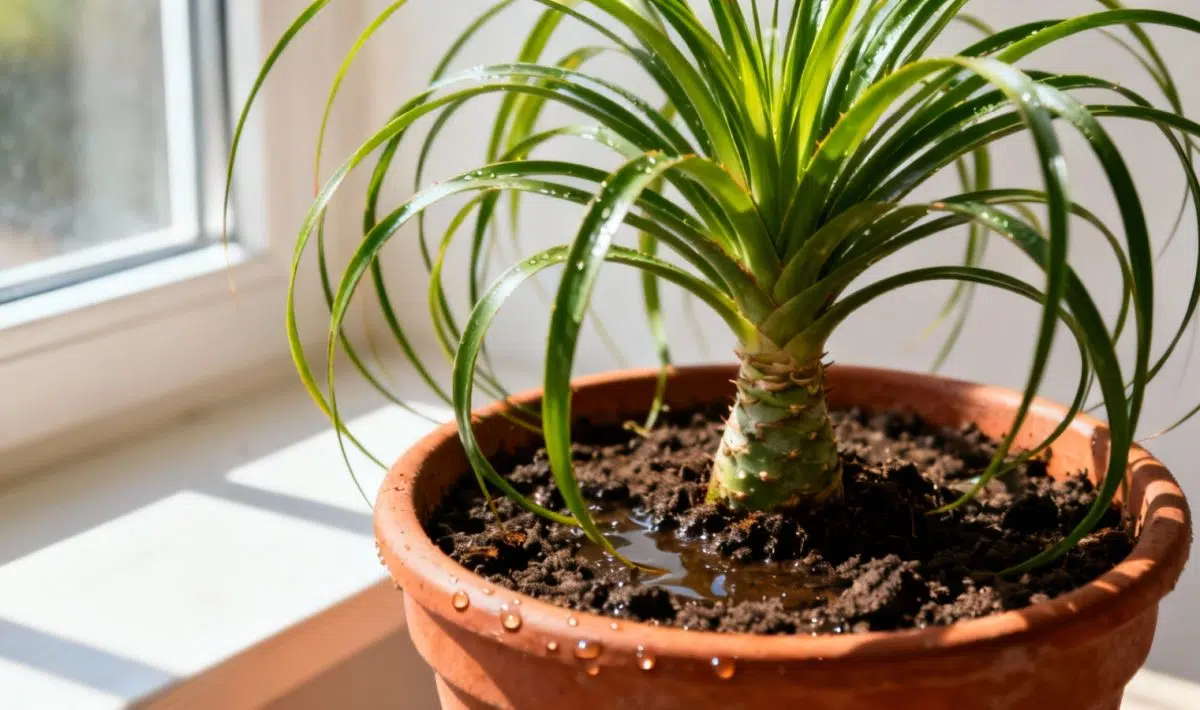
Understanding your ponytail palm’s unique watering needs
The ponytail palm, also known as the elephant foot tree, is actually a succulent that stores water in its distinctive bulbous trunk. This indoor plant has evolved to survive in arid conditions, which makes it perfect for busy plant parents who might forget the occasional watering session. Unlike many other houseplants you might have, this tree thrives with minimal water and can actually be damaged by too much attention.
You’ll want to understand that this plant’s water storage system means it can go weeks without a drink. The thick trunk acts like a natural reservoir, slowly releasing moisture to the rest of the plant when needed. This adaptation makes the ponytail palm an incredibly forgiving choice for indoor gardening.
Signs that tell you when to water
The best way to determine if your ponytail palm needs water is by checking the soil moisture. Stick your finger down into the soil about two inches deep – if it feels completely dry, it’s time for watering. The soil should be dry throughout the top portion before you add any water.
Watch for subtle changes in the leaves as well. When your plant needs water, the leaves might appear slightly less plump or the tips could start to look a bit brown. However, don’t wait for dramatic signs of distress, as prevention is always better than correction.
How often should you water your ponytail palm throughout the year
During the growing season from spring through early fall, you’ll typically need to water your ponytail palm every two to three weeks. This frequency can vary based on your home’s humidity, temperature, and the size of the pot you’re using. In smaller pots, the soil will dry out faster, while larger containers retain moisture longer.
Winter brings a different rhythm for your plant care routine. The cooler temperatures and lower light levels slow down your plant’s metabolism, so you can extend watering intervals to once a month or even longer. Many experienced plant parents find that their ponytail palms need water only every four to six weeks during the dormant winter period.
Factors that influence watering frequency
Several environmental conditions will affect how often your ponytail palm needs water. Higher temperatures and lower humidity levels will increase the plant’s water consumption, while cooler, more humid conditions slow it down. Air circulation from heating vents or fans can also dry out the soil more quickly.
The type of potting medium you use makes a significant difference too. Well-draining soil mixes with perlite or sand will dry out faster than heavy, moisture-retentive soils. For optimal results, choose a cactus or succulent potting mix that allows excess water to drain away quickly.
Proper watering techniques for healthy growth
When it’s time to water, give your ponytail palm a thorough soaking. Pour water slowly around the base of the plant until you see it draining from the bottom holes. This deep watering encourages the roots to grow strong and helps flush out any accumulated salts from fertilizers.
Always empty the drainage tray within an hour of watering. Standing water can quickly lead to root rot, which is one of the few things that can seriously harm this otherwise resilient plant. The goal is to wet the entire root ball thoroughly, then allow it to dry out completely before the next watering session.
Common mistakes that harm your plant
Overwatering represents the biggest threat to ponytail palms. Many well-meaning plant parents kill their trees with kindness, providing water on a fixed schedule rather than checking what the plant actually needs. Just like watering guidelines for African-lilies, each plant has its unique requirements that you’ll learn to recognize over time.
Another common error is using pots without drainage holes. This indoor plant absolutely must have a way for excess water to escape, or root rot will inevitably follow. Similarly, placing the pot in a decorative container that holds water creates the same problem – always ensure proper drainage for long-term plant health.
Recognizing overwatering and underwatering symptoms
Overwatered ponytail palms often develop soft, mushy trunks and yellowing leaves that fall off easily. The soil will smell sour or rotten, and you might notice fungal growth on the surface. If you catch these signs early, you can often save the plant by improving drainage and reducing watering frequency.
Underwatering symptoms are less dramatic but still worth noting. The leaves might become wrinkled or develop brown tips, and the trunk could appear slightly deflated. However, this plant tolerates drought much better than excess moisture, so err on the side of less water rather than more. Understanding these patterns helps with other houseplants too, such as knowing the proper care for Monstera obliqua that requires different attention.
Seasonal care adjustments
Spring brings renewed growth, so you’ll gradually increase watering frequency as temperatures warm up and daylight hours extend. This is also the perfect time to check if your plant needs repotting, which should be done every three to four years using fresh, well-draining soil.
Summer care focuses on monitoring moisture levels more frequently due to higher temperatures and increased evaporation. Place your ponytail palm near a bright window but protect it from direct afternoon sun that could scorch the leaves. Much like following watering tips for common hornbeam, consistency in observation leads to better plant health.
Creating the ideal growing environment
Your ponytail palm will thrive in bright, indirect light with good air circulation. While it can tolerate some direct sunlight, especially morning sun, too much intense light can stress the plant and increase water needs. A spot near an east or west-facing window often provides the perfect balance.
Temperature consistency helps maintain steady watering schedules. These plants prefer temperatures between 65-80°F during their active growing period. Avoid placing them near heating vents, air conditioning units, or drafty areas that create sudden temperature fluctuations.
Fertilizing and maintenance tips
Feed your ponytail palm sparingly with a diluted liquid fertilizer once or twice during the growing season. Too much fertilizer can actually harm the plant and alter its water requirements. A balanced, low-nitrogen fertilizer works best for maintaining healthy growth without encouraging excessive foliage that demands more water.
Regular maintenance involves removing any dead or damaged leaves and wiping the remaining foliage clean with a damp cloth. This not only keeps your plant looking its best but also allows you to spot any potential problems early. The same attention to detail applies when caring for shrubby cinquefoil plants and other houseplants in your collection.
Troubleshooting common ponytail palm problems
If your plant’s leaves are turning yellow or brown from the tips downward, this usually indicates either watering issues or low humidity. Try increasing the humidity around your plant with a pebble tray filled with water, or group it with other plants to create a more humid microclimate.
Slow growth isn’t necessarily a problem with ponytail palms, as they’re naturally slow-growing plants. However, if growth completely stops during the growing season, check your watering schedule, light conditions, and consider whether the plant might be root-bound and need repotting.
Long-term care success strategies
Keep a simple watering log for the first few months to help you understand your specific plant’s needs. Note the date you water, soil moisture level, and any changes you observe in the plant’s appearance. This record will help you establish the perfect routine for your growing conditions.
Remember that every home environment is different, and your ponytail palm’s needs might vary from general guidelines. Factors like your home’s humidity, heating system, and even the season can affect watering frequency. The same principle applies to other indoor plants, whether you’re learning best practices for Boston fern care or mastering other houseplant varieties.
Building confidence with your plant care routine
The most important thing to remember is that ponytail palms are incredibly forgiving plants. They’re sold in garden centers specifically because they tolerate neglect better than most houseplants. If you’re new to plant care, this tree makes an excellent choice for building your confidence and skills.
Start with a conservative watering approach and adjust based on your observations. It’s much easier to increase watering frequency than to recover from root rot caused by too much water. Trust your plant to communicate its needs through the soil moisture test and subtle visual cues. With experience, you’ll develop an intuitive sense for when your ponytail palm needs attention, much like understanding optimal watering for satin pothos and other popular houseplants.
This remarkable plant will reward your careful attention with years of steady growth and distinctive beauty. By focusing on proper drainage, checking soil moisture before watering, and adjusting your care routine seasonally, you’ll create the perfect environment for your ponytail palm to thrive as a stunning centerpiece in your indoor garden.
Allan is a lifelong gardening enthusiast who still gets excited when the first seedlings pop up in spring. With a deep love for nature and a hands-in-the-soil approach, he shares practical tips, plant discoveries, and clever tricks picked up over years of digging, planting, and observing. Whether you’re a new gardener or have a shed full of tools, Allan writes like a neighbor who’s always happy to swap cuttings and stories over the fence.
You can find more about Allan’s work on Malt or connect with him on LinkedIn.