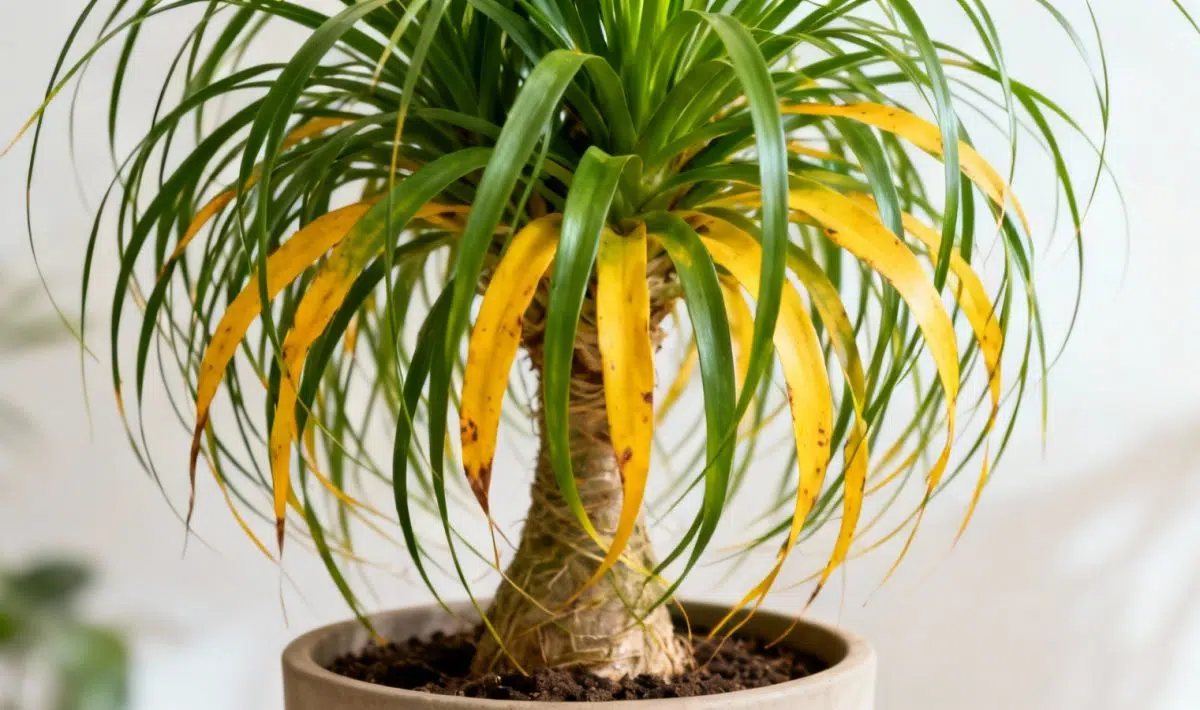
Why are my ponytail palm leaves turning yellow? Beaucarnea care tips
Nothing’s more disheartening than watching your beloved ponytail palm develop yellow leaves when it was thriving just weeks ago. These charming houseplants, scientifically known as Beaucarnea recurvata, are generally low-maintenance companions, but yellowing foliage often signals that something’s off with their care routine. The good news is that most causes are easily fixable once you identify the root problem.
Your ponytail palm craves bright, indirect light for optimal growth and vibrant green foliage. These plants naturally grow in sunny, tropical regions, so insufficient lighting is often the first culprit behind yellowing leaves. When your plant doesn’t receive adequate lumière, it begins to shed older leaves to conserve energy for new growth.
The best spot for your cheval de queue (as it’s known in French) is near a south or east-facing window where it can soak up plenty of bright, filtered sunlight. However, direct afternoon sun can actually scorch the leaves, causing them to turn yellow and crispy. If you notice your plant stretching toward the light source or developing pale, weak growth, it’s definitely asking for more illumination.
✅ Quick Checklist
Is the soil too wet or too dry?
Is the plant getting 6+ hours of sunlight daily?
Have you fertilized in the last 2 months?
Are there visible pests under the leaves?
Does the pot have adequate drainage?
🔥 FREE
📱
Diagnose your plant in one click!
AI instant diagnosis • Personalized solutions • 50,000+ species
Overwatering is by far the most common reason ponytail palms develop yellow, mushy leaves. These desert natives store water in their distinctive bulbous tronc, making them incredibly drought-tolerant. When you water too frequently, the roots become waterlogged and begin to rot, cutting off nutrient flow to the feuilles above.
The key is allowing the sol to dry out completely between waterings. During growing season, this typically means watering every 2-3 weeks, while winter watering can be reduced to once monthly. Before you water, stick your finger 2-3 inches into the soil – if it feels even slightly moist, wait a few more days.
On the flip side, severe underwatering can also cause yellowing, though this is less common with ponytail palmiers. When the plant becomes too dry, it sacrifices older leaves to preserve moisture for new growth. The difference is that underwatered plants typically show crispy, brown leaf tips rather than the soft, yellow leaves associated with overwatering.
Soil and drainage problems
Poor drainage is often linked to watering issues but deserves special attention. Standard potting mix retains too much moisture for these succulent-like plants, leading to root problems and yellowing foliage. Your ponytail palm needs a well-draining, sandy mix that allows excess water to flow freely through the pot.
Create the perfect soil blend by mixing regular potting soil with coarse sand, perlite, or small gravel in a 2:1 ratio. This mimics the rocky, fast-draining conditions these plantes experience in their native habitat. Additionally, ensure your pot has adequate drainage holes – without them, even the best soil mix won’t prevent water from pooling around the racines.
Root rot manifests as soft, black roots that smell unpleasant when you remove the plant from its pot. If you catch it early, you can trim away affected roots with sterile scissors and repot in fresh, well-draining soil. However, advanced root rot is often fatal, making prevention through proper drainage absolutely critical.
Environmental stress factors
Temperature fluctuations and humidity levels can stress your ponytail palm, resulting in yellow leaves. These tropical plants prefer consistent temperatures between 65-80°F and struggle with sudden changes. Cold drafts from air conditioning units or heating vents can shock the plant, while temperatures below 50°F can cause permanent damage.
While ponytail palms tolerate low humidity better than most houseplants, extremely dry indoor air (especially during winter) can contribute to leaf yellowing. However, avoid misting the leaves directly, as this can promote fungal issues. Instead, place a humidity tray nearby or run a humidifier in the room to maintain comfortable moisture levels around 40-50%.
Interestingly, similar yellowing patterns occur with other houseplants facing environmental stress. For instance, causes of yellowing honeysuckle leaves often relate to comparable watering and light issues, while reasons for yellow cat palm leaves frequently stem from overwatering problems.
✅ Quick Checklist
Is the soil too wet or too dry?
Is the plant getting 6+ hours of sunlight daily?
Have you fertilized in the last 2 months?
Are there visible pests under the leaves?
Does the pot have adequate drainage?
🔥 FREE
📱
Diagnose your plant in one click!
AI instant diagnosis • Personalized solutions • 50,000+ species
Though less common than watering problems, pests can certainly cause yellowing leaves on your Beaucarnea recurvata. Spider mites, scale insects, and mealybugs occasionally target these plants, especially when grown indoors with low humidity. These tiny invaders feed on plant juices, weakening the foliage and causing it to yellow and drop.
Check regularly for pest signs: fine webbing (spider mites), sticky honeydew deposits (scale), or white, cottony masses (mealybugs). Early detection makes treatment much easier – simply wipe affected areas with rubbing alcohol on a cotton swab, or spray with insecticidal soap solution. For severe infestations, you might need to isolate the plant and repeat treatments weekly until pests are eliminated.
Fungal diseases are rare on ponytail palms but can occur with poor air circulation and excessive moisture. Root rot is the most serious concern, while leaf spot diseases occasionally affect stressed plants. Prevention through proper watering, good drainage, and adequate spacing between plants is your best defense against these issues.
Fertilizer and nutrient considerations
Nutrient deficiencies rarely cause yellowing in ponytail palms since they’re adapted to poor soils, but over-fertilization definitely can. These slow-growing plants need minimal feeding – perhaps a diluted, balanced liquid fertilizer once or twice during the growing season. Excess engrais, particularly nitrogen-heavy formulations, can actually burn the roots and cause leaf yellowing.
If you suspect fertilizer burn, flush the soil thoroughly with plain water to remove excess salts. Allow the plant to recover for several weeks before resuming any feeding schedule. Remember, it’s always better to under-fertilize ponytail palms than to overdo it with plant food.
Recovery and prevention strategies
Once you’ve identified and addressed the underlying cause, your ponytail palm should gradually improve. Remove any severely yellowed or damaged feuilles with clean scissors to prevent energy waste and potential disease spread. However, don’t panic if recovery seems slow – these plants naturally grow at a leisurely pace, and new growth may take weeks or months to appear.
Moving forward, establish a consistent care routine that includes checking soil moisture before watering, providing bright indirect lumière, and maintaining stable environmental conditions. Most importantly, resist the urge to “help” your plant too much – ponytail palms thrive on benign neglect and prefer minimal interference once their basic needs are met.
With proper care, your Beaucarnea recurvata can be a stunning, long-lived addition to your home’s collection of houseplants. These resilient palmiers can live for decades indoors, rewarding patient gardeners with their unique architectural beauty and low-maintenance charm. The key is understanding their desert origins and providing care that mimics their natural growing conditions rather than treating them like typical tropical plants.
Allan is a lifelong gardening enthusiast who still gets excited when the first seedlings pop up in spring. With a deep love for nature and a hands-in-the-soil approach, he shares practical tips, plant discoveries, and clever tricks picked up over years of digging, planting, and observing. Whether you’re a new gardener or have a shed full of tools, Allan writes like a neighbor who’s always happy to swap cuttings and stories over the fence.
You can find more about Allan’s work on Malt or connect with him on LinkedIn.