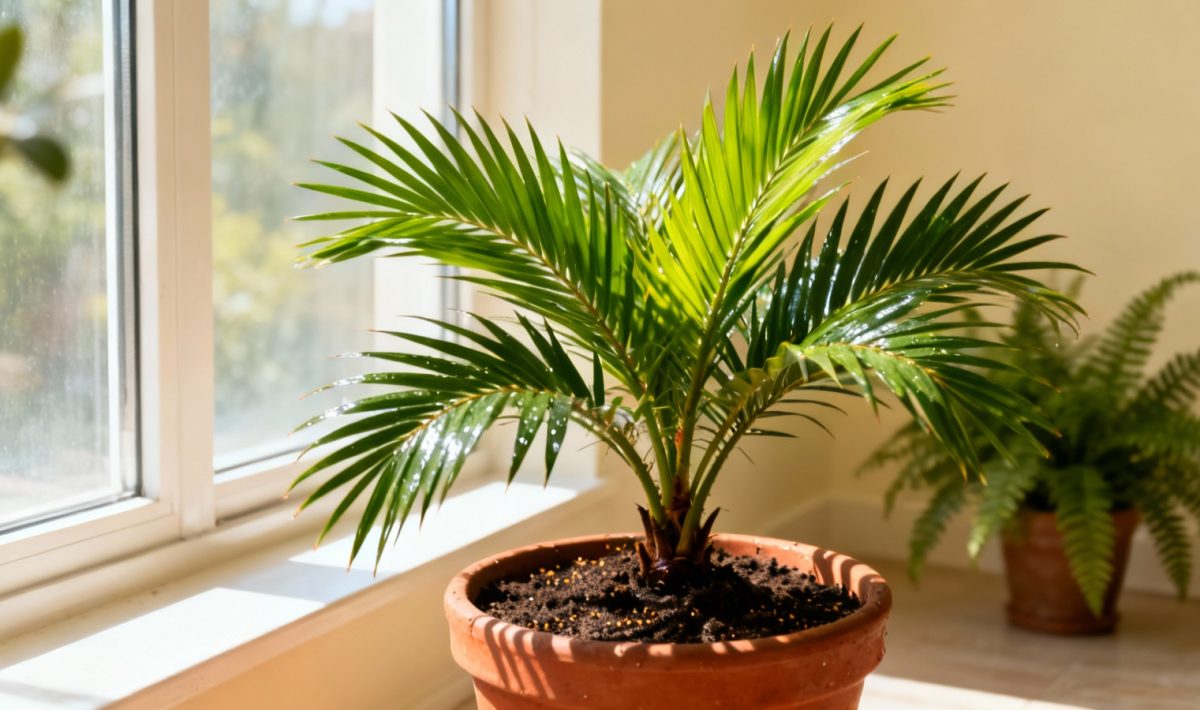
How much sunlight does Pygmy date palm need for healthy indoor growth
When you’re considering adding a Pygmy date palm to your indoor collection, understanding how much sunlight does Pygmy date palm need becomes crucial for success. The Phoenix roebelenii, commonly known as the pygmy date palm, has specific lighting requirements that can make the difference between a thriving palm and a struggling one.
Understanding the Phoenix roebelenii’s lighting preferences
The pygmy date palm naturally thrives in bright, indirect sunlight rather than harsh direct rays. In its native habitat, this miniature palm grows under the canopy of larger trees, receiving filtered light throughout the day. For optimal growth, your date palm needs approximately 6 hours of bright, indirect sunlight daily.
Unlike plants that crave intense direct sunlight, the Phoenix roebelenii performs best when placed near east or west-facing windows. These locations provide the perfect balance of morning or afternoon sun without the scorching midday rays that can damage the delicate fronds.
Direct vs indirect sunlight requirements
While the pygmy palm can tolerate some direct sunlight, prolonged exposure often leads to leaf burn and stress. The key is understanding the difference between beneficial and harmful sun exposure for your date palm.
Beneficial lighting includes morning sun until 10 AM and late afternoon sun after 4 PM. These gentler rays provide energy without causing heat stress. However, avoid placing your palm in direct midday sun, which can quickly scorch the fronds and stunt growth.
Indoor conditions typically require 8 to 12 hours of artificial lighting if natural light is insufficient. LED grow lights positioned 12-18 inches above the palm work well for supplementing natural sunlight during darker months.
Signs of improper lighting conditions
Recognizing the symptoms of incorrect lighting helps you adjust your palm’s position before serious damage occurs. Too little light causes yellowing lower fronds, slow growth, and a generally weak appearance.
Conversely, excessive direct sunlight creates brown, crispy frond tips and an overall bleached appearance. The palm may also drop leaves more frequently when stressed by intense light.
Just as understanding sunlight requirements for painted-leaf begonia helps with proper plant care, monitoring your pygmy palm’s response to light changes guides optimal placement decisions.
Creating the ideal lighting environment
Setting up the perfect lighting conditions for your Phoenix roebelenii involves more than just finding a bright spot. Consider the seasonal changes in light intensity and duration when positioning your palm.
During summer months, move your palm slightly away from south-facing windows to prevent overheating. In winter, you might need to relocate it closer to windows or add supplemental lighting to maintain healthy growth.
Indoor placement strategies
The best indoor locations for pygmy date palms include areas with consistent, moderate light levels. Living rooms with large windows, bright hallways, and conservatories often provide ideal conditions.
Avoid placing your palm in dark corners, basements, or rooms without windows. These locations lack sufficient light for photosynthesis and lead to declining health over time.
Consider rotating your palm weekly to ensure even light distribution across all fronds. This simple practice prevents one side from becoming leggy while the other remains compact.
Much like how optimal sunlight for common borage varies by location, your pygmy palm’s needs may change based on your specific indoor environment and regional climate.
Supplemental lighting options
When natural light proves insufficient, artificial lighting becomes essential for maintaining healthy growth. Full-spectrum LED lights provide the best results without generating excessive heat.
Position grow lights 12-18 inches above your palm and run them for 10-12 hours daily during winter months. Timer systems help maintain consistent lighting schedules without daily attention.
Fluorescent lights work as budget-friendly alternatives, though they require closer positioning and longer daily operation compared to LEDs.
Growing pygmy date palms from seeds
Starting your own Phoenix roebelenii from seeds offers the satisfaction of watching your palm develop from the beginning. Fresh, high-quality seeds provide the best germination rates and healthier seedlings.
When purchasing seeds, look for suppliers offering organic, recently harvested specimens. The prix for quality pygmy date palm seeds typically ranges from $15-30 for small quantities, with bulk options available for enthusiasts planning multiple plantings.
Germination requirements and care
Successful germination requires warm, humid conditions combined with filtered light. Soak seeds in warm water for 24-48 hours before planting to soften the hard outer shell.
Plant seeds in well-draining soil mix, covering them lightly with approximately half an inch of growing medium. Maintain soil temperature between 80-85°F for optimal sprouting conditions.
During germination, keep soil consistently moist but not waterlogged. Provide bright, indirect light once seedlings emerge, gradually increasing exposure as they strengthen.
Understanding light needs early helps establish strong root systems and healthy growth patterns. Similar to how mango tree sunlight needs influence their development, proper lighting during the seedling stage sets the foundation for lifelong palm health.
Where to purchase quality seeds
Reputable online retailers, specialty nurseries, and palm enthusiast communities offer the best sources for authentic Phoenix roebelenii seeds. Read customer reviews and verify seller ratings before making purchases.
Local garden centers sometimes stock palm seeds, though selection may be limited compared to online options. Building relationships with local growers can provide access to fresh, locally-adapted specimens.
Consider purchasing from multiple sources to test germination rates and genetic diversity. This approach increases your chances of successful propagation and healthier mature palms.
Long-term care and maintenance tips
Maintaining proper lighting conditions throughout your palm’s life ensures continued health and attractive appearance. Regular monitoring and adjustments prevent common problems associated with inadequate illumination.
As your pygmy date palm matures, its light tolerance may increase slightly, but the preference for bright, indirect sunlight remains constant. Larger palms can handle brief periods of direct morning sun better than young specimens.
Seasonal adjustments and considerations
Adapting your care routine to seasonal light changes helps maintain consistent growth rates year-round. Winter months often require repositioning or supplemental lighting to compensate for shorter days.
Spring brings opportunities to gradually increase light exposure as your palm emerges from winter dormancy. Summer requires vigilance against excessive heat and intensity that can stress indoor plants.
Fall preparation involves gradually reducing light intensity to help your palm adjust to approaching winter conditions. This transition period supports healthy dormancy cycles.
Just as learning about garlic mustard sunlight requirements helps with garden planning, understanding your pygmy palm’s seasonal needs ensures year-round success.
The Phoenix roebelenii remains one of the most rewarding indoor palms when provided with appropriate lighting conditions. By understanding how much sunlight does Pygmy date palm need and implementing proper care practices, you’ll enjoy years of tropical beauty in your home. Whether you’re starting from seeds or caring for an established plant, consistent attention to lighting requirements forms the foundation of successful pygmy date palm cultivation.
Allan is a lifelong gardening enthusiast who still gets excited when the first seedlings pop up in spring. With a deep love for nature and a hands-in-the-soil approach, he shares practical tips, plant discoveries, and clever tricks picked up over years of digging, planting, and observing. Whether you’re a new gardener or have a shed full of tools, Allan writes like a neighbor who’s always happy to swap cuttings and stories over the fence.
You can find more about Allan’s work on Malt or connect with him on LinkedIn.