
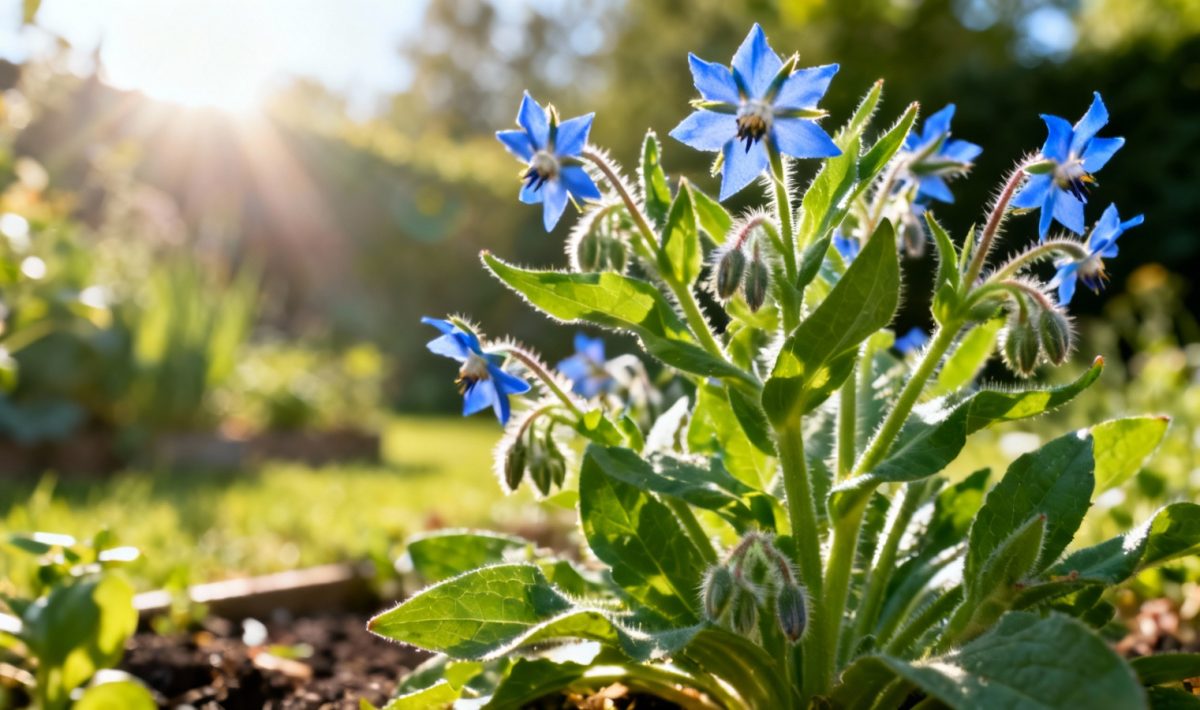
Understanding common borage and its sunlight requirements
Common borage (Borago officinalis) stands out as a delightful herb that can transform any garden with its vibrant blue flowers and cucumber-scented leaves. This Mediterranean native has captured the hearts of gardeners worldwide, but understanding how much sunlight does common borage need remains crucial for successful cultivation. The plant thrives best with proper light exposure, making it essential to provide the right conditions from seed to harvest.
Originally from the Mediterranean region, borage has adapted to various climates while maintaining its preference for abundant sunshine. This annual herb produces edible flowers that are highly prized in culinary applications, while its leaves offer medicinal properties. The quality of both flowers and foliage depends significantly on receiving adequate light throughout the growing season.
For optimal growth, common borage requires a minimum of 6 hours of direct sunlight daily, though it can tolerate partial shade conditions with 3-6 hours of sun exposure. Plants grown in full sun develop stronger stems, more vibrant flowers, and enhanced flavor profiles compared to those grown in shadier locations.
Sunlight needs throughout different growth stages
Germination and seedling development
Starting borage from seeds requires careful attention to lighting conditions. Fresh seeds germinate best when exposed to bright, indirect light rather than intense direct sunlight. A warm location receiving morning sun but protected from harsh afternoon rays provides ideal germination conditions. The soil temperature should remain between 60-70°F for optimal results.
During the first two weeks after germination, seedlings benefit from gradually increasing light exposure. This process, known as hardening off, helps prevent shock when transplanting outdoors. Young plants that receive consistent, moderate sunlight develop stronger root systems and more robust foliage.
Just as different plants have varying light needs, understanding specific requirements helps ensure success. For comparison, exploring the lighting preferences of other garden favorites can provide valuable insights into proper plant care techniques.
Young plant establishment
Once borage seedlings reach 3-4 inches tall, they can handle more direct sunlight exposure. At this stage, plants benefit from morning sun combined with afternoon protection, especially in regions with intense summer heat. The ideal placement provides eastern or southeastern exposure where plants receive 4-6 hours of direct morning light.
Young borage plants show remarkable adaptability to different light conditions. However, insufficient sunlight during this critical growth phase can lead to weak, spindly stems and reduced flower production. Gardeners should monitor their plants closely for signs of stress, including yellowing leaves or elongated growth patterns.
Much like the considerations for sunlight requirements for mango trees, borage plants need consistent light exposure to develop properly. Providing stable conditions during establishment sets the foundation for healthy mature plants.
Mature plant maintenance
Adult borage plants demonstrate impressive tolerance for full sun conditions, thriving with 6-8 hours of direct sunlight daily. These mature specimens produce the most abundant flower displays when grown in locations receiving maximum light exposure. The herb’s natural Mediterranean heritage makes it well-suited to sunny, warm conditions.
However, in extremely hot climates where temperatures regularly exceed 85°F, some afternoon shade can prevent stress and extend the flowering period. Plants grown in consistently high-light conditions may require more frequent watering to maintain proper moisture levels in the soil.
Optimizing light conditions for best results
Choosing the perfect garden location
Selecting an appropriate planting site determines the success of your borage cultivation. The best locations offer morning sun exposure with some protection from intense afternoon heat. South-facing gardens typically provide excellent conditions, though eastern exposures work well in hotter regions.
Consider the surrounding landscape when planning your borage garden. Tall plants or structures that cast shadows can significantly impact light availability throughout the day. The goal is to provide consistent, adequate illumination without creating stress from excessive heat exposure.
Garden design principles that work for herbs like borage also apply to other sun-loving plants. Understanding optimal sunlight for garlic mustard can help create comprehensive planting plans that meet various species’ needs.
Indoor cultivation considerations
Growing borage indoors requires careful attention to artificial lighting requirements. Standard household lighting rarely provides sufficient intensity for optimal growth, making supplemental grow lights necessary for indoor cultivation. Full-spectrum LED lights positioned 12-18 inches above plants work effectively for this purpose.
Indoor plants need 12-14 hours of artificial light daily to compensate for lower intensity compared to natural sunlight. Rotating plants regularly ensures even light distribution and prevents one-sided growth patterns. Window cultivation works best in south-facing locations with unobstructed light access.
The principles of indoor light management apply across many plant types, from herbs to more exotic species like light needs for Aphrodite’s phalaenopsis, each requiring specific intensity levels for optimal development.
Seasonal adjustments and care
Borage’s lighting needs change throughout the growing season as daylight hours and intensity fluctuate. Spring plantings benefit from gradually increasing sun exposure as temperatures warm and days lengthen. Summer care may require afternoon shade in extremely hot regions to prevent stress and bolting.
Fall-planted borage can continue producing flowers well into autumn with adequate light exposure. Shorter days and lower sun angles mean plants may need more direct exposure to maintain vigorous growth. Cold frames or season extension techniques help maximize available light during cooler months.
Many flowering plants share similar seasonal light adaptations. Garden planning that considers species like sunlight for Lady banks’s rose alongside herbs creates year-round interest while meeting diverse lighting requirements.
Recognizing light stress symptoms
Too much intense sunlight can cause borage leaves to develop yellow or brown edges, particularly during hot summer days. Plants may also show signs of wilting despite adequate soil moisture when exposed to excessive light intensity. These symptoms indicate the need for temporary shade during peak sun hours.
Conversely, insufficient light creates different problems including elongated stems, pale foliage, and reduced flower production. Plants growing in too much shade often develop weak, spindly growth that makes them susceptible to wind damage and pest problems.
Understanding light-related stress helps distinguish between lighting issues and other cultural problems. Plants receiving appropriate illumination maintain compact growth, vibrant green foliage, and abundant flower production throughout the season.
Solutions for challenging growing conditions
Gardens with limited sun exposure can still successfully grow borage with some modifications. Reflective mulches or light-colored surfaces help increase available light intensity in partially shaded areas. Strategic pruning of nearby trees or shrubs may improve light penetration to garden beds.
Container growing offers flexibility for optimizing light exposure throughout the day. Pots can be moved to follow available sunlight or relocated during extreme weather conditions. This mobility makes container cultivation particularly valuable for gardeners with challenging site conditions.
Similar adaptive strategies work for various garden plants facing light challenges. Learning from approaches used with shade-tolerant species like ideal sunlight for old man’s beard can inspire creative solutions for optimizing growing conditions.
Maximizing flower and herb production
Proper lighting directly impacts both flower quantity and foliage quality in borage plants. Maximum flower production occurs when plants receive 6-8 hours of direct sunlight daily, combined with adequate water and nutrients. The vibrant blue flowers that make borage so attractive develop their best color under optimal light conditions.
Regular harvesting of leaves and flowers encourages continued production throughout the growing season. Plants grown in ideal lighting conditions can provide fresh herbs and edible flowers for months when properly maintained. The cucumber-scented leaves develop their strongest flavor when grown under appropriate sun exposure.
Successful cultivation requires balancing multiple factors, but providing adequate sunlight remains fundamental to achieving excellent results. With proper attention to lighting needs, borage can become a reliable and productive addition to any herb garden, offering both culinary and ornamental value throughout the growing season.

Allan is a lifelong gardening enthusiast who still gets excited when the first seedlings pop up in spring. With a deep love for nature and a hands-in-the-soil approach, he shares practical tips, plant discoveries, and clever tricks picked up over years of digging, planting, and observing. Whether you’re a new gardener or have a shed full of tools, Allan writes like a neighbor who’s always happy to swap cuttings and stories over the fence.
You can find more about Allan’s work on Malt or connect with him on LinkedIn.


