
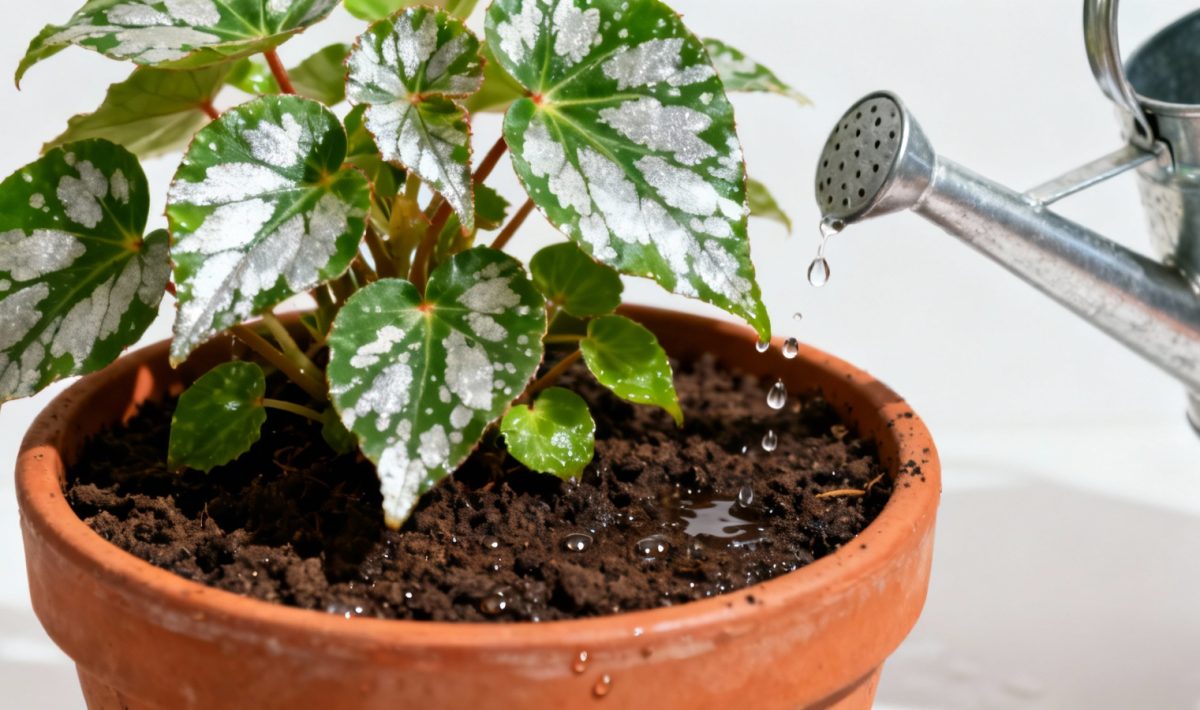
Understanding your Angel’s-wings watering needs
Angel’s-wings begonias are stunning houseplants that will reward you with spectacular foliage when you get their watering just right. These plants are from tropical regions, so they love consistent moisture but absolutely hate waterlogged soil. The key is finding that sweet spot where your Angel’s-wings stays happy all year long.
Your Angel’s-wings needs water when the top inch of soil feels dry to the touch. This simple test will become your best friend for keeping these beautiful plants healthy. During the growing season, this typically means watering once or twice a week, but you should always check the soil first rather than following a strict schedule.
The power of proper watering shows in the glossy, spotted leaves that make Angel’s-wings so popular. When these plants get consistent moisture without being soggy, they develop that signature silver-spotted pattern that catches light beautifully in any home setting.
Signs your Angel’s-wings needs water
Learning to read your plant’s signals will help you water at exactly the right time. Drooping leaves are an early sign that your Angel’s-wings is getting thirsty. The soil surface will also pull away slightly from the pot edges when it’s time to add water.
However, don’t wait until the leaves start wilting dramatically. By then, your plant is stressed and may drop some of its beautiful foliage. Instead, develop a routine of checking the soil every few days with your finger.
Seasonal watering schedules for Angel’s-wings
Spring and summer are when your Angel’s-wings will be most active and thirsty. During these warm months, you’ll likely need to water every 5-7 days, depending on your home’s temperature and humidity levels. The plant is actively growing and producing new leaves, so it uses water more quickly.
As autumn arrives, you can gradually reduce watering frequency. Your Angel’s-wings enters a slower growth phase, so it won’t need as much moisture. Check the soil every 7-10 days and water only when the top inch is dry.
Winter calls for the most careful approach to watering. Your Angel’s-wings may only need water every 10-14 days during the coldest months. The combination of lower light and cooler temperatures means the plant processes water much more slowly.
Adjusting for your home environment
Every home is different, and your Angel’s-wings will respond to the specific conditions you provide. Homes with forced-air heating may dry out plants faster, while naturally humid environments might extend the time between waterings.
Room temperature plays a huge role in how often you’ll water. Warmer rooms increase evaporation and plant metabolism, while cooler spaces slow everything down. Pay attention to these factors rather than blindly following a calendar schedule.
If you’re also growing other moisture-loving plants, you might find value in learning about caring for china asters effectively, which have similar humidity preferences.
Water quality matters for Angel’s-wings
The type of water you use can make a significant difference in your Angel’s-wings’ health. Tap water that’s high in chlorine or fluoride can cause brown leaf tips and overall plant stress. If your tap water is heavily treated, let it sit out overnight before using it.
Rainwater is fantastic for Angel’s-wings when you can collect it. This natural option is free from chemicals and provides the soft water these plants prefer. Many experienced growers swear by rainwater for keeping their Angel’s-wings looking their absolute best.
Distilled water is another excellent choice, especially if your tap water is very hard. While it costs a bit more, the investment shows in healthier, more vibrant foliage that maintains its striking silver patterns.
Room temperature water is always best for your Angel’s-wings. Cold water can shock the roots, while hot water can damage them. Fill your watering can and let it reach room temperature before using it on your plants.
Watering techniques that work
Water your Angel’s-wings slowly and thoroughly until you see water draining from the bottom holes. This ensures the entire root system gets moisture and helps flush out any salt buildup from fertilizers.
Always empty the drainage tray within 30 minutes of watering. Standing water is one of the fastest ways to kill an Angel’s-wings through root rot. These plants need good drainage to stay healthy long-term.
For gardeners managing multiple watering schedules, understanding different plant needs helps. You might also benefit from learning about watering your parlor palm correctly if you’re building an indoor plant collection.
Common watering mistakes to avoid
Overwatering is the number one killer of Angel’s-wings begonias. These plants will quickly develop root rot if they sit in soggy soil. Yellow leaves that fall off easily are often a sign you’re being too generous with the watering can.
On the flip side, letting your Angel’s-wings get bone dry will stress the plant and may cause leaf drop. The goal is consistent moisture, not extreme swings between wet and dry conditions.
Using a pot without drainage holes is another common mistake. Angel’s-wings absolutely need proper drainage to thrive. If you love a particular decorative pot without holes, use it as a cache pot with a properly draining inner container.
Watering on a rigid schedule without checking soil moisture leads to problems. Plants don’t follow human calendars, and their water needs change with seasons, weather, and growth cycles.
Monitoring soil moisture effectively
The finger test is simple but effective for checking soil moisture. Stick your finger about an inch deep into the soil. If it feels dry, it’s time to water. If it’s still moist, wait a day or two and check again.
Moisture meters can be helpful tools, especially when you’re learning. These inexpensive devices take the guesswork out of soil moisture and help you develop better watering instincts over time.
For those managing diverse plant collections, understanding various moisture needs is crucial. Learning about tips for watering Pontic rhododendrons can provide insights into different watering approaches for various plant types.
Creating the perfect growing environment
Humidity plays a huge role in how often your Angel’s-wings will need water. These plants love humidity levels around 50-60%, which helps keep their leaves looking glossy and healthy. Low humidity means you’ll need to water more frequently.
Proper air circulation helps prevent fungal issues that can arise from consistently moist soil. A small fan on low speed can provide gentle air movement that benefits your Angel’s-wings without creating drafts that dry out the soil too quickly.
The size of your pot affects watering frequency too. Smaller pots dry out faster than larger ones, so you’ll need to check them more often. However, don’t go too large with the pot size, as excess soil can stay wet too long and cause root problems.
Light levels influence how much water your Angel’s-wings uses. Plants in bright, indirect light will process water faster than those in lower light conditions. Adjust your watering schedule accordingly as seasons change and light levels shift.
Special considerations for different seasons
During hot summer weather, your Angel’s-wings may need extra attention. Indoor plants can suffer when temperatures spike, just like outdoor plants. For insights into extreme weather watering, consider reading about watering tomatoes during a heatwave for perspective on plant stress management.
Winter heating systems can create challenging conditions for houseplants. Forced-air heat can dry out both the air and soil quickly, while radiator heat can create localized dry spots. Monitor your Angel’s-wings more closely during heating season.
Spring growth spurts may catch you off guard with increased water needs. As your Angel’s-wings emerges from winter dormancy, it will gradually increase its water consumption. Be ready to adjust your watering routine as new growth appears.
Long-term care strategies
Developing a consistent care routine will help your Angel’s-wings thrive for years. This includes not just watering, but also monitoring for pests, rotating the plant for even growth, and adjusting care as the plant matures.
Keep a simple plant journal noting when you water and any observations about your Angel’s-wings’ condition. Over time, you’ll see patterns that help you perfect your watering schedule. This record becomes invaluable as seasons change.
Understanding different plant care principles helps you become a better overall gardener. If you’re expanding your knowledge, learning about proper care for sago palms can teach you about plants with completely different water needs.
Regular repotting every 1-2 years keeps your Angel’s-wings healthy and may change its watering needs. Fresh potting soil drains differently than old, compacted soil, so be ready to adjust your routine after repotting.
Troubleshooting common issues
Brown leaf edges usually indicate either low humidity or water quality issues. Increasing humidity around your Angel’s-wings or switching to filtered water often solves this problem quickly.
If your Angel’s-wings is consistently dropping leaves, review both your watering schedule and the plant’s environment. Stress from irregular watering, temperature changes, or poor light can all cause leaf drop.
For gardeners dealing with multiple flowering plants, understanding bloom-specific needs helps. Reading about ensuring vibrant black-eyed susans provides perspective on supporting plants through flowering periods.
Remember that your Angel’s-wings will reward consistent, thoughtful care with stunning foliage that brings natural beauty to your home all year round. With proper watering and attention to its needs, this remarkable plant will become a long-term centerpiece of your indoor garden.

Allan is a lifelong gardening enthusiast who still gets excited when the first seedlings pop up in spring. With a deep love for nature and a hands-in-the-soil approach, he shares practical tips, plant discoveries, and clever tricks picked up over years of digging, planting, and observing. Whether you’re a new gardener or have a shed full of tools, Allan writes like a neighbor who’s always happy to swap cuttings and stories over the fence.
You can find more about Allan’s work on Malt or connect with him on LinkedIn.


