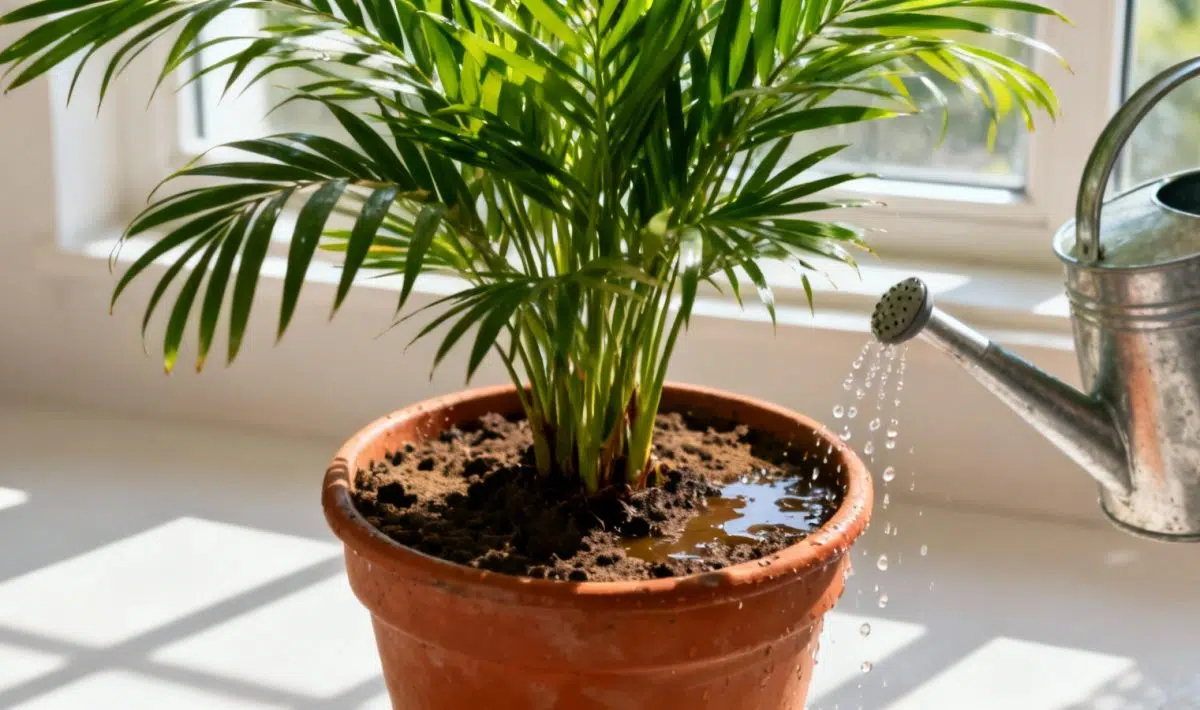
How often should you water your parlor palm for healthy growth
Your parlor palm is one of the most forgiving houseplants you can grow, but getting the watering right makes all the difference between a thriving plant and one that’s struggling. How often should you water your parlor palm? The answer isn’t as straightforward as you might think, since several factors influence your plant’s water needs throughout the year.
Understanding your parlor palm’s water requirements
Parlor palms naturally grow in the humid understories of Central American rainforests, where they receive consistent moisture without sitting in waterlogged soil. This means your indoor plant thrives with a moderate watering approach that mimics these natural conditions. The key is maintaining soil that stays slightly moist but never soggy.
During the growing season from spring through early fall, you’ll typically need to water your parlor palm once or twice per week. However, this frequency can vary significantly based on your home’s humidity, temperature, and the size of your pot. Rather than following a strict schedule, it’s better to check the soil moisture regularly using your finger as a natural gauge.
Factors that influence watering frequency
Several environmental conditions will affect how quickly your parlor palm’s soil dries out. Bright indirect light increases the plant’s metabolic rate and water uptake, while low light conditions slow down these processes considerably. Similarly, when humidity levels drop below 40%, your plant will lose moisture more rapidly through its leaves.
The type of pot and drainage system you use also plays a crucial role. Terra cotta pots allow soil to dry faster than plastic containers, while proper drainage holes prevent water from accumulating at the bottom. Some gardeners find success with techniques similar to those used for watering your sago palm properly, adapting the frequency based on seasonal changes.
Temperature fluctuations throughout your home can create microclimates that affect water needs. Areas near heating vents or air conditioning units will dry out faster, while cooler spots retain moisture longer. Each location requires slight adjustments to your watering routine.
Seasonal watering adjustments
Winter brings the most significant changes to your parlor palm’s water requirements. As daylight hours decrease and indoor heating systems reduce humidity, your plant enters a slower growth phase. During these months, you might only need to water every 10-14 days, depending on your home’s conditions.
Summer presents different challenges, especially during periods of extreme heat. Just as with caring for tomatoes during heatwaves, indoor plants can experience stress from excessive temperatures that increase their water consumption. You may find yourself watering more frequently, sometimes every 4-5 days if conditions are particularly dry.
Spring and fall typically offer the most stable watering conditions. These transitional seasons allow you to establish a consistent routine that works well for most parlor palms, usually settling into that once or twice weekly pattern.
Proper watering techniques for optimal health
The method you use to water your parlor palm is just as important as the frequency. Always water thoroughly until you see excess draining from the bottom holes, ensuring the entire root system receives moisture. This deep watering encourages healthy root development and prevents salt buildup in the soil.
Use room temperature water to avoid shocking the roots, and consider letting tap water sit overnight to allow chlorine to evaporate. Some growers prefer filtered water, especially in areas with hard water that can leave mineral deposits on leaves over time.
Never let your parlor palm sit in standing water for more than an hour. Empty saucers and drip trays promptly to prevent root rot, which is one of the most common problems with indoor palms. The goal is to provide adequate moisture while maintaining excellent drainage.
Recognizing signs of watering problems
Learning to read your plant’s signals will help you fine-tune your watering schedule. Overwatered parlor palms often develop yellowing fronds that start from the bottom of the plant and work their way up. The soil may have a musty smell, and you might notice small fungus gnats hovering around the pot.
Underwatered plants show different symptoms, including brown, crispy leaf tips and fronds that feel dry to the touch. The soil will pull away from the edges of the pot, and new growth may appear stunted or pale. These signs typically develop gradually, giving you time to adjust your watering routine.
Healthy parlor palms maintain vibrant green fronds with no browning or yellowing, except for the occasional old frond that naturally dies back. The soil should feel slightly moist an inch below the surface, similar to the moisture needs of optimal watering for Pontic rhododendrons in outdoor gardens.
Tools and techniques for monitoring soil moisture
Investing in a few simple tools can take the guesswork out of watering your parlor palm. A basic moisture meter provides accurate readings of soil moisture levels at different depths, helping you understand when the root zone truly needs water. These devices are particularly helpful for beginners who haven’t yet developed the confidence to rely on finger testing alone.
For a more natural approach, insert your index finger about two inches into the soil near the edge of the pot. If the soil feels dry at this depth, it’s time to water. This method works well for most indoor plants and becomes second nature with practice.
Some growers prefer the weight method, lifting their pots to gauge moisture content. A well-watered pot feels noticeably heavier than one that needs watering. This technique requires familiarity with your specific plant and container, but it’s incredibly reliable once you develop the feel for it.
Creating the ideal environment for your parlor palm
Proper watering goes hand in hand with providing optimal growing conditions. Place your parlor palm in bright, indirect light where it can photosynthesize efficiently without the stress of direct sun exposure. North or east-facing windows typically provide perfect lighting conditions for these adaptable plants.
Maintain humidity levels between 40-50% to reduce water loss through the leaves and create a more comfortable environment for your plant. You can achieve this with humidity trays, room humidifiers, or by grouping plants together to create a beneficial microclimate.
Good air circulation helps prevent fungal problems while allowing the soil surface to dry appropriately between waterings. However, avoid placing your parlor palm directly in the path of heating or cooling vents, which can create extreme fluctuations in moisture and temperature. Many of the same principles that help keeping black-eyed susan flourishing in outdoor gardens apply to indoor palm care, particularly regarding consistent moisture management.
With proper attention to watering frequency and technique, your parlor palm will reward you with years of lush, tropical beauty in your home. Remember that each plant develops its own rhythm based on your unique growing conditions, so stay observant and adjust your care routine as needed to keep your palm thriving.
Allan is a lifelong gardening enthusiast who still gets excited when the first seedlings pop up in spring. With a deep love for nature and a hands-in-the-soil approach, he shares practical tips, plant discoveries, and clever tricks picked up over years of digging, planting, and observing. Whether you’re a new gardener or have a shed full of tools, Allan writes like a neighbor who’s always happy to swap cuttings and stories over the fence.
You can find more about Allan’s work on Malt or connect with him on LinkedIn.