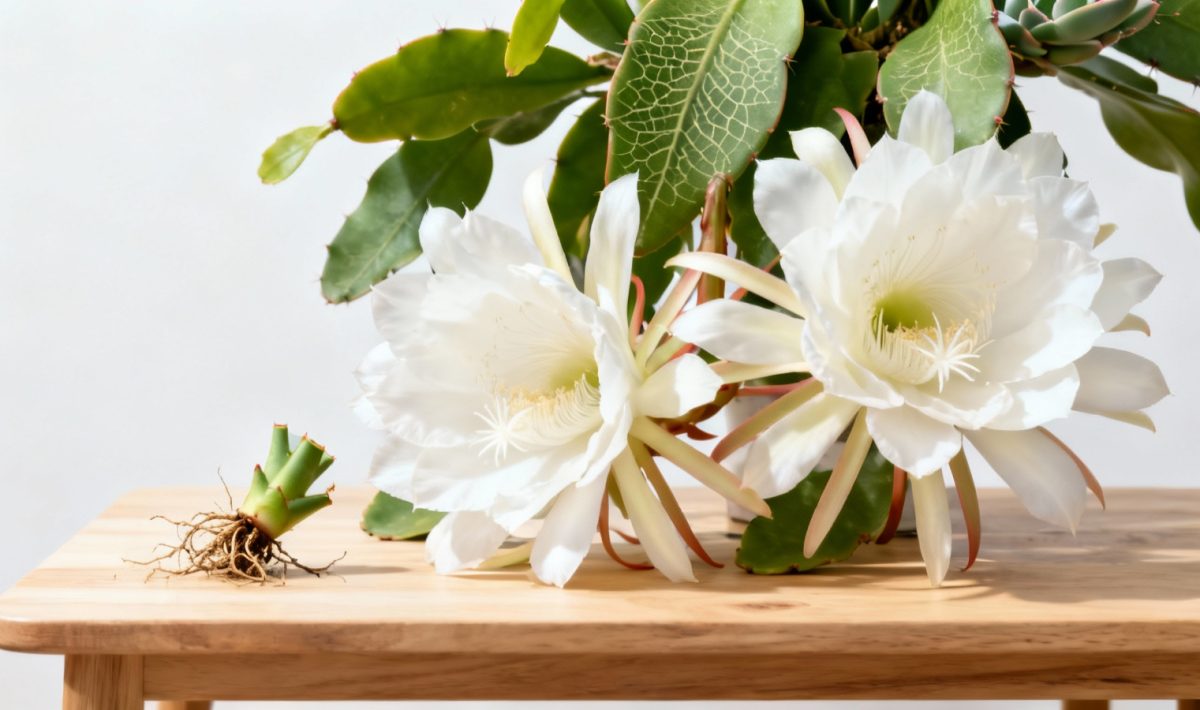
Queen of the night – Epiphyllum oxypetalum care, characteristics and propagation tips
The Queen of the night – Epiphyllum oxypetalum stands as one of the most fascinating plants you can add to your collection. This remarkable nocturnal cactus captivates gardeners with its spectacular white flowers that bloom for just one night. With proper care and attention, this extraordinary plant will reward you with breathtaking displays that justify its royal nickname.
The Queen of the night belongs to the epiphyllum family and originates from the tropical regions of Central America. Unlike typical desert cacti, this epiphyte naturally grows on trees in humid forests. Its flattened stems, often mistaken for leaves, can reach lengths of 30 to 60 cm and create a beautiful cascading effect perfect for hanging baskets.
This unique plant produces enormous fragrant flowers that can measure up to 30 cm in diameter. These white blooms open exclusively at night and typically last only one or two days, making each flowering event truly special. The plant usually begins flowering after 3 to 5 years of growth when mature enough to support the energy-intensive blooming process.
Essential care requirements
Light and positioning
Your Queen of the night thrives with bright, indirect light for 6 to 8 hours daily during the growing season. Position it near a south-facing window with filtered light or use a sheer curtain to prevent direct sunlight exposure. Direct sun can cause unsightly burns on the sensitive stem surfaces, permanently damaging your plant’s appearance.
Indoor cultivation works exceptionally well with normal household humidity levels between 50-60%. However, you can increase humidity around the plant by placing it on a pebble tray filled with water or grouping it with other humidity-loving plants.
Watering and moisture management
Water deeply when the top 2-5 cm of soil feels dry to the touch. Allow excess water to drain completely, as soggy conditions quickly lead to root rot in this species. During winter months, reduce watering frequency significantly to encourage the plant’s natural dormancy period.
Signs of overwatering include yellowing stems, soft spots, or a musty smell from the soil. Underwatered plants show wrinkled, deflated-looking stems and may drop flower buds prematurely. Just as care tips for evergreen azaleas emphasize proper moisture balance, the Queen of the night requires consistent but not excessive watering.
Soil and fertilization
Use a well-draining potting mix specifically designed for epiphytes or cacti. A combination of regular potting soil, perlite, and orchid bark creates an ideal growing medium. The soil should retain some moisture while allowing excess water to drain freely.
Feed your plant with a balanced, diluted fertilizer every 4-6 weeks during the growing season from spring through early fall. Reduce or eliminate fertilization during winter when the plant enters its rest period. Excessive fertilization can promote leafy growth at the expense of flower production.
Cultivation techniques for success
Temperature requirements
Maintain temperatures between 18-24°C during the day and allow for a slight drop at night. This temperature variation mimics natural conditions and can help trigger flowering. Avoid exposing your plant to temperatures below 10°C, which can cause permanent damage or death.
The plant tolerates typical indoor temperatures year-round, making it an excellent houseplant choice. However, a cool period during winter months with temperatures around 15-18°C can encourage better flowering in the following season.
Repotting and container selection
Repot your Queen of the night every 2-3 years or when it becomes rootbound. Choose a container slightly larger than the current one, as these plants prefer being somewhat pot-bound. Ensure the new pot has adequate drainage holes to prevent water accumulation.
Spring represents the ideal time for repotting, just before the active growing season begins. Handle the plant carefully during this process, as the stems can be brittle and may break if bent too forcefully.
Propagation methods
Stem cutting propagation
The easiest propagation method involves taking stem cuttings during the growing season. Cut a healthy stem section 15-20 cm long using clean, sharp scissors or pruning shears. Allow the cutting to dry for 2-3 days until the cut end forms a callus.
Plant the callused cutting in a well-draining potting mix, burying about one-third of the stem. Keep the soil lightly moist and place in bright, indirect light. New roots typically develop within 4-6 weeks, and you’ll see new growth appearing shortly after.
Unlike growing and caring for potatoes, which requires specific soil conditions, Queen of the night cuttings adapt readily to various growing mediums as long as drainage remains adequate.
Seed propagation
Growing from seeds offers an exciting but challenging alternative for patient gardeners. Fresh seeds germinate more successfully than stored ones, so collect them immediately after fruit ripening. Sow seeds on the surface of a sterile, well-draining seed-starting mix.
Maintain consistent moisture and temperatures around 21-24°C for optimal germination rates. Seedlings grow slowly initially and may take 3-5 years to reach flowering size. This method requires significantly more time and patience compared to cutting propagation.
Common challenges and solutions
Pest management
Watch for common pests including spider mites, mealybugs, and scale insects. These pests often appear when indoor air becomes too dry or when plants experience stress from improper care. Regular inspection helps catch infestations early when treatment proves most effective.
Treat minor infestations with insecticidal soap or neem oil applications. For severe problems, systemic insecticides may become necessary, though always follow label instructions carefully and ensure adequate ventilation during application.
Disease prevention
Root rot represents the most serious disease threat to Queen of the night plants. This fungal condition typically results from overwatering or poor drainage conditions. Prevention through proper watering practices and well-draining soil proves far easier than treating established infections.
Bacterial soft rot can also occur, particularly in warm, humid conditions with poor air circulation. Ensure adequate spacing between plants and avoid wetting the stems when watering. Just as cultivating common borage effectively requires attention to air circulation, your Queen of the night benefits from good airflow around its stems.
Encouraging flowering
Mature Queen of the night plants require specific conditions to trigger their spectacular blooms. During winter months, reduce watering and maintain cooler temperatures to simulate natural dormancy conditions. This rest period proves essential for flower bud formation.
Increase watering and resume fertilization as temperatures warm in spring. The plant may produce flower buds several weeks before the actual blooming event. These buds develop slowly and require patience, but the eventual display makes the wait worthwhile.
Some gardeners report success with slight stress techniques, such as allowing the plant to become slightly pot-bound or experiencing mild drought conditions before resuming normal care. However, avoid extreme stress that could damage the plant permanently.
Advanced cultivation tips
Consider the plant’s mature size when selecting a permanent location, as established specimens can develop impressive proportions. Provide adequate support for heavy stems, particularly when flower buds develop and add extra weight to the plant structure.
Group your Queen of the night with other tropical plants to create a favorable microenvironment with increased humidity and protection from dry air. Plants like tips for old man’s beard clematis might complement your collection, though they have different cultural requirements.
Document your plant’s flowering schedule, as individual specimens often develop predictable patterns. Some plants bloom annually, while others may flower multiple times per year or skip seasons entirely. Understanding your plant’s rhythm helps you anticipate and prepare for these special events.
Consider cross-pollination if you have multiple flowering plants, as this can produce interesting hybrid offspring with varied characteristics. Hand-pollination using a small brush transfers pollen between flowers and may result in fruit production containing viable seeds.
For outdoor cultivation in suitable climates, protect your Queen of the night from strong winds and ensure adequate winter protection. While some varieties tolerate brief cold spells, most perform best with consistent temperatures above 10°C throughout the year.
Regular pruning helps maintain the plant’s shape and can encourage branching, leading to more flowering sites. Remove any damaged or diseased growth promptly to prevent problems from spreading to healthy tissue. Similar to care practices for information on sugarberry tree care, preventive pruning maintains plant health and appearance.
The Queen of the night rewards dedicated gardeners with unforgettable displays that justify every effort invested in its care. Whether you’re expanding an existing collection or starting fresh with this remarkable species, proper attention to its unique requirements ensures years of spectacular nocturnal blooms. Like other specialty plants such as guidelines for tree aeonium cultivation, success comes from understanding and meeting the plant’s specific needs rather than applying generic care approaches.
Allan is a lifelong gardening enthusiast who still gets excited when the first seedlings pop up in spring. With a deep love for nature and a hands-in-the-soil approach, he shares practical tips, plant discoveries, and clever tricks picked up over years of digging, planting, and observing. Whether you’re a new gardener or have a shed full of tools, Allan writes like a neighbor who’s always happy to swap cuttings and stories over the fence.
You can find more about Allan’s work on Malt or connect with him on LinkedIn.