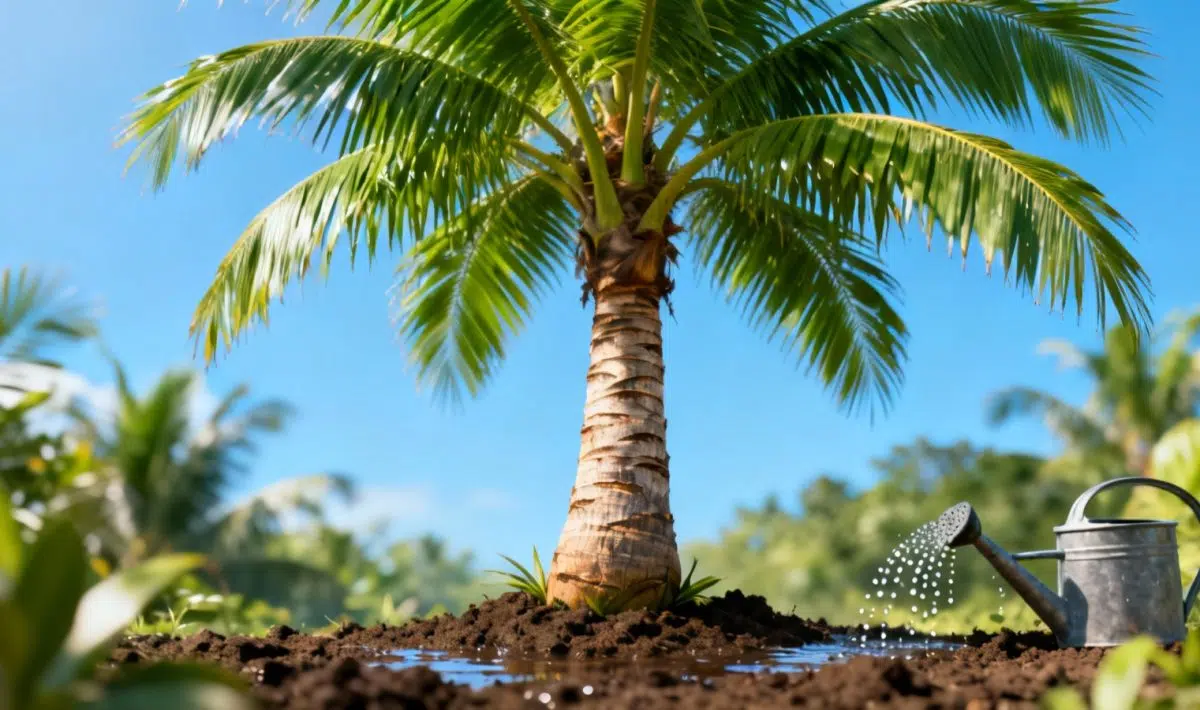
How often should you water your common coconut palm for healthy growth
Today, I’m sharing some straightforward advice about watering your common coconut palm that I’ve learned through years of growing these magnificent tropical trees. The coconut palm, scientifically known as Cocos nucifera, is a stunning addition to any garden or indoor space, but getting the watering right can make or break your success with this plant.
Understanding how often should you water your common coconut palm is crucial for maintaining healthy growth. These tropical beauties are quite particular about their water needs, and finding that sweet spot between too much and too little moisture will determine whether your palm thrives or struggles.
Understanding your coconut palm’s water requirements
Coconut palms are naturally adapted to coastal environments where they receive consistent moisture from both rainfall and humid air. This means your tree expects regular hydration, but not waterlogged conditions that can lead to root rot.
The general rule for watering frequency is 1-2 times per week, depending on your climate and season. However, this isn’t a rigid schedule – you’ll need to adjust based on several factors that affect how quickly your palm uses water.
During summer months or hot weather, your coconut palm will drink more water as it works harder to cool itself and maintain growth. The dwarf variety tends to have slightly different needs compared to the tall standard coconut palm, requiring more frequent but smaller amounts of water.
Factors that influence watering frequency
Several key elements determine how often you should reach for that watering can. Climate plays the most significant role – if you live in a hot, dry area, your palm will need water more frequently than those growing in naturally humid environments.
The size and variety of your coconut palm also matters considerably. A young tree in a pot will dry out much faster than a mature specimen planted directly in garden soil. Similarly, dwarf coconut varieties often need more attention than their tall cousins due to their smaller root systems.
Soil type and drainage are equally important considerations. Sandy soil drains quickly and may require more frequent watering, while clay-heavy soil retains moisture longer. Good drainage is essential – coconut palms hate sitting in waterlogged soil, which can quickly lead to root disease.
Recognizing when your palm needs water
The most reliable way to determine watering needs is checking the soil moisture. Stick your finger about 2-4 inches into the soil near your palm’s base. If it feels dry at this depth, it’s time to water. This method works whether you’re growing your coconut palm in a pot or directly in the garden.
Watch for visual cues from your palm’s fronds as well. Yellowing leaves can indicate either overwatering or underwatering, so combine this observation with soil testing for accuracy. If leaves appear wilted or the green color seems less vibrant, your tree might be telling you it’s thirsty.
For those maintaining multiple tropical plants, you might find similar principles apply. For instance, when learning about optimal watering for common mallow, you’ll notice how checking soil moisture remains the gold standard across different plant varieties.
Best practices for watering coconut palms
When you do water, make it count. Apply water slowly and deeply rather than giving frequent light sprinkles. This encourages the roots to grow deeper, making your palm more resilient during dry periods.
Early morning is typically the best time to water your coconut palm. This allows the plant to absorb moisture before the day’s heat sets in, and any excess water on the leaves has time to evaporate, reducing the risk of fungal problems.
Use room temperature water when possible, especially for indoor coconut palms. Cold water can shock the roots, while very hot water might damage them. If you’re using tap water, let it sit overnight to allow chlorine to dissipate before watering.
Consider installing a drip irrigation system for outdoor palms if you have multiple trees. This provides consistent, slow-release watering that mimics natural rainfall patterns. Mulching around the base helps retain soil moisture and reduces watering frequency.
Seasonal watering adjustments
Your coconut palm’s water needs change dramatically with the seasons. During spring and summer growing seasons, you’ll likely need to water twice weekly, especially if you’re experiencing hot, dry weather or low humidity.
Winter calls for a more restrained approach. Most coconut palms enter a slower growth phase when temperatures drop, meaning they use less water. Reduce watering to once weekly or even less frequently if your indoor heating creates very dry air conditions.
Just as other garden plants require seasonal attention adjustments, you might be interested in learning about maintaining different species year-round. The approach to healthy blooms for common peony demonstrates how seasonal changes affect various plants’ water requirements.
Common watering mistakes to avoid
Overwatering ranks as the most common mistake with coconut palms. These trees are surprisingly tolerant of brief dry periods but can quickly succumb to root rot from excessive moisture. Always err on the side of slightly dry rather than constantly wet soil.
Inconsistent watering schedules can stress your palm unnecessarily. While the exact frequency may vary with weather, try to maintain some regularity in your watering routine. Your coconut palm will respond better to predictable care patterns.
Don’t forget about humidity requirements alongside soil moisture. Coconut palms appreciate humid air, especially when grown indoors. Consider using a humidifier or placing water trays nearby to boost ambient humidity levels around your tree.
Troubleshooting water-related problems
If your coconut palm’s fronds are turning yellow or brown despite regular watering, you might be dealing with either drainage issues or water quality problems. Check that your pot has adequate drainage holes and that water isn’t pooling around the roots.
Sometimes, the issue isn’t how often you water but what you’re watering with. Coconut palms are sensitive to fluoride and chlorine in tap water. Consider using filtered or rainwater if you notice leaf tip burn or slow growth despite proper watering frequency.
Understanding plant water needs extends beyond coconut palms. Many gardeners find success applying similar observation techniques to other species. Learning about watering tips for common dandelion can help you develop better plant observation skills that benefit your entire garden.
Creating the ideal watering environment
Temperature and humidity work together to determine how quickly your coconut palm uses water. Ideal growing conditions include temperatures between 70-85°F with humidity levels around 50-60%. These conditions minimize water stress while promoting healthy growth.
For indoor palms, consider the impact of heating and air conditioning on your watering schedule. These systems can dramatically reduce humidity and increase how often your palm needs water. Monitor soil moisture more frequently during seasons when you’re running climate control systems.
Cultural practices from coconut-growing regions often emphasize the importance of consistent moisture without waterlogging. Traditional growers typically water deeply but less frequently, allowing the soil to dry slightly between waterings while never letting it become completely parched.
Different plants in your collection may have varying moisture requirements, but the principles of observation and adjustment remain constant. For instance, understanding healthy growth of common sage shows how careful attention to individual plant needs creates thriving garden environments.
Long-term success with coconut palm care
Developing a successful watering routine for your coconut palm takes patience and observation. Start with the general guideline of 1-2 times per week, then adjust based on your specific conditions and your palm’s response.
Keep a simple watering log for the first few months to track when you water and how your palm responds. This helps you identify patterns and develop an intuitive sense of your tree’s needs that goes beyond rigid scheduling.
Remember that healthy coconut palms are resilient plants that can adapt to various conditions when their basic needs are met consistently. Focus on providing regular moisture, good drainage, and appropriate humidity, and your tropical tree will reward you with years of beautiful growth and possibly even fruit production in ideal conditions.
Allan is a lifelong gardening enthusiast who still gets excited when the first seedlings pop up in spring. With a deep love for nature and a hands-in-the-soil approach, he shares practical tips, plant discoveries, and clever tricks picked up over years of digging, planting, and observing. Whether you’re a new gardener or have a shed full of tools, Allan writes like a neighbor who’s always happy to swap cuttings and stories over the fence.
You can find more about Allan’s work on Malt or connect with him on LinkedIn.