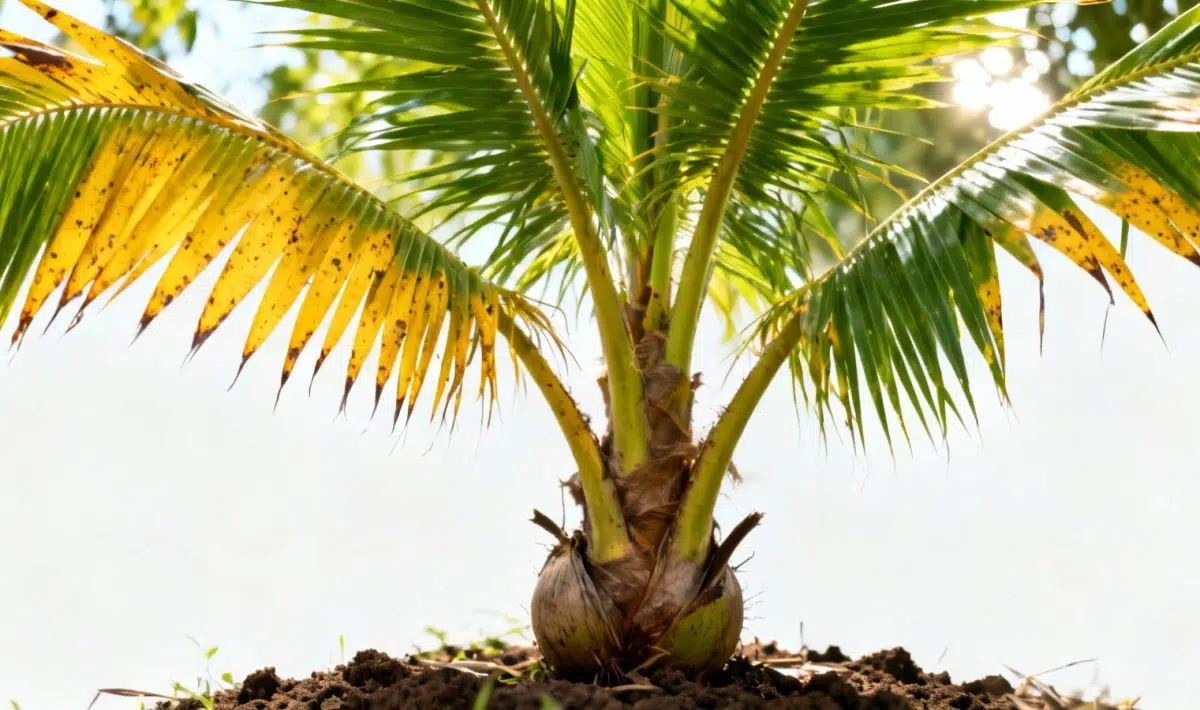
Why are my common coconut palm leaves turning yellow – causes and solutions
Nothing’s more worrying for coconut palm enthusiasts than watching those beautiful green leaves slowly turn yellow. This common issue affects many coconut trees worldwide, from backyard plants to commercial plantations. Understanding why your coconut palm leaves are turning yellow is the first step toward bringing your tree back to vibrant health.
Yellowing leaves on coconut palms can signal various problems, from simple nutrient deficiencies to more serious diseases. The good news is that most causes are treatable when caught early. Let’s explore the main culprits behind this frustrating problem and how to fix them effectively.
Common nutrient deficiencies causing yellow leaves
Nutrient deficiencies are among the most frequent reasons coconut palm leaves turn yellow. These tropical trees have specific nutritional needs that must be met for healthy growth and vibrant foliage.
Nitrogen deficiency symptoms
Nitrogen shortage typically shows up as yellowing that starts with the older, lower leaves first. The yellowing progresses upward through the plant as the tree redirects nitrogen from old leaves to support new growth. Young coconut trees are particularly susceptible to nitrogen deficiency since they’re actively growing and need steady nutrition.
You’ll notice the yellowing begins at the leaf tips and moves toward the base. The affected leaves often become pale yellow before turning brown and dropping off completely. This pattern is very characteristic of nitrogen problems.
✅ Quick Checklist
Is the soil too wet or too dry?
Is the plant getting 6+ hours of sunlight daily?
Have you fertilized in the last 2 months?
Are there visible pests under the leaves?
Does the pot have adequate drainage?
🔥 FREE
📱
Diagnose your plant in one click!
AI instant diagnosis • Personalized solutions • 50,000+ species
Potassium deficiency creates a different yellowing pattern than nitrogen shortage. With potassium problems, you’ll see yellow spotting that develops into brown, necrotic patches along the leaf edges. The coconut fruit production also suffers significantly when potassium levels are low.
This deficiency is particularly common in sandy soils where potassium leaches away quickly. Coconut trees need substantial amounts of potassium for proper fruit development and overall health. Without adequate potassium, the tree cannot maintain proper water balance in its tissues.
Watering problems affecting coconut palms
Water management issues cause many yellowing problems in coconut trees. These plants need consistent moisture but cannot tolerate waterlogged conditions that lead to root rot.
Overwatering consequences
Too much water creates anaerobic conditions around the roots, preventing them from absorbing nutrients effectively. The first sign is often yellowing leaves that feel soft and mushy rather than crisp. Root rot typically follows, which can kill the entire tree if not addressed quickly.
Overwatered coconut palms often develop a characteristic smell from the soil, indicating bacterial activity in the waterlogged root zone. The yellowing usually affects multiple leaves simultaneously rather than progressing from old to new growth.
Underwatering stress signals
Drought stress causes leaves to yellow and become crispy around the edges. The tree prioritizes survival by dropping older leaves to conserve water for new growth. You’ll notice the soil pulling away from container edges and becoming very hard when severely dry.
Coconut palms are naturally adapted to coastal areas with regular rainfall, so they struggle in consistently dry conditions. Similar to the patterns seen in causes of yellowing honeysuckle leaves, water stress creates predictable yellowing patterns that help identify the problem.
Environmental factors causing leaf yellowing
Environmental stress plays a major role in coconut palm health. These tropical plants have specific requirements for temperature, humidity, and light that must be met for optimal growth.
Temperature and light issues
Coconut palms need warm temperatures year-round and cannot tolerate frost or extended cold periods. When temperatures drop below 60°F regularly, the leaves begin yellowing from cold stress. This yellowing typically starts at the leaf tips and progresses inward.
Insufficient light also causes gradual yellowing as the tree struggles to photosynthesize effectively. Coconut palms need at least 6 hours of direct sunlight daily to maintain their green color and healthy growth patterns.
Humidity and air circulation
Low humidity levels stress coconut palms, especially those grown indoors or in dry climates. The leaves lose moisture faster than the roots can replace it, leading to yellowing and eventual browning. Proper air circulation helps prevent fungal problems but strong winds can damage leaves and cause yellowing.
Indoor coconut palms particularly struggle with dry air from heating systems during winter months. The combination of low humidity and reduced light creates perfect conditions for yellowing leaves.
Diseases and pests affecting coconut trees
Various diseases and pests can cause yellowing in coconut palm leaves. Early identification and treatment are crucial for preventing serious damage to the tree.
Fungal infections
Fungal diseases often start as small yellow spots that gradually enlarge and turn brown. These infections thrive in humid conditions with poor air circulation. Common fungal problems include leaf spot diseases that create distinctive patterns of yellowing and browning.
Preventive fungicide treatments can help protect healthy trees, while infected leaves should be removed and destroyed to prevent spread. Improving air circulation and reducing leaf wetness also helps control fungal problems.
Insect damage
Scale insects, mites, and other pests can cause yellowing by sucking plant juices from the leaves. Heavy infestations weaken the tree significantly and make it more susceptible to other problems. The yellowing from pest damage often appears as stippling or general chlorosis rather than distinct patterns.
Regular inspection helps catch pest problems early when they’re easier to control. Natural predators and targeted treatments can effectively manage most pest issues without harming the tree.
✅ Quick Checklist
Is the soil too wet or too dry?
Is the plant getting 6+ hours of sunlight daily?
Have you fertilized in the last 2 months?
Are there visible pests under the leaves?
Does the pot have adequate drainage?
🔥 FREE
📱
Diagnose your plant in one click!
AI instant diagnosis • Personalized solutions • 50,000+ species
Preventing yellowing leaves is always better than treating the problem after it develops. A comprehensive approach addressing nutrition, watering, and environmental factors gives the best results.
Proper fertilization schedule
Regular fertilization with a balanced palm fertilizer prevents most nutrient deficiencies. Apply fertilizer every 2-3 months during the growing season, following package directions carefully. Look for fertilizers specifically formulated for palms that contain micronutrients as well as major nutrients.
Slow-release fertilizers work particularly well for coconut palms since they provide steady nutrition over several months. This approach prevents the feast-or-famine cycles that can stress trees and cause yellowing.
Water management best practices
Establish a consistent watering routine that keeps soil moist but not waterlogged. Check soil moisture regularly by inserting your finger 2-3 inches deep. Water when the top inch feels dry, but don’t wait until the soil becomes completely dry.
Good drainage is essential for preventing root rot and the associated yellowing. Container plants need drainage holes, while landscape trees benefit from raised planting areas in heavy soils.
Environmental monitoring
Keep track of temperature and humidity levels, especially for indoor plants. Use humidifiers during dry periods and provide adequate lighting year-round. Much like addressing reasons for yellowing mugwort leaves, consistent environmental conditions help prevent stress-related yellowing.
Regular inspection for pests and diseases allows early intervention when problems are easiest to solve. Remove any yellowing leaves promptly to prevent disease spread and improve the tree’s appearance.
When to seek professional help
Some yellowing problems require professional diagnosis and treatment. If yellowing continues despite your best efforts, or if it’s accompanied by other concerning symptoms, consult with a certified arborist or plant pathologist.
Rapid yellowing affecting the entire tree, unusual patterns of discoloration, or yellowing combined with wilting often indicate serious problems that need expert attention. Early professional intervention can save trees that might otherwise be lost.
Allan is a lifelong gardening enthusiast who still gets excited when the first seedlings pop up in spring. With a deep love for nature and a hands-in-the-soil approach, he shares practical tips, plant discoveries, and clever tricks picked up over years of digging, planting, and observing. Whether you’re a new gardener or have a shed full of tools, Allan writes like a neighbor who’s always happy to swap cuttings and stories over the fence.
You can find more about Allan’s work on Malt or connect with him on LinkedIn.