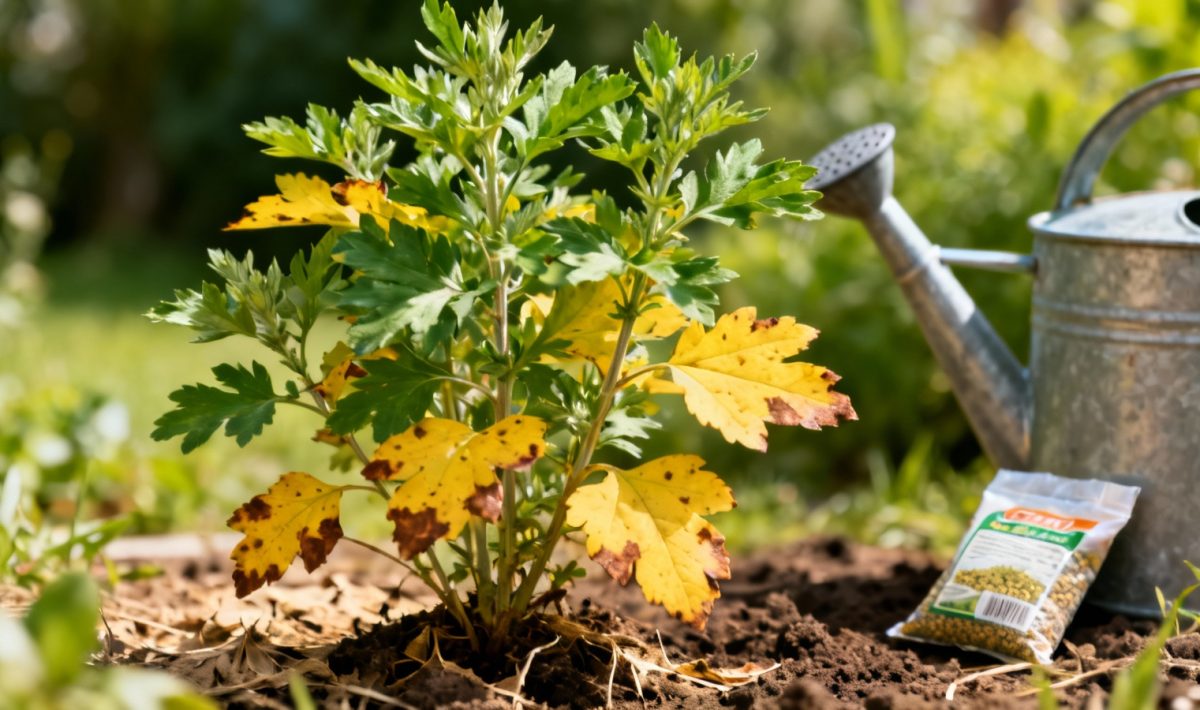
Nothing’s more frustrating than watching your beautiful common mugwort (Artemisia vulgaris) develop yellow leaves when you’ve been caring for it with love. Today, I’m sharing the most common reasons why your artemisia leaves turn yellow and practical solutions that will help you restore your plant’s vibrant green appearance.
Yellow leaves on your mugwort plant are usually a sign that something in its environment needs adjustment. The good news is that most causes are easily fixable once you know what to look for.
Understanding light requirements for healthy mugwort
Your artemisia annua and other artemisia varieties are sun-loving plants that need plenty of bright light to maintain their green foliage. When your plant doesn’t receive adequate sunlight, the leaves will gradually turn yellow as the chlorophyll breaks down.
Common mugwort thrives with at least 6-8 hours of direct sunlight daily. If you’re growing your plant indoors, place it near a south-facing window where it can soak up maximum light throughout the day.
✅ Quick Checklist
- Is the soil too wet or too dry?
- Is the plant getting 6+ hours of sunlight daily?
- Have you fertilized in the last 2 months?
- Are there visible pests under the leaves?
- Does the pot have adequate drainage?
Diagnose your plant in one click!
AI instant diagnosis • Personalized solutions • 50,000+ species
Signs of insufficient light include pale yellow leaves that start from the bottom of the plant and work their way up. You might also notice your artemisia becoming leggy or stretched as it reaches for more light.
Practical solutions for light issues
If you suspect light problems, gradually move your plant to a brighter location over the course of a week. Sudden changes can shock your artemisia, so take it slow. For indoor plants, consider investing in a grow light if natural light is limited.
Soil quality and nutrient deficiencies
The quality of soil plays a crucial role in keeping your mugwort leaves green and healthy. Poor soil conditions often lead to nutrient deficiencies that manifest as yellowing leaves.
Artemisia plants prefer well-draining soil with a slightly alkaline pH between 6.0 and 7.5. They’re not particularly fussy about soil richness, but they do need good drainage to prevent root problems.
Identifying nutrient problems
Nitrogen deficiency is the most common cause of yellow leaves in artemisia. When your plant lacks nitrogen, the older leaves turn yellow first, starting from the bottom and moving upward. Iron deficiency, on the other hand, causes yellowing between the leaf veins while the veins themselves remain green.
To address nutrient issues, feed your artemisia with a balanced, slow-release fertilizer once in spring and once in mid-summer. Avoid over-fertilizing, as these plants are naturally adapted to lean soils.
Watering mistakes that cause yellow leaves
Getting the watering schedule right is essential for preventing yellow leaves on your common mugwort. Both overwatering and underwatering can cause leaf yellowing, but for different reasons.
Overwatering is actually more dangerous than underwatering for artemisia plants. When roots sit in soggy soil, they can’t absorb oxygen properly, leading to root rot and yellowing leaves. Similarly, problems with other plants like reasons for yellow honeysuckle leaves often stem from watering issues.
Signs of watering problems
Overwatered plants typically show yellow leaves that feel soft and mushy, often accompanied by a musty smell from the soil. Underwatered plants will have yellow leaves that feel dry and crispy to the touch.
Your artemisia prefers to dry out slightly between waterings. Stick your finger about 2 inches into the soil – if it feels dry at that depth, it’s time to water.
Best watering practices
Water deeply but infrequently, allowing excess water to drain away completely. In summer, you might need to water every 3-4 days, while in winter, weekly watering is usually sufficient.
Always water at the base of the plant rather than on the leaves to prevent fungal issues. Early morning watering is ideal as it gives the plant time to absorb moisture before the heat of the day.
Pests and diseases affecting leaf color
Several pests and diseases can cause your mugwort leaves to turn yellow. Identifying these problems early will help you address them before they spread.
Common pests that attack artemisia include aphids, spider mites, and whiteflies. These tiny insects feed on plant juices, causing leaves to yellow and eventually drop. Check the undersides of leaves regularly for signs of pest activity.
Disease identification
Fungal diseases like powdery mildew and root rot can also cause yellowing leaves. Powdery mildew appears as a white, dusty coating on leaves, while root rot typically causes yellowing that starts at the base of the plant.
Just as issues with yellowing hackberry leaves require careful diagnosis, artemisia problems need proper identification for effective treatment.
Treatment strategies
For pest problems, start with natural solutions like insecticidal soap or neem oil. These treatments are gentle on your plant while effectively controlling most common pests.
For fungal diseases, improve air circulation around your plant and avoid overhead watering. In severe cases, you may need to use a fungicide specifically designed for ornamental plants.
✅ Quick Checklist
- Is the soil too wet or too dry?
- Is the plant getting 6+ hours of sunlight daily?
- Have you fertilized in the last 2 months?
- Are there visible pests under the leaves?
- Does the pot have adequate drainage?
Diagnose your plant in one click!
AI instant diagnosis • Personalized solutions • 50,000+ species
Additional care tips for thriving artemisia
Beyond addressing the immediate causes of yellow leaves, there are several proactive steps you can take to keep your common mugwort healthy and vibrant.
Pruning plays an important role in maintaining plant health. Remove yellow or damaged leaves promptly to prevent the spread of disease and encourage new growth. Regular pruning also helps improve air circulation around your plant.
Seasonal care considerations
Your artemisia’s needs change with the seasons. During spring and summer, the plant enters its active growing phase and requires more frequent watering and feeding. In fall and winter, reduce watering frequency and stop fertilizing to allow the plant to rest.
Temperature stress can also cause leaf yellowing. Most artemisia varieties are quite hardy, but sudden temperature changes or exposure to frost can shock the plant and cause leaves to yellow.
Prevention is better than cure
The best way to prevent yellow leaves is to maintain consistent care practices. Check your plant weekly for signs of stress, pests, or disease. Keep a simple care log noting when you water, fertilize, and observe any changes in your plant’s appearance.
Remember that some yellowing of older leaves is completely natural as your artemisia grows and matures. Don’t panic if you see a few yellow leaves at the bottom of the plant – this is often just part of the normal growth cycle.
With proper care and attention to these key factors – light, soil, water, and pest management – your common mugwort will reward you with beautiful, healthy green foliage throughout the growing season. The key is observing your plant regularly and making adjustments as needed to create the optimal growing conditions.

Allan is a lifelong gardening enthusiast who still gets excited when the first seedlings pop up in spring. With a deep love for nature and a hands-in-the-soil approach, he shares practical tips, plant discoveries, and clever tricks picked up over years of digging, planting, and observing. Whether you’re a new gardener or have a shed full of tools, Allan writes like a neighbor who’s always happy to swap cuttings and stories over the fence.
You can find more about Allan’s work on Malt or connect with him on LinkedIn.