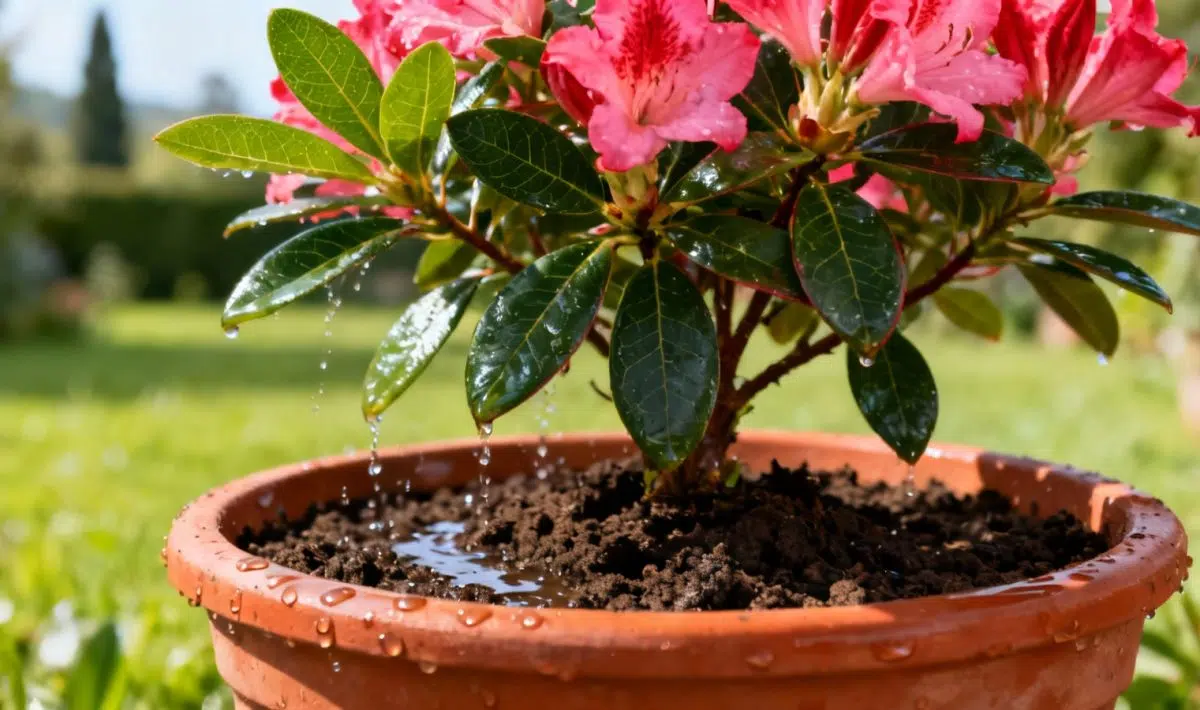
Understanding your Pontic rhododendron’s watering needs
The Pontic rhododendron stands out as one of the most resilient plants in your garden collection, but getting the watering frequency right makes all the difference. These evergreen beauties require consistent moisture without waterlogging, as their shallow root system can quickly suffer from both drought and overwatering.
Native to the Mediterranean region, this plant has adapted to moderate rainfall patterns throughout the year. Understanding this natural habitat helps us create the perfect care routine for our garden specimens.
Seasonal watering schedule for optimal plant health
Spring and summer watering requirements
During the growing season from March through August, your rhododendron demands more frequent attention. Water deeply once or twice per week, depending on rainfall and temperature conditions. The soil should remain consistently moist but never soggy.
Check the top three inches of soil with your finger – if it feels dry, it’s time to water. During particularly hot spells, you might need to increase frequency to every few days. Just like watering tomatoes during extreme heat, rhododendrons need extra care during temperature extremes.
Early morning watering works best during these months, allowing the plant to absorb moisture before the heat of the day. This timing also reduces the risk of fungal issues that can develop when leaves remain wet overnight.
Autumn and winter care adjustments
As temperatures drop and growth slows, reduce watering frequency to once every two weeks or less. The plant enters a semi-dormant state and requires much less moisture during this period.
However, don’t let the soil become bone dry, especially during mild winter spells when the plant might still be actively photosynthesizing. A light watering every three weeks usually suffices unless you experience unusually dry conditions.
Creating the ideal soil environment
Soil composition for perfect drainage
Your rhododendron thrives in well-draining, slightly acidic soil with plenty of organic matter. Mix garden soil with compost, leaf mold, and a handful of perlite to create the perfect growing medium.
The key lies in achieving that delicate balance – soil that retains moisture without becoming waterlogged. Think of it like a sponge that’s been wrung out but still feels damp to the touch.
Adding organic amendments like aged bark chips or pine needles helps maintain the acidic pH these plants love while improving drainage. This creates an environment where roots can breathe while still accessing the moisture they need.
Common soil preparation mistakes to avoid
Many gardeners make the mistake of planting rhododendrons in heavy clay soil without proper amendments. This leads to water pooling around the roots and eventual plant decline.
Another frequent error involves using fresh bark or wood chips directly in the planting hole. These materials can rob nitrogen from the soil as they decompose, leaving your plant struggling to establish itself. Similar to caring for your black-eyed susans, proper soil preparation makes all the difference.
Selecting and establishing your new plants
What to look for when buying rhododendrons
When shopping for new plants, examine the root system carefully. Healthy specimens should have white or cream-colored roots that fill the container without becoming severely root-bound.
The foliage should appear vibrant and free from brown spots or yellowing leaves. Fresh, well-maintained plants establish much faster and require less intensive care during their first year.
Check with your local nursery about their delivery options – many offer specialized handling for delicate flowering plants to ensure they arrive in perfect condition.
Placement considerations for long-term success
Choose a location that receives morning sun but afternoon shade, especially in warmer climates. These conditions mimic the plant’s natural forest edge habitat and reduce water stress during hot summer months.
Avoid planting too close to large trees that might compete for water and nutrients. However, some protection from harsh winds helps prevent moisture loss through the leaves. Just as identifying sunburned plants is important, recognizing the signs of improper placement early can save your rhododendron.
Advanced watering techniques and troubleshooting
Deep watering methods for established plants
Instead of frequent shallow watering, focus on deep, thorough soaking sessions. This encourages the root system to grow deeper and become more drought-tolerant over time.
Use a soaker hose or drip irrigation system for the most efficient water delivery. These methods provide slow, steady moisture that penetrates deeply without running off the surface.
For container-grown specimens, water until you see drainage from the bottom holes. This ensures the entire root ball receives adequate moisture, similar to the approach used when watering your sago palm effectively.
Signs of watering problems and solutions
Yellowing leaves often indicate either too much or too little water. Check the soil moisture and adjust your schedule accordingly. Brown, crispy leaf edges usually signal underwatering, while soft, mushy roots point to overwatering issues.
If you notice wilting despite moist soil, the problem might be root rot or poor drainage rather than insufficient water. In such cases, improving soil structure becomes more important than increasing watering frequency.
When transplanting becomes necessary due to drainage issues, follow proper techniques to minimize stress. Learning how to repot without stressing your plant out applies similar principles to garden transplanting.
Creating a sustainable garden ecosystem
Remember that your rhododendron exists within a larger garden ecosystem. Encourage beneficial insects that help maintain plant health and reduce pest pressure naturally.
Mulching around your plants helps retain soil moisture and reduces watering frequency during dry spells. Use organic materials like shredded leaves or bark chips that break down slowly and enrich the soil over time.
Understanding which beneficial garden insects to keep creates a balanced environment where your rhododendrons can thrive with minimal intervention.
With proper attention to watering frequency and soil conditions, your Pontic rhododendron will reward you with years of beautiful blooms and robust growth. The key lies in consistency and observation – let the plant and soil guide your watering decisions rather than sticking rigidly to a calendar schedule.

Allan is a lifelong gardening enthusiast who still gets excited when the first seedlings pop up in spring. With a deep love for nature and a hands-in-the-soil approach, he shares practical tips, plant discoveries, and clever tricks picked up over years of digging, planting, and observing. Whether you’re a new gardener or have a shed full of tools, Allan writes like a neighbor who’s always happy to swap cuttings and stories over the fence.
You can find more about Allan’s work on Malt or connect with him on LinkedIn.