
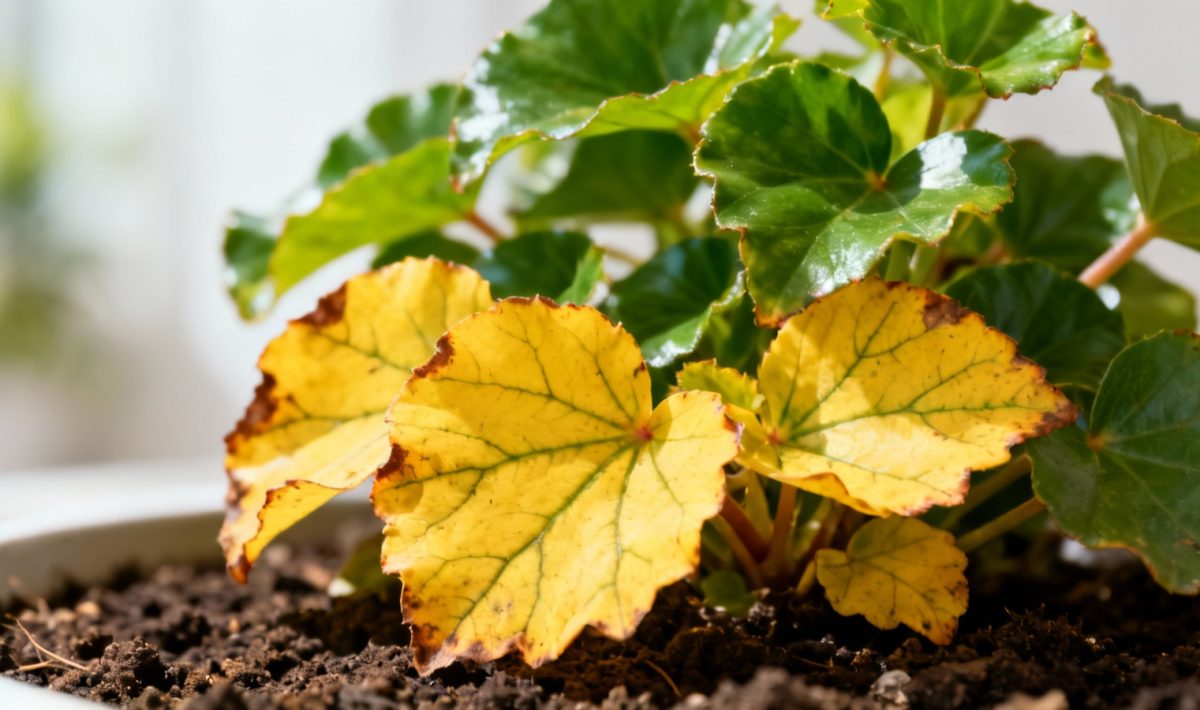
When your beautiful wax begonia starts showing yellow leaves, it can be quite concerning for any gardener. This common issue affects many plant enthusiasts, but understanding the underlying causes will help you restore your begonia’s vibrant green foliage. Yellow leaves are your plant’s way of signaling that something in its environment needs attention.
Common causes of yellowing leaves in wax begonias
Several factors can cause your wax begonia’s leaves to turn yellow, and identifying the specific cause is crucial for effective treatment. The most frequent culprits include watering problems, light exposure issues, and nutritional deficiencies that stress the plant.
Watering problems
Improper watering is the leading cause of yellow leaves in wax begonias. These plants are particularly sensitive to both overwatering and underwatering, which can quickly manifest as yellowing foliage.
Overwatering creates waterlogged soil conditions that prevent roots from accessing oxygen. When roots can’t breathe properly, they begin to rot, and the plant responds by yellowing its leaves from the bottom up. You’ll notice the soil stays consistently wet for days after watering.
Conversely, underwatering stresses the plant as it struggles to maintain its cellular functions without adequate moisture. The leaves will yellow and may become crispy at the edges before dropping off entirely.
✅ Quick Checklist
- Is the soil too wet or too dry?
- Is the plant getting 6+ hours of sunlight daily?
- Have you fertilized in the last 2 months?
- Are there visible pests under the leaves?
- Does the pot have adequate drainage?
Diagnose your plant in one click!
AI instant diagnosis • Personalized solutions • 50,000+ species
Sunlight exposure issues
Wax begonias thrive in bright, indirect sunlight but can struggle when exposed to harsh direct sun or insufficient light. Too much direct sunlight, especially during hot afternoon hours, can scorch the leaves and cause them to yellow and brown.
Similarly, insufficient light prevents the plant from photosynthesizing effectively, leading to weak, yellowing leaves that eventually drop. Your begonia needs approximately 4-6 hours of bright, filtered light daily to maintain healthy green foliage.
Nutritional deficiencies
Lack of essential nutrients, particularly nitrogen, can cause widespread yellowing in your wax begonia. Nitrogen deficiency typically starts with older leaves turning yellow while new growth remains green initially.
Other nutrient deficiencies like iron or magnesium can also contribute to yellowing, often appearing as yellowing between leaf veins while the veins themselves remain green. Regular fertilization during the growing season helps prevent these issues.
Environmental factors affecting leaf health
Your wax begonia’s environment plays a crucial role in maintaining healthy foliage. Temperature fluctuations, humidity levels, and soil quality all impact your plant’s ability to thrive and maintain its vibrant green leaves.
Temperature and humidity considerations
Wax begonias prefer consistent temperatures between 65-75°F and moderate humidity levels. Sudden temperature changes or exposure to cold drafts can shock the plant, causing leaves to yellow and drop.
Low humidity, especially during winter months when indoor heating systems run frequently, can stress your begonia and contribute to leaf yellowing. Consider using a humidity tray or room humidifier to maintain adequate moisture levels around your plant.
Soil quality and drainage
Poor drainage is often the root cause of many begonia problems, including yellowing leaves. These plants require well-draining soil that allows excess water to escape while retaining some moisture for the roots.
Heavy clay soils or containers without drainage holes create waterlogged conditions that suffocate roots and promote fungal growth. Using a quality potting mix designed for flowering plants ensures proper drainage and aeration for healthy root development.
Diseases and pests that cause yellowing
Various diseases and pests can attack your wax begonia, causing leaves to yellow as the plant struggles to defend itself. Early identification and treatment are essential for preventing widespread damage to your plant.
Fungal infections
Fungal diseases like powdery mildew and botrytis can cause yellowing leaves in wax begonias. These infections thrive in humid conditions with poor air circulation, creating white or gray patches on leaves before they turn yellow and drop.
Root rot, another common fungal problem, attacks the root system and prevents nutrient uptake, leading to yellowing leaves throughout the plant. This condition often develops from consistently wet soil conditions and poor drainage.
Pest infestations
Aphids, spider mites, and whiteflies commonly attack wax begonias, feeding on plant juices and weakening the overall health of your plant. These pests cause leaves to yellow as they drain essential nutrients from the foliage.
Similar to how reasons for yellowing honeysuckle leaves can include pest problems, begonias also suffer when insects attack their delicate leaves. Regular inspection of the undersides of leaves helps catch infestations early.
For gardeners dealing with different begonia varieties, understanding that causes of yellowing begonia leaves can vary between species helps in providing targeted care for each plant type.
Prevention and treatment solutions
Preventing yellow leaves is always easier than treating the problem after it occurs. Establishing proper care routines and monitoring your plant’s health regularly will help maintain vibrant, healthy foliage throughout the growing season.
Proper watering techniques
Water your wax begonia when the top inch of soil feels dry to the touch, typically every 2-3 days during active growth. Water thoroughly until it drains from the bottom holes, then empty the drainage tray after 30 minutes.
During winter months, reduce watering frequency as the plant’s growth slows and water requirements decrease. Always check soil moisture before watering rather than following a strict schedule.
Optimal growing conditions
Place your wax begonia in bright, indirect light where it receives morning sun but is protected from harsh afternoon rays. East or north-facing windows typically provide ideal lighting conditions for these plants.
Maintain consistent temperatures and avoid placing your plant near heating vents, air conditioners, or drafty windows that can cause temperature fluctuations and stress.
✅ Quick Checklist
- Is the soil too wet or too dry?
- Is the plant getting 6+ hours of sunlight daily?
- Have you fertilized in the last 2 months?
- Are there visible pests under the leaves?
- Does the pot have adequate drainage?
Diagnose your plant in one click!
AI instant diagnosis • Personalized solutions • 50,000+ species
Treatment options for yellowing leaves
Remove yellowed leaves immediately to prevent the spread of disease and redirect the plant’s energy toward healthy growth. Use clean, sharp scissors to make clean cuts and avoid tearing the plant tissue.
For severe cases involving multiple yellowing leaves, consider repotting your begonia in fresh, well-draining soil. This allows you to inspect the root system for rot and provides a clean growing medium for recovery.
Apply a balanced liquid fertilizer diluted to half strength every 2-3 weeks during the growing season to ensure your plant receives adequate nutrition. Avoid over-fertilizing, which can burn roots and cause additional leaf problems.
With proper care and attention to these key factors, your wax begonia will recover from yellowing leaves and return to producing the vibrant, healthy foliage that makes these plants such popular choices for both indoor and outdoor gardens.

Allan is a lifelong gardening enthusiast who still gets excited when the first seedlings pop up in spring. With a deep love for nature and a hands-in-the-soil approach, he shares practical tips, plant discoveries, and clever tricks picked up over years of digging, planting, and observing. Whether you’re a new gardener or have a shed full of tools, Allan writes like a neighbor who’s always happy to swap cuttings and stories over the fence.
You can find more about Allan’s work on Malt or connect with him on LinkedIn.


