
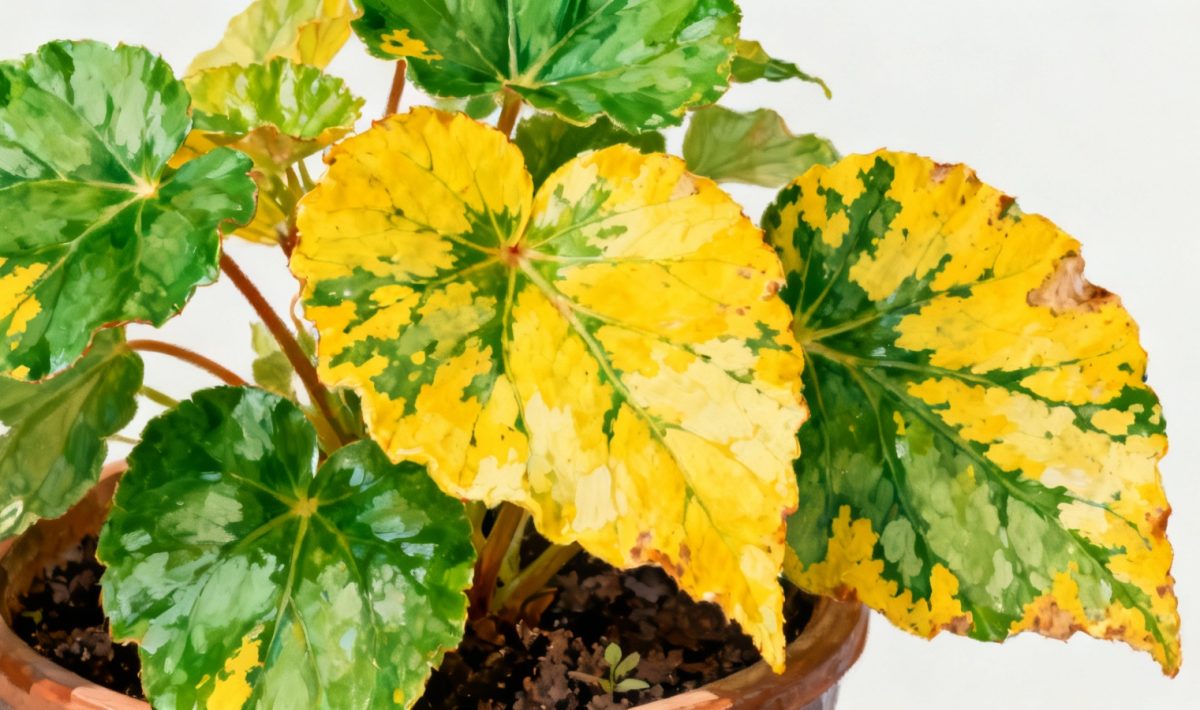
If you’ve noticed your beautiful painted-leaf begonia developing yellow leaves, you’re not alone in this concern. This striking houseplant, also known as begonia rex, can experience yellowing for several reasons that are actually quite manageable once you understand what’s happening. Most of the time, yellowing leaves indicate an environmental issue that can be corrected with proper care adjustments.
Understanding why your begonia leaves are changing color is the first step toward restoring your plant’s vibrant appearance. The good news is that painted-leaf begonias are generally resilient plants, and yellowing is often a temporary setback rather than a permanent problem.
Environmental factors affecting leaf color
Your painted-leaf begonia’s environment plays a crucial role in maintaining its stunning foliage. These plants are quite particular about their living conditions, and even small changes can trigger yellowing leaves. Temperature fluctuations, inadequate humidity, and poor air circulation are common culprits that can stress your plant.
Begonias thrive in stable environments with temperatures between 65-75°F during the day and slightly cooler at night. When temperatures drop below 60°F or rise above 80°F, your rex begonia may respond by yellowing its leaves as a protective mechanism. Similarly, sudden temperature changes from moving your plant or placing it near heating vents can cause immediate stress.
✅ Quick Checklist
- Is the soil too wet or too dry?
- Is the plant getting 6+ hours of sunlight daily?
- Have you fertilized in the last 2 months?
- Are there visible pests under the leaves?
- Does the pot have adequate drainage?
Diagnose your plant in one click!
AI instant diagnosis • Personalized solutions • 50,000+ species
Light exposure and its impact
Light requirements are perhaps the most misunderstood aspect of begonia care. These plants need bright, indirect light to maintain their vibrant leaf patterns and prevent yellowing. Direct sunlight will scorch the delicate foliage, while too little light causes the plant to lose its characteristic color intensity and eventually yellow.
Place your painted-leaf begonia near an east or north-facing window where it can receive gentle morning light without the harsh afternoon sun. If you notice yellowing accompanied by crispy leaf edges, your plant is likely getting too much direct light and needs to be moved to a shadier spot.
Watering issues: finding the right balance
Watering problems are the most common cause of yellowing leaves in painted-leaf begonias. These plants have a delicate root system that can’t tolerate extremes in either direction. Both overwatering and underwatering will cause your begonia to develop yellow leaves, though each presents slightly different symptoms.
Overwatered begonias typically show yellowing that starts from the bottom leaves and moves upward. The soil will feel soggy, and you might notice a musty smell from the pot. On the other hand, underwatered plants develop yellowing from the leaf tips inward, and the soil will be completely dry several inches down.
Signs of overwatering
When your begonia receives too much water, its roots become waterlogged and can’t properly absorb nutrients. This stress manifests as yellowing leaves that feel soft and may develop dark spots. The problem becomes worse if your pot lacks proper drainage holes, as standing water creates the perfect environment for root rot.
To fix overwatering issues, allow the soil to dry out completely between waterings and ensure your pot has adequate drainage. You might need to repot your plant in fresh, well-draining soil if the roots show signs of rot.
Signs of underwatering
Underwatered begonias will show yellowing leaves that become crispy and brittle. The plant may also wilt dramatically, and new growth will be stunted. This issue is easier to correct than overwatering – simply resume a regular watering schedule and monitor the soil moisture.
Water your painted-leaf begonia when the top inch of soil feels dry to the touch. Use room-temperature water and apply it slowly until it drains from the bottom holes. Similar to how you might encounter dealing with yellowing angel’s-wings leaves , the key is maintaining consistent moisture without waterlogging.
Nutritional deficiencies and their effects
Your begonia rex needs proper nutrition to maintain its stunning foliage, and deficiencies often show up as yellowing leaves. The most common nutrient deficiencies affecting painted-leaf begonias are nitrogen, iron, and magnesium, each causing distinct patterns of yellowing.
Nitrogen deficiency causes older leaves to yellow first, starting from the bottom of the plant and working upward. Iron deficiency creates yellowing between the leaf veins while the veins themselves remain green. Magnesium deficiency shows as yellowing that begins at the leaf edges and moves inward.
The importance of regular fertilization
Regular fertilization during the growing season (spring through early fall) helps prevent nutritional deficiencies. Use a balanced, water-soluble fertilizer diluted to half strength every 2-3 weeks. Avoid fertilizing during winter when the plant’s growth slows down naturally.
Over-fertilization can also cause yellowing, so it’s worth checking if you’ve been too generous with feeding. Salt buildup from excess fertilizer will burn the roots and cause widespread yellowing. If you suspect this issue, flush the soil with plain water several times to remove excess salts.
Common diseases and pest problems
Sometimes yellowing leaves indicate more serious problems like diseases or pest infestations. Fungal diseases such as powdery mildew or bacterial leaf spot can cause yellowing, often accompanied by other symptoms like spots, wilting, or unusual growths on the leaves.
Pests like spider mites, aphids, or thrips can also stress your begonia enough to cause yellowing. These tiny insects feed on plant juices, weakening your begonia and causing it to drop leaves or change color. Regular inspection of your plant, especially the undersides of leaves, will help you catch pest problems early.
✅ Quick Checklist
- Is the soil too wet or too dry?
- Is the plant getting 6+ hours of sunlight daily?
- Have you fertilized in the last 2 months?
- Are there visible pests under the leaves?
- Does the pot have adequate drainage?
Diagnose your plant in one click!
AI instant diagnosis • Personalized solutions • 50,000+ species
Prevention and treatment strategies
Preventing diseases and pests is always easier than treating them after they’ve taken hold. Ensure good air circulation around your plant, avoid getting water on the leaves when watering, and quarantine new plants before introducing them to your collection.
If you do discover pests or diseases, act quickly to prevent spread. Remove affected leaves, isolate the plant if necessary, and treat with appropriate organic or chemical controls. Just as causes of yellowing honeysuckle leaves can vary, begonia problems require specific approaches based on the underlying cause.
Recovery and prevention tips
Once you’ve identified and addressed the cause of yellowing leaves, your painted-leaf begonia should begin to recover within a few weeks. Remove any severely yellowed or damaged leaves to help the plant focus its energy on healthy growth. Be patient, as it may take several months for your begonia to fully restore its former glory.
Prevention is always the best approach to maintaining healthy begonias. Establish a consistent care routine that includes regular watering checks, monthly fertilization during growing season, and weekly inspections for pests or diseases. Keep your plant in a stable environment with appropriate light, temperature, and humidity levels.
Remember that some leaf yellowing is natural as older leaves age and are replaced by new growth. However, if you notice widespread yellowing or rapid leaf drop, investigate the potential causes using the information in this article. With proper care and attention, your painted-leaf begonia will continue to display its stunning foliage for years to come.

Allan is a lifelong gardening enthusiast who still gets excited when the first seedlings pop up in spring. With a deep love for nature and a hands-in-the-soil approach, he shares practical tips, plant discoveries, and clever tricks picked up over years of digging, planting, and observing. Whether you’re a new gardener or have a shed full of tools, Allan writes like a neighbor who’s always happy to swap cuttings and stories over the fence.
You can find more about Allan’s work on Malt or connect with him on LinkedIn.


