
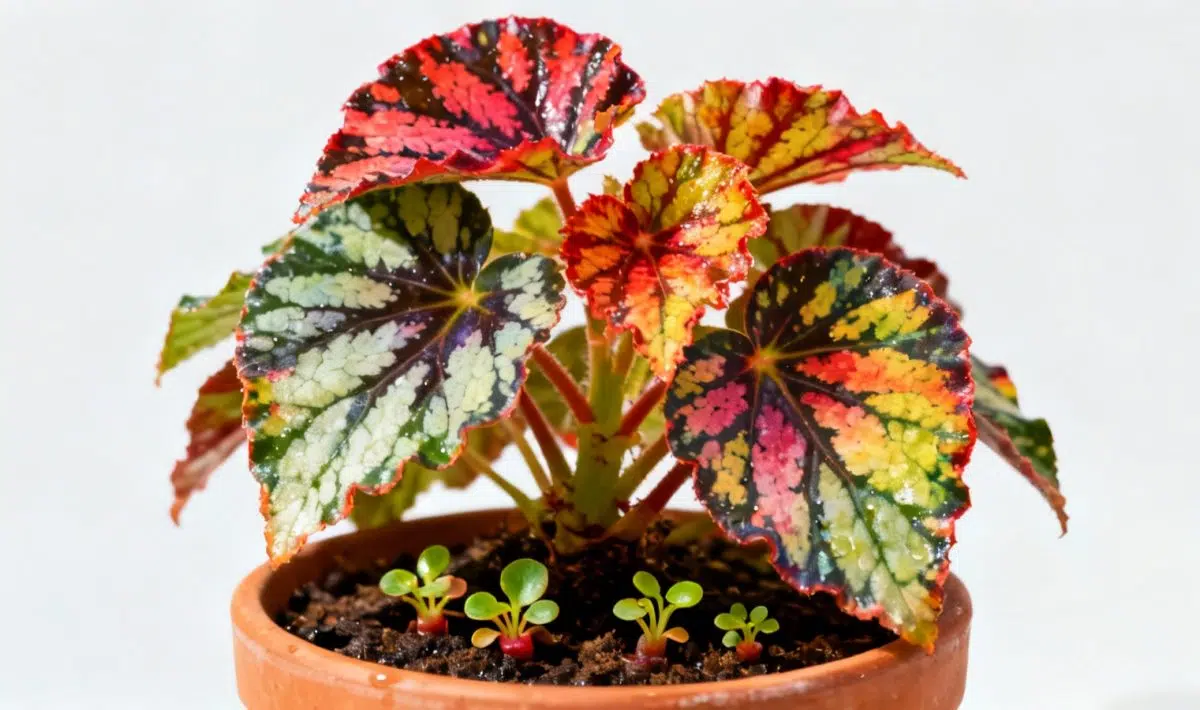
What makes the painted-leaf begonia so special
The painted-leaf begonia, scientifically known as Begonia rex, stands out as one of nature’s most artistic houseplants. With its spectacular foliage displaying silvery patterns, deep purples, and vibrant greens, this plant transforms any indoor space into a living art gallery. Native to India and Vietnam, this rhizomatous species has captured hearts worldwide with its asymmetrical leaves that seem hand-painted by a master artist.
Unlike many begonias grown for their flowers, the rex cultivar focuses entirely on stunning leaf displays. Each plant creates a unique tapestry of colors and textures that changes subtly as new leaves emerge. The metallic sheen on many varieties catches light beautifully, making them perfect statement pieces for well-lit indoor spaces.
Understanding Begonia rex characteristics
Distinctive foliage features
The leaves of Begonia rex typically reach 20-30 centimètres in diameter, with an unmistakably asymmetrical shape. These painted leaves showcase incredible diversity – from deep burgundy with silver veining to bright green with metallic highlights. The texture varies between smooth and slightly fuzzy, depending on the specific cultivar you choose.
Most rex begonias display a distinctive spiral pattern where leaves emerge from the central rhizome. This growth habit creates natural layers that enhance the visual impact of the colorful foliage. The undersides of leaves often reveal contrasting colors, adding another dimension to their beauty.
Flowering and seasonal behavior
While this species can produce small pink or white flowers in spring and summer, most growers pinch these off to maintain energy focus on the spectacular leaves. The flowers, though delicate, pale in comparison to the main attraction – that incredible painted foliage that earned this plant its common name.
During winter months, rex begonias may enter a dormant phase where leaf production slows significantly. This natural cycle helps the plant conserve energy for vigorous spring growth when conditions improve.
Creating ideal growing conditions
Light requirements for painted leaves
Bright, indirect light proves essential for maintaining those vibrant leaf colors that make rex begonias so desirable. A spot near an east or west-facing window with sheer curtains provides perfect illumination without scorching those delicate painted leaves. Too much direct sun will fade the colors and burn the foliage.
Insufficient light causes the plant to lose its distinctive coloration, with leaves becoming predominantly green. Watch your plant closely – if new leaves appear less colorful than older ones, consider moving it to a brighter location.
Temperature and humidity needs
Rex begonias thrive between 18-24°C, making them perfect houseplants for most homes. However, they absolutely hate temperature fluctuations and drafts. Keep them away from heating vents, air conditioning units, and frequently opened doors or windows.
Humidity levels around 50-60% keep these plants happiest. In dry homes, place the pot on a humidity tray filled with pebbles and water, or use a humidifier nearby. Good air circulation prevents fungal issues while maintaining the moisture these plants crave.
Soil and container considerations
A well-draining potting mix that retains some moisture works best for rex begonias. Combine regular potting soil with perlite and a small amount of peat moss to create the ideal growing medium. The soil should feel slightly moist but never soggy.
Choose containers with drainage holes to prevent waterlogged conditions that quickly lead to rhizome rot. Shallow, wide pots work better than deep ones since these plants spread horizontally rather than developing deep root systems.
Essential care and maintenance
Watering techniques
Water when the top inch of soil feels dry to the touch, but not before. These plants prefer consistent moisture without being waterlogged. Pour water slowly around the base, avoiding the leaves and central rhizome area where excess moisture can cause rot.
During winter dormancy, reduce watering frequency significantly. The plant’s reduced growth means less water consumption, and overwatering during this period often proves fatal to rex begonias.
Fertilizing for optimal growth
Feed rex begonias monthly during the growing season with a balanced, diluted liquid fertilizer. These plants don’t require heavy feeding – too much fertilizer can actually reduce the intensity of their painted leaf colors.
Skip fertilizing during winter months when the plant naturally slows its growth. Resume feeding in early spring when new leaf growth becomes visible.
Propagation methods for rex begonias
Leaf cutting propagation
The most rewarding multiplication method involves leaf cuttings with pétioles attached. Select a healthy, mature leaf and cut it with about 2-3 centimètres of pétioles included. Plant the pétioles in moist potting mix, ensuring the leaf blade remains above soil level.
Within 4-6 weeks, tiny plantlets emerge from the base of the pétioles. This technique often produces multiple plants from a single leaf cutting, making it an efficient propagation method. For enthusiasts exploring different plant cultivation techniques, similar careful attention to propagation details can be found when learning about care for Pontic rhododendron plants.
Rhizome division
Mature rex begonias develop substantial rhizomes that can be carefully divided during repotting. Use a sharp, clean knife to separate sections ensuring each piece has both roots and growing points. Allow cut surfaces to dry for a few hours before planting to prevent rot.
Plant divided sections in fresh potting mix and keep soil lightly moist until new growth appears. This method typically succeeds best in spring when plants naturally increase their growth activity.
Alternative propagation techniques
Some experienced growers create new plants by scoring leaf veins and laying the whole leaf flat on moist soil. Small plants develop at each cut point, though this method requires more patience and careful moisture management. Just as growing apricot trees successfully requires specific timing and techniques, rex begonia propagation benefits from understanding the plant’s natural growth cycles.
Common challenges and solutions
Preventing pest problems
Rex begonias occasionally attract spider mites, especially in dry conditions. Regular misting and maintaining proper humidity levels usually prevent these pests. If mites appear, increase humidity immediately and consider using insecticidal soap if the infestation persists.
Mealybugs sometimes hide in the leaf crevices where pétioles meet the main stem. Check these areas during regular plant inspections and remove any white, cottony masses with rubbing alcohol on a cotton swab.
Managing fungal issues
Powdery mildew can affect rex begonias in poorly ventilated, humid conditions. Ensure good air circulation around your plants while maintaining the humidity they need. Remove affected leaves immediately and improve ventilation to prevent spread.
Root and rhizome rot typically result from overwatering or poor drainage. If you notice soft, blackened rhizome areas, remove affected portions immediately and replant in fresh, well-draining soil. Much like how proper drainage considerations apply when cultivating oxeye daisies effectively, rex begonias demand careful moisture management.
Building your begonia collection
Popular cultivars to consider
The ‘Escargot’ cultivar features a distinctive spiral pattern that resembles a snail shell, with silver and green coloration that’s absolutely stunning. ‘Red Kiss’ displays deep red leaves with darker edges, while ‘Silver Queen’ showcases predominantly silver foliage with green veining.
For those preferring more subtle colors, ‘Iron Cross’ features a dark cross pattern over green leaves, and ‘Fireworks’ displays a burst of red, pink, and silver that lives up to its name. Each cultivar brings unique beauty to any indoor plant collection.
Creating the perfect display
Group several rex begonias with different colored foliage for maximum visual impact. The varying textures and colors complement each other beautifully when arranged thoughtfully. Consider height differences by using plant stands or hanging some varieties at different levels.
Rex begonias pair well with other foliage plants that appreciate similar conditions. Ferns, prayer plants, and certain orchids create wonderful companion plantings. When designing comprehensive plant displays, the same attention to environmental needs applies whether you’re arranging rex begonias or learning about tips for caring for arborvitae.
Long-term success with painted-leaf begonias
Success with rex begonias comes down to consistency in care and understanding their natural cycles. These plants reward patient gardeners with years of spectacular foliage displays when their basic needs are met consistently.
Regular observation helps you catch problems early and adjust care as needed. Watch for changes in leaf color, growth patterns, or overall plant vigor. With proper attention, your painted-leaf begonia will continue producing those amazing colorful leaves that make this species so beloved among indoor plant enthusiasts.
Remember that each plant develops its own character over time. Some may become more compact while others spread wider, but all will continue creating that distinctive painted foliage that makes rex begonias such treasured houseplants.

Allan is a lifelong gardening enthusiast who still gets excited when the first seedlings pop up in spring. With a deep love for nature and a hands-in-the-soil approach, he shares practical tips, plant discoveries, and clever tricks picked up over years of digging, planting, and observing. Whether you’re a new gardener or have a shed full of tools, Allan writes like a neighbor who’s always happy to swap cuttings and stories over the fence.
You can find more about Allan’s work on Malt or connect with him on LinkedIn.


