How often should you water your himalayan blackberry for healthy growth
Watering your Himalayan blackberry correctly is crucial for establishing healthy plants that produce abundant fruit while managing their invasive tendencies. Understanding the specific water needs of this vigorous shrub will help you maintain optimal growing conditions without encouraging excessive spread.
Understanding himalayan blackberry water requirements
Himalayan blackberry plants are remarkably adaptable when it comes to water needs, but they perform best with consistent moisture levels. These robust plants require approximately 1-2 inches of water per week during the growing season, including rainfall. The key is maintaining steady soil moisture without creating waterlogged conditions that can lead to root rot.
During establishment, which typically takes 6-8 weeks, young plants need more frequent watering to develop strong root systems. Water newly planted Himalayan blackberries every 2-3 days, checking soil moisture at a depth of 2 inches. Once established, you can reduce watering frequency while increasing the amount applied each time.
Seasonal watering schedules for optimal growth
Spring watering should begin when new growth appears, typically in March or April depending on your climate. During this period, apply water twice weekly as the plant emerges from dormancy and begins active growth. Much like understanding the watering frequency for watermelon growth, consistency is key for berry plants during their early season development.
Summer represents the most critical watering period for Himalayan blackberries. With temperatures rising and fruit development occurring, these plants require regular deep watering sessions. Water every 3-4 days during peak summer, applying enough water to penetrate 12-18 inches into the soil. This encourages deep root development and helps plants withstand heat stress.
Fall watering should gradually decrease as temperatures cool and growth slows. Reduce watering to once weekly, but maintain consistent moisture until the first frost. This helps plants store energy for winter survival and prepares them for dormancy.
Winter water management
Winter watering requirements are minimal for established Himalayan blackberries. In most climates, natural rainfall provides adequate moisture. However, during extended dry periods, provide supplemental watering once monthly to prevent root desiccation.
Factors affecting watering frequency
Soil type significantly influences how often you should water your Himalayan blackberry plants. Sandy soils drain quickly and require more frequent watering, potentially every 2-3 days during hot weather. Clay soils retain moisture longer but can become waterlogged, requiring less frequent but deeper watering sessions.
Climate conditions play a crucial role in determining watering schedules. Areas with high humidity may require less frequent watering, while arid regions need more consistent moisture application. Wind exposure also increases water loss through transpiration, necessitating adjusted watering schedules.
Plant maturity affects water requirements significantly. Young plants need frequent light watering to establish roots, while mature plants benefit from deep, less frequent watering. Mature Himalayan blackberries can often survive on rainfall alone in temperate climates, though supplemental watering improves fruit quality.
Container vs. ground-planted considerations
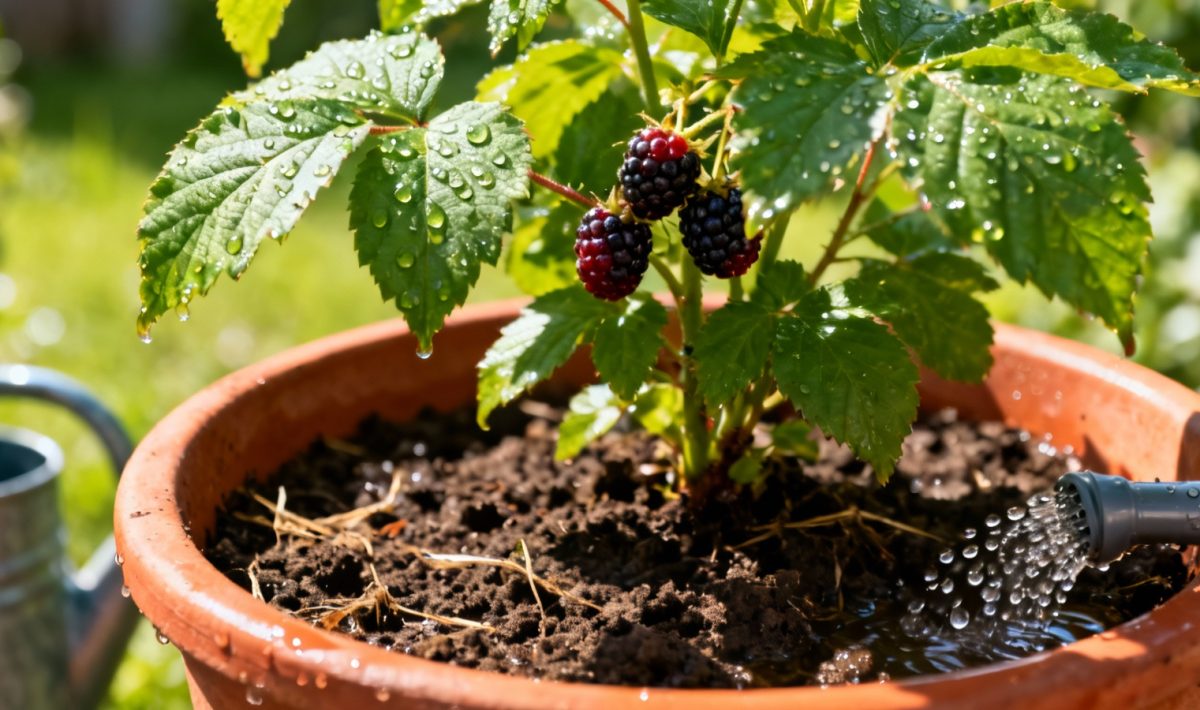
Container-grown Himalayan blackberries require more frequent watering than ground-planted specimens. Pots dry out faster due to increased surface area exposure and limited soil volume. Check container plants daily during summer and water when the top inch of soil feels dry.
Effective watering techniques and methods
Deep watering techniques encourage healthy root development and drought tolerance. Apply water slowly at the base of plants, allowing it to penetrate deeply rather than running off the surface. Soaker hoses work exceptionally well for Himalayan blackberries, providing consistent moisture without wetting foliage.
Mulching around plants helps retain soil moisture and reduces watering frequency. Apply a 3-4 inch layer of organic mulch such as wood chips or straw around the base, keeping it 6 inches away from the main stem. This technique can reduce watering needs by up to 50% while suppressing weeds.
Morning watering is optimal for Himalayan blackberries as it allows plants to absorb moisture before daily heat stress occurs. Avoid evening watering which can promote fungal diseases by keeping foliage wet overnight. Similar principles apply when considering watering schedule for Chinese wisteria, where timing matters significantly for plant health.
Monitoring soil moisture levels
Use the finger test to check soil moisture before watering. Insert your finger 2-3 inches into the soil near the plant base. If the soil feels dry at this depth, it’s time to water. Consistently moist but not soggy soil indicates proper hydration levels.
Moisture meters provide accurate readings for those who prefer precise measurements. Aim for soil moisture levels between 40-60% for optimal Himalayan blackberry growth. These tools are particularly useful for container plants where visual soil assessment is more challenging.
Managing water stress and prevention
Recognizing water stress symptoms helps prevent damage to your Himalayan blackberry plants. Wilting leaves, especially during cooler parts of the day, indicate insufficient water. Brown leaf edges and reduced fruit size also signal inadequate moisture levels.
Overwatering symptoms include yellowing leaves, soft stems, and a musty soil odor indicating root rot. If you notice these signs, reduce watering frequency and improve soil drainage around the plant base. Just as you would adjust care for other plants like understanding how to water rutabaga effectively, monitoring and adjusting watering practices prevents common problems.
Creating proper drainage prevents water-related issues in Himalayan blackberries. Ensure planting areas have good drainage by amending heavy soils with compost or sand. Raised beds work well in areas prone to waterlogging, providing better control over soil moisture levels.
Irrigation system setup
Drip irrigation systems provide efficient water delivery for larger Himalayan blackberry plantings. Set timers to deliver water early morning, applying 1-2 inches weekly depending on weather conditions. This method reduces water waste and maintains consistent soil moisture.
Sprinkler systems work for established plants but avoid overhead watering during fruit development to prevent disease issues. If using sprinklers, water early morning and ensure good air circulation around plants to promote quick drying.
Seasonal care and maintenance tips
Spring preparation involves checking irrigation systems and adjusting watering schedules as growth resumes. Clear any winter debris that might affect water penetration and reapply mulch if needed. This is also the time to establish consistent watering routines for the growing season.
Summer maintenance requires vigilant monitoring of soil moisture, especially during heat waves. Increase watering frequency during extended hot periods, but always check soil moisture before applying additional water. Similar to caring for ornamental plants like maintaining optimal watering for common peonies, consistent monitoring prevents stress during peak growing season.
Fall preparation includes gradually reducing water as temperatures cool and growth slows. This helps plants prepare for dormancy while maintaining enough moisture for root health. Remove any fallen fruit or debris that might harbor pests or diseases over winter.
Integrated pest and weed management
Proper watering practices support overall plant health, making Himalayan blackberries more resistant to pests and diseases. Strong, well-hydrated plants better withstand insect damage and recover more quickly from stress.
Mulching not only conserves moisture but also suppresses weeds that compete for water and nutrients. Regular weeding around plants ensures water reaches the intended plants rather than unwanted growth. Even when managing common garden weeds, understanding watering tips for dandelion growth can inform broader garden water management strategies.
By following these watering guidelines, your Himalayan blackberry plants will develop strong root systems, produce quality fruit, and maintain healthy growth throughout the growing season. Remember that consistency and observation are key to successful water management for these adaptable but water-sensitive plants.
Allan is a lifelong gardening enthusiast who still gets excited when the first seedlings pop up in spring. With a deep love for nature and a hands-in-the-soil approach, he shares practical tips, plant discoveries, and clever tricks picked up over years of digging, planting, and observing. Whether you’re a new gardener or have a shed full of tools, Allan writes like a neighbor who’s always happy to swap cuttings and stories over the fence.
You can find more about Allan’s work on Malt or connect with him on LinkedIn.