
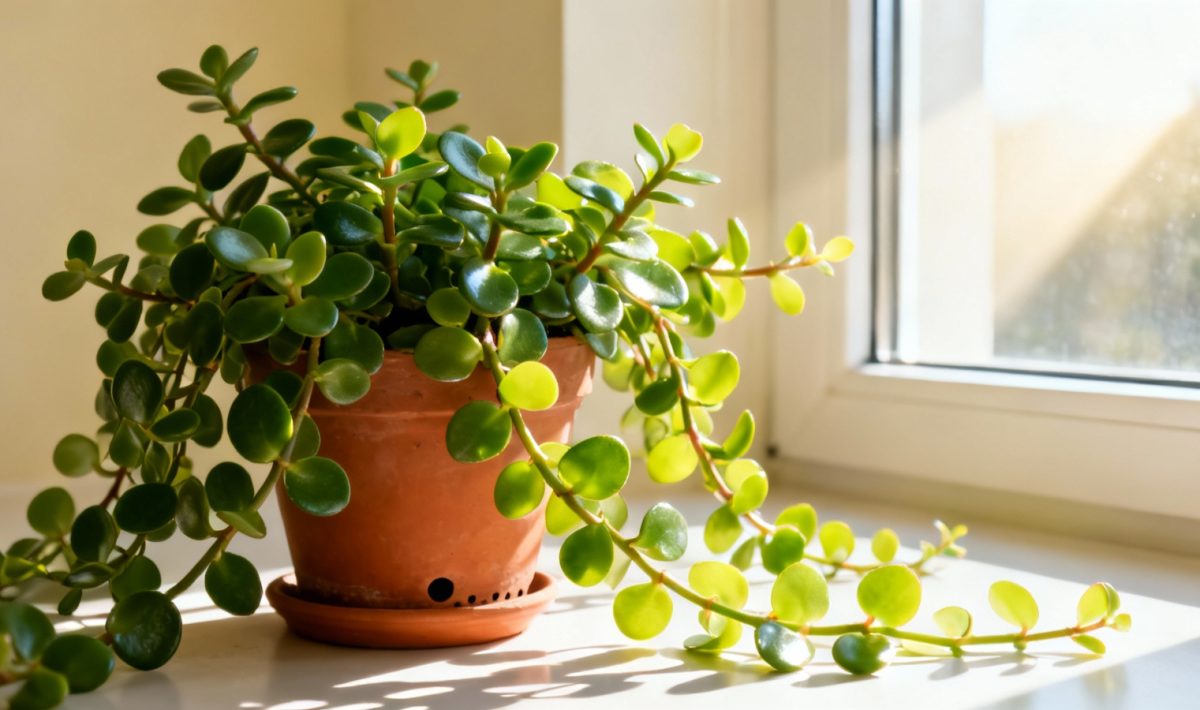
Understanding trailing jade light requirements
Trailing jade, scientifically known as Senecio jacobsenii, is a stunning succulent that has captured the hearts of plant enthusiasts worldwide. This charming plant requires specific lighting conditions to thrive and maintain its vibrant appearance. Understanding how much sunlight does trailing jade need is crucial for successful cultivation and long-term plant health.
The trailing jade belongs to the family of succulents, which means it has evolved to store water in its thick, fleshy leaves. This adaptation makes it relatively drought-tolerant, but it also influences its sunlight preferences. The plant originates from South Africa, where it grows in bright but filtered light conditions.
Unlike many other succulents that can tolerate intense direct sun, trailing jade performs best with bright, indirect sunlight. This makes it an excellent choice for indoor gardening, where you can control the light exposure more easily than outdoor conditions.
Optimal light conditions for trailing jade
The ideal lighting setup for trailing jade involves providing 4 to 6 hours of bright, indirect sunlight daily. This amount of light ensures the plant can photosynthesize effectively without suffering from sun damage. Too little light will cause the plant to become leggy and lose its compact, trailing habit.
When grown indoors, place your trailing jade near an east or north-facing window. These locations provide consistent, gentle light throughout the day without the harsh afternoon sun that can scorch the leaves. The plant should receive enough light to cast a shadow, but the shadow should be soft and not sharply defined.
For outdoor cultivation in mild climates, partial shade works well for trailing jade. Morning sun with afternoon shade creates the perfect balance. Just as different plants have varying needs – for example, understanding sunlight requirements for radishes helps with vegetable gardening – knowing your trailing jade’s specific requirements ensures success.
Signs of proper light exposure
A well-lit trailing jade will display vibrant green foliage with purple or reddish edges on the leaves. The stems will be sturdy and the plant will maintain its trailing, cascading growth pattern. The leaves should feel firm and plump, indicating healthy water storage.
If your plant is receiving adequate light, you’ll notice steady growth during the growing season. New leaves will emerge regularly, and the plant will maintain its compact form rather than stretching toward the light source.
Common lighting problems and solutions
One of the most frequent issues with trailing jade is insufficient light, which manifests as etiolation – the stretching of stems as the plant searches for more light. This condition makes the plant appear sparse and weak, with longer distances between leaves along the stem.
On the opposite end, too much direct sunlight can cause leaf burn, appearing as brown or white patches on the foliage. This is particularly common when plants are suddenly moved from low light to intense sun without gradual acclimatization.
Similar to how optimal sunlight for selloum plants requires careful consideration, trailing jade needs a balanced approach. If you notice signs of stress, gradually adjust the light conditions over several weeks rather than making dramatic changes.
Seasonal light adjustments
During winter months, trailing jade may need supplemental artificial lighting to maintain healthy growth. LED grow lights can provide the necessary spectrum and intensity when natural light becomes insufficient. Position lights 12 to 18 inches above the plant and run them for 12 to 14 hours daily.
Summer often brings more intense sunlight, so you may need to move your plant slightly further from windows or provide some filtering with sheer curtains. The goal is maintaining consistent, bright light without sudden intensity changes that can shock the plant.
Watering considerations with light exposure
The amount of sunlight your trailing jade receives directly affects its watering needs. Plants in brighter conditions will use water more quickly and may require more frequent watering. However, the soil should still be allowed to dry completely between waterings to prevent root rot.
Well-draining soil is essential for trailing jade, regardless of light conditions. A mixture of regular potting soil with added perlite or coarse sand creates the ideal growing medium. This type of soil prevents water from sitting around the roots while still providing adequate nutrition.
When watering, do so thoroughly until water drains from the bottom of the pot. This ensures the entire root system receives moisture. During the growing season (spring and summer), you might water every 1-2 weeks, while winter watering can be reduced to once monthly.
Different plants have unique relationships between light and water – much like how sunlight needs for Jimsonweed affects its care requirements. Understanding these connections helps create optimal growing conditions.
Indoor vs outdoor cultivation
Indoor trailing jade cultivation offers better control over light conditions but requires attention to placement and potential supplemental lighting. South-facing windows may provide too much intense light, while north-facing windows might not provide enough during winter months.
Outdoor cultivation in suitable climates can produce more robust plants with enhanced coloration. However, it requires careful consideration of seasonal changes and weather protection. In regions with harsh summers, providing afternoon shade prevents leaf burn while still allowing morning sun exposure.
The key difference lies in light intensity and duration. Outdoor plants receive more varied light throughout the day, while indoor plants typically get more consistent but potentially limited exposure. Just as rutabaga sunlight requirements for growth differ between indoor and outdoor cultivation, trailing jade adapts differently to each environment.
Enhancing growth with proper care
Beyond sunlight requirements, trailing jade benefits from regular feeding during the growing season. A balanced, water-soluble fertilizer diluted to quarter strength monthly provides adequate nutrition without overwhelming the plant.
Temperature also plays a role in how well your plant utilizes sunlight. Trailing jade prefers temperatures between 65-75°F (18-24°C) during the day and slightly cooler at night. These moderate temperatures, combined with proper lighting, create ideal photosynthesis conditions.
Pruning and maintenance help the plant make the most of available light. Removing dead or damaged leaves allows energy to focus on healthy growth. Pinching growing tips encourages branching and creates a fuller, more attractive plant form.
Much like how how much sun oregano needs involves understanding the plant’s natural habitat, trailing jade care benefits from mimicking its native South African conditions as closely as possible.
If your trailing jade appears pale or yellowish, it may be receiving too much light or insufficient nutrients. Gradually move it to a location with filtered light and ensure you’re providing adequate fertilization during the growing season.
Conversely, dark green leaves with stretched stems indicate insufficient light. This is the plant’s attempt to maximize light capture, but it results in weak growth. Gradually increase light exposure over several weeks to avoid shock.
Brown or crispy leaf edges typically result from too much direct sunlight, especially during hot afternoon hours. This damage is permanent, but adjusting light conditions prevents further harm to new growth.
Interestingly, different species have evolved various strategies for dealing with light stress. While some plants like sunlight needs for pineapple plants involve full sun tolerance, trailing jade has adapted to thrive in more moderate conditions.
Maximizing your trailing jade’s potential
Creating the perfect environment for your trailing jade involves balancing all care factors with proper lighting as the foundation. When light conditions are optimal, the plant can efficiently process water and nutrients, leading to vigorous growth and stunning appearance.
Consider the plant’s natural growth habit when positioning it for light exposure. As a trailing succulent, it looks best in hanging baskets or elevated positions where the stems can cascade naturally. This positioning also often provides ideal light angles.
Regular monitoring helps you fine-tune care as seasons change and your plant matures. What works in one location might need adjustment as the plant grows larger or as surrounding conditions change throughout the year.
With proper attention to sunlight requirements and complementary care practices, your trailing jade can become a spectacular addition to your plant collection, rewarding you with years of beautiful, cascading growth and occasional delicate flowers.

Allan is a lifelong gardening enthusiast who still gets excited when the first seedlings pop up in spring. With a deep love for nature and a hands-in-the-soil approach, he shares practical tips, plant discoveries, and clever tricks picked up over years of digging, planting, and observing. Whether you’re a new gardener or have a shed full of tools, Allan writes like a neighbor who’s always happy to swap cuttings and stories over the fence.
You can find more about Allan’s work on Malt or connect with him on LinkedIn.


