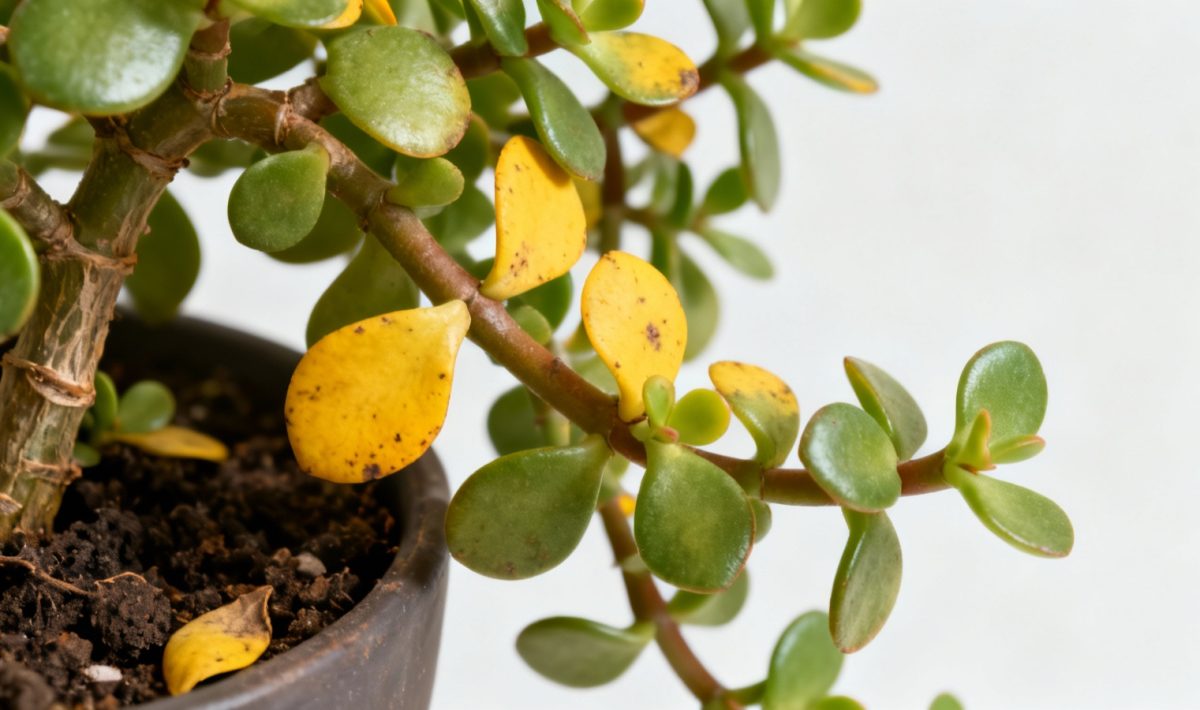
Why are my trailing jade leaves turning yellow – common causes and solutions
Nothing breaks a plant lover’s heart quite like watching their beautiful trailing jade develop yellow leaves. I’ve been there myself, staring at my once-perfect succulent wondering what went wrong. The good news? Yellow leaves on trailing jade plants are usually fixable once you understand what’s causing the problem.
Trailing jade, also known as Senecio jacobsenii, is generally a resilient plant, but it does communicate its needs through its foliage. When leaves start turning yellow, your plant is essentially sending you a message that something in its environment needs adjustment.
The most common culprit behind yellowing leaves is overwatering. Unlike regular houseplants, trailing jade stores water in its thick, succulent leaves and doesn’t appreciate wet feet. When soil stays consistently moist, the roots can’t breathe properly, leading to root rot and subsequently yellow leaves.
Light issues rank as the second most frequent cause. Too little sunlight weakens the plant, causing older leaves to yellow and drop as the plant redirects energy to newer growth. Conversely, sudden exposure to intense direct sunlight can scorch leaves, creating yellow patches that eventually spread.
✅ Quick Checklist
Is the soil too wet or too dry?
Is the plant getting 6+ hours of sunlight daily?
Have you fertilized in the last 2 months?
Are there visible pests under the leaves?
Does the pot have adequate drainage?
🔥 FREE
📱
Diagnose your plant in one click!
AI instant diagnosis • Personalized solutions • 50,000+ species
I learned this lesson the hard way when I first started growing succulents. Trailing jade needs infrequent but thorough watering. The soil should dry out completely between waterings, which typically means watering every 7-14 days depending on your climate and season.
When roots sit in waterlogged soil, they begin to rot, turning black and mushy. This prevents them from absorbing nutrients properly, causing the plant to drop its older leaves to conserve energy. You might notice the yellowing starts from the bottom leaves and works its way up the plant.
On the flip side, severe underwatering can also cause yellowing, though this is less common with trailing jade. When the plant is desperately thirsty, it will sacrifice older leaves to keep the growing tips alive.
Nutrient deficiencies and fertilizer issues
Nitrogen deficiency often manifests as yellowing that starts with older leaves and progresses upward. This typically happens in plants that haven’t been fertilized in months or are growing in depleted soil. Similar to causes of yellowing honeysuckle leaves, nutrient imbalances can significantly impact plant health.
However, be careful not to over-fertilize. Trailing jade plants are light feeders and too much fertilizer can burn their sensitive roots, leading to yellow, crispy leaf edges. I recommend using a diluted succulent fertilizer once monthly during the growing season only.
Potassium and magnesium deficiencies can also cause yellowing, though these are less common. Potassium deficiency usually shows as yellow edges on leaves, while magnesium deficiency causes yellowing between leaf veins while the veins themselves stay green.
Environmental stress factors
Temperature fluctuations stress trailing jade plants significantly. They prefer consistent temperatures between 65-75°F (18-24°C). Cold drafts from air conditioners or heat from radiators can shock the plant into dropping yellow leaves as a protective response.
Humidity levels also matter, though trailing jade is quite adaptable. Extremely low humidity combined with high temperatures can cause leaf yellowing and dropping. In my experience, maintaining moderate humidity around 40-50% works best.
Transplant shock is another common cause I see discussed frequently in online gardening communities and reddit publications. Moving your trailing jade to a new pot or location can trigger temporary leaf yellowing as the plant adjusts to its new environment.
Pest and disease identification
Spider mites, aphids, and mealybugs can all cause yellowing leaves by sucking plant juices and weakening the overall health. Check the undersides of leaves regularly for tiny webs, sticky honeydew, or white cottony masses.
Fungal infections, particularly root rot and leaf spot diseases, can cause yellowing patterns. Root rot typically affects the whole plant, while leaf spots appear as yellow circles or patches that gradually expand and turn brown.
✅ Quick Checklist
Is the soil too wet or too dry?
Is the plant getting 6+ hours of sunlight daily?
Have you fertilized in the last 2 months?
Are there visible pests under the leaves?
Does the pot have adequate drainage?
🔥 FREE
📱
Diagnose your plant in one click!
AI instant diagnosis • Personalized solutions • 50,000+ species
Start by adjusting your watering schedule. I use the “soak and dry” method: water thoroughly until it drains from the bottom holes, then wait until the soil is completely dry before watering again. This usually takes 7-14 days depending on temperature and humidity.
Improve your plant’s lighting conditions gradually. If it’s been in low light, don’t suddenly move it to full sun. Instead, gradually increase light exposure over a week or two to prevent shock. Trailing jade thrives in bright, indirect light with some morning sun.
For nutrient issues, use a balanced, diluted succulent fertilizer monthly during spring and summer only. I mix it at quarter strength to avoid burning the roots. Just like with reasons for yellow pomegranate leaves, proper nutrition timing matters significantly.
Soil and pot considerations
Well-draining soil is crucial for preventing yellow leaves. I mix regular potting soil with perlite and coarse sand in a 2:1:1 ratio. Commercial cactus and succulent mixes work well too, though I often add extra perlite for better drainage.
Ensure your pot has drainage holes. Without proper drainage, even perfect watering techniques won’t prevent root rot. Terra cotta pots work excellently because they’re porous and allow excess moisture to evaporate through the sides.
Repot every 2-3 years or when the plant becomes rootbound. Fresh soil provides new nutrients and better drainage, helping prevent many yellowing issues before they start.
Recovery and maintenance tips
Remove yellow leaves promptly by gently twisting them off at the base. This prevents the plant from wasting energy on damaged foliage and reduces the risk of fungal infections spreading to healthy parts.
Monitor your plant closely after making changes. New growth should appear green and healthy within a few weeks if you’ve addressed the underlying problem correctly. Be patient – recovery takes time, especially if the root system was damaged.
Keep a simple care log noting when you water, fertilize, and observe changes. This helps you identify patterns and prevent future problems. Many successful growers I know in online publications and forums swear by this practice for maintaining healthy plants long-term.
Regular inspection is key to catching problems early. Check your trailing jade weekly, looking under leaves for pests and examining the soil moisture level. Early intervention almost always leads to better outcomes than waiting until problems become severe.
Allan is a lifelong gardening enthusiast who still gets excited when the first seedlings pop up in spring. With a deep love for nature and a hands-in-the-soil approach, he shares practical tips, plant discoveries, and clever tricks picked up over years of digging, planting, and observing. Whether you’re a new gardener or have a shed full of tools, Allan writes like a neighbor who’s always happy to swap cuttings and stories over the fence.
You can find more about Allan’s work on Malt or connect with him on LinkedIn.