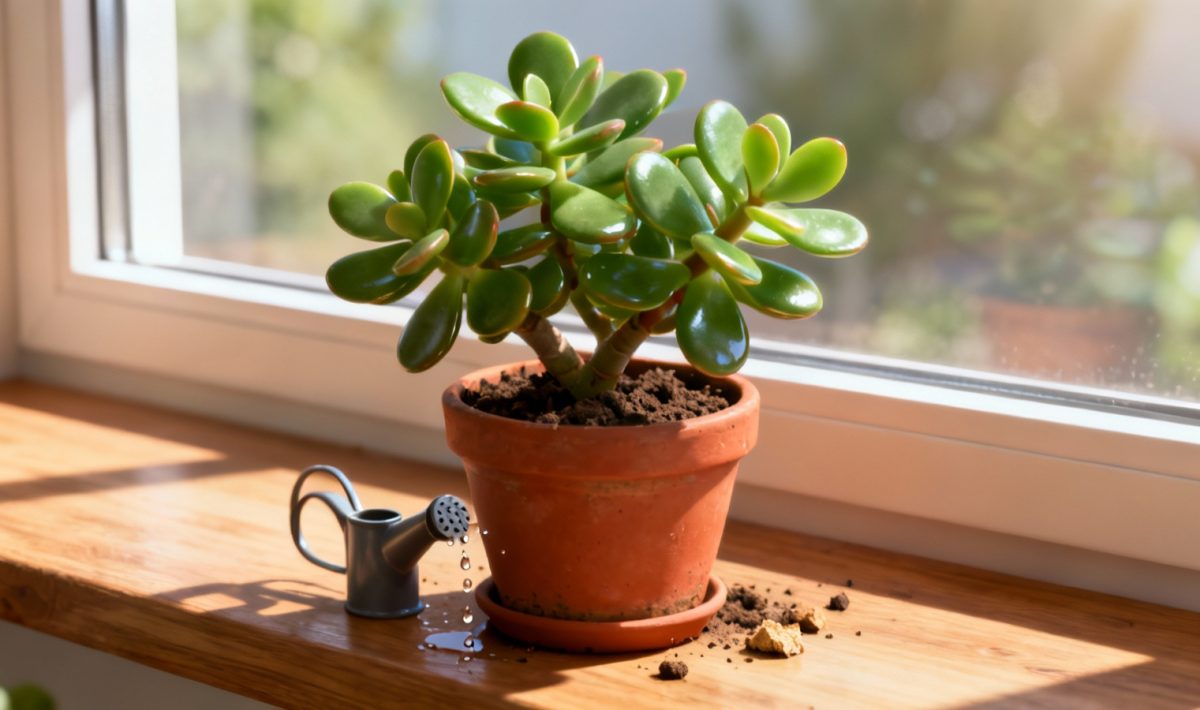
Jade plants are remarkable succulents that have mastered the art of water storage. These charming indoor plants store water in their thick, fleshy leaves, making them incredibly resilient during dry periods. However, this natural adaptation means they require a completely different watering approach compared to traditional houseplants.
The key to success with jade plants lies in understanding that less is more. Their succulent nature means they can survive weeks without water, but they cannot tolerate soggy soil conditions. When you water your jade plant too frequently, you risk creating the perfect environment for root rot and fungal diseases.
Most indoor gardeners make the mistake of treating their jade plants like other houseplants. This approach can quickly lead to problems, as jade plants prefer their soil to dry out completely between waterings. The thick leaves will actually show you when the plant needs water by becoming slightly softer and less plump.
How often should you water your jade plant throughout the year
The watering frequency for your jade plant will vary significantly with the seasons. During spring and summer, when your plant is actively growing, you’ll need to water more frequently than during the dormant winter months. Generally, this means watering every 1-2 weeks during the growing season.
In winter, your jade plant enters a period of rest, and its water requirements drop dramatically. You might only need to water once every 3-4 weeks, or even less frequently if your home is cool and humid. The key is always checking the soil moisture level rather than following a strict schedule.
Temperature and humidity in your home also play crucial roles in determining watering frequency. During hot summer days, the soil will dry out faster, requiring more frequent watering. Conversely, during cooler months or in humid environments, the soil retains moisture longer. Just as you might adjust watering frequency for Ghost plants, jade plants need seasonal consideration too.
Testing soil moisture levels
The most reliable method for determining when to water your jade plant is the finger test. Insert your finger about 2 inches into the soil near the edge of the pot. If the soil feels dry at this depth, it’s time to water. If there’s still moisture present, wait a few more days and test again.
Another helpful technique is lifting the pot to gauge its weight. A dry pot will feel noticeably lighter than a recently watered one. With practice, you’ll develop an intuitive sense for when your jade plant needs water simply by hefting the container.
You can also use a wooden chopstick or moisture meter for more precise readings. Insert the tool into the soil and leave it for a few minutes. If it comes out clean and dry, your plant is ready for watering. This method works particularly well for larger pots where the finger test might not reach deep enough.
Seasonal watering adjustments for optimal growth
Spring brings renewed growth for your jade plant, and you’ll notice new leaves appearing and stems extending. This is when you should increase your watering frequency to support active growth. Water when the top inch of soil is dry, which typically means every 10-14 days.
Summer requires the most attention, as higher temperatures and increased light exposure cause faster soil drying. You may need to water weekly during particularly hot spells, but always check the soil first. Never water on a fixed schedule without verifying that the plant actually needs it.
Fall marks the beginning of the dormancy period. Start reducing your watering frequency as growth slows down. This gradual transition helps your plant prepare for winter rest. Similar to how to care for African-lilies, proper seasonal timing is essential for plant health.
Winter care considerations
Winter is when many jade plant owners make critical mistakes. The reduced light and cooler temperatures mean your plant needs much less water. Overwatering during winter is the leading cause of jade plant failure, as the combination of low light and excess moisture creates perfect conditions for root rot.
During winter months, you might water as infrequently as once per month. Some jade plants in cool conditions can go 6-8 weeks between waterings. Always prioritize soil dryness over calendar dates when making watering decisions.
Common watering mistakes and how to avoid them
The most frequent error with jade plants is overwatering. Signs of excessive moisture include yellowing leaves, soft or mushy stems, and a musty odor from the soil. If you notice these symptoms, stop watering immediately and allow the soil to dry completely. You may need to repot if root rot has developed.
Underwatering, while less common, can also cause problems. Severely dehydrated jade plants will have wrinkled, deflated leaves and may drop foliage. The stems might become thin and weak. Fortunately, jade plants recover quickly from underwatering once you resume proper care.
Another mistake is watering with cold water directly from the tap. Jade plants prefer room temperature water, which won’t shock their root system. Let tap water sit overnight to reach room temperature and allow chlorine to dissipate before using it on your plants.
Proper watering technique
When you do water your jade plant, do it thoroughly. Water should flow out of the drainage holes, ensuring the entire root system receives moisture. This deep watering encourages healthy root development and prevents salt buildup in the soil.
Always water at soil level rather than on the leaves. Jade plant leaves can develop water spots or fungal issues if they stay wet for extended periods. Use a watering can with a narrow spout or a squeeze bottle for precise application. Just like caring for Japanese cherry trees requires specific techniques, jade plants benefit from proper watering methods.
Empty the drainage tray within an hour after watering. Standing water around the pot can lead to root problems and attract pests. Good drainage is absolutely essential for jade plant health, so ensure your pot has adequate drainage holes.
Environmental factors affecting watering needs
The light conditions in your home significantly impact how often you need to water. Jade plants in bright, sunny windows will use water more quickly than those in lower light areas. If you move your plant to a brighter location, expect to increase watering frequency accordingly.
Humidity levels also affect watering needs. Low humidity, common in heated homes during winter, can increase water loss through the leaves. However, this doesn’t necessarily mean you should water more often – instead, focus on maintaining consistent soil moisture levels.
Air circulation around your plant influences how quickly soil dries. Good airflow helps prevent fungal problems but may require slightly more frequent watering. Avoid placing your jade plant in stagnant air areas or directly next to heating vents. Understanding these factors, much like learning optimal watering for common mullein, helps you provide better plant care.
Choosing the right soil and pot
The type of soil and container you use dramatically affects watering frequency. Jade plants need well-draining soil that doesn’t retain excess moisture. A cactus and succulent potting mix works perfectly, or you can create your own by mixing regular potting soil with perlite and coarse sand.
Pot material matters too. Terra cotta pots allow soil to dry more quickly than plastic containers, which means more frequent watering but better root health. Choose a pot with drainage holes and avoid saucers that keep the pot sitting in water.
Size also plays a role – smaller pots dry out faster than large ones. If you’re unsure about watering frequency, start with a smaller pot until you develop confidence with your jade plant’s needs. You can always repot into a larger container as the plant grows.
Allan is a lifelong gardening enthusiast who still gets excited when the first seedlings pop up in spring. With a deep love for nature and a hands-in-the-soil approach, he shares practical tips, plant discoveries, and clever tricks picked up over years of digging, planting, and observing. Whether you’re a new gardener or have a shed full of tools, Allan writes like a neighbor who’s always happy to swap cuttings and stories over the fence.
You can find more about Allan’s work on Malt or connect with him on LinkedIn.