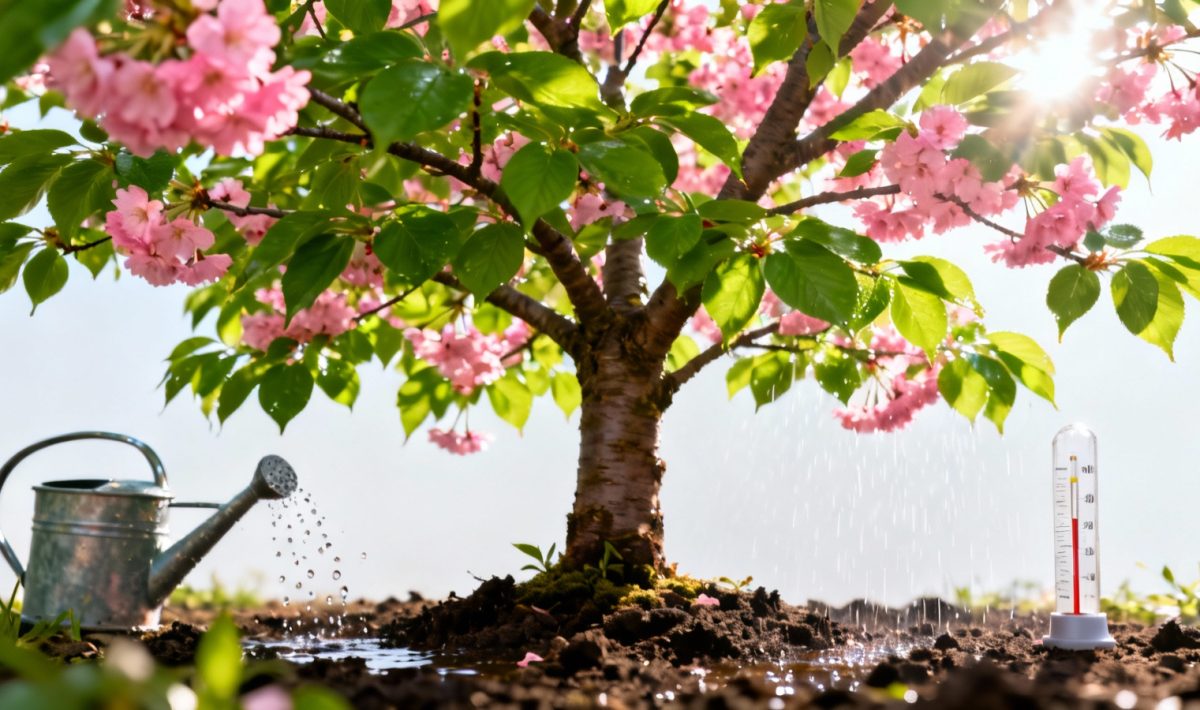
When you first plant your Japanese cherry tree, understanding its water requirements becomes crucial for successful growth. These beautiful sakura trees need consistent moisture without becoming waterlogged, which can quickly damage their delicate root system. The key lies in finding that perfect balance where your cherry tree receives adequate hydration while maintaining proper soil drainage.
Most gardeners wonder how often should you water your Japanese cherry, and the answer depends on several environmental factors. Generally, you should aim for deep, infrequent watering sessions that penetrate 2.5 to 5 cm into the soil. This approach encourages strong root development and helps your tree become more resilient to drought conditions once established.
Similar principles apply to other Japanese plants in your garden. For instance, you’ll find that watering your Japanese maple correctly requires the same attention to soil moisture levels and drainage considerations.
Seasonal watering schedule for optimal growth
During spring and summer months, your Japanese cherry will require more frequent watering as temperatures rise and growth accelerates. In warm, dry conditions, plan to water 1-2 times per week, ensuring the soil remains consistently moist but never soggy. The fast growth period demands adequate moisture to support new leaf development and flower bud formation.
Winter months call for a dramatically different approach. Reduce watering frequency to once every two weeks or less, depending on natural precipitation in your area. Your cherry tree enters a dormant phase where excessive moisture can actually harm the plant by promoting root rot or fungal infections.
Just as you would adjust care for other garden favorites, understanding seasonal needs helps tremendously. The same careful attention you’d give to optimal care for Japanese meadowsweet applies here, with seasonal adjustments being paramount for plant health.
Best practices for watering techniques
The method you choose for watering makes a significant difference in your tree’s health. Deep, slow watering proves most effective, allowing water to penetrate thoroughly rather than running off the surface. Use a soaker hose or drip irrigation system for best results, as these deliver water directly to the root zone without wasting moisture through evaporation.
Morning watering works best for Japanese cherry trees. This timing allows the plant to absorb moisture throughout the day while preventing fungal issues that can develop when leaves remain wet overnight. Always water at the base of the tree rather than spraying the foliage, which can encourage disease problems.
Quality soil preparation enhances your watering efforts significantly. Well-draining soil mixed with organic matter helps retain appropriate moisture levels while preventing waterlogged conditions. Consider adding compost or aged mulch around the base to help conserve moisture between watering sessions.
Signs your cherry tree needs attention
Learning to read your tree’s signals helps you adjust your watering schedule appropriately. Wilting leaves, especially during cooler parts of the day, often indicate insufficient moisture. However, yellowing leaves can signal both under-watering and over-watering, so check soil moisture levels before making adjustments.
Healthy Japanese cherry trees display vibrant green foliage with good leaf retention throughout the growing season. The soil should feel slightly moist when you insert your finger 2-3 inches deep near the root zone. This simple test helps you determine whether additional watering is necessary.
For newly planted trees, daily monitoring becomes essential during the first week. Gradually extend the time between waterings as the root system establishes. Just like when caring for fruit trees such as proper watering for cherry plums, establishing good habits early sets the foundation for long-term success.
Common watering mistakes to avoid
Over-watering ranks as the most frequent error gardeners make with Japanese cherry trees. Soggy soil conditions quickly lead to root rot, which can kill even healthy trees. Always check soil moisture before watering, and remember that it’s better to water deeply but less frequently than to provide frequent shallow waterings.
Another common mistake involves watering at the wrong time of day. Late evening watering leaves foliage wet overnight, creating perfect conditions for fungal diseases. Similarly, midday watering during hot weather leads to rapid evaporation and potential leaf burn from water droplets acting like tiny magnifying glasses.
Ignoring seasonal changes also causes problems. Many gardeners continue summer watering schedules into fall and winter, which can prevent proper dormancy and make trees more susceptible to cold damage. Understanding that different plants have varying needs helps; for example, keeping your African lily thriving requires different timing than your cherry tree.
Choosing quality seeds for your garden project
When starting your Japanese cherry journey from seeds, selecting high-quality seeds makes all the difference. Premium sakura seeds germinate more reliably and produce healthier seedlings that establish better in your garden. Look for seeds from reputable suppliers who provide fresh, viable seeds with proper storage and handling.
Fast delivery ensures your seeds arrive in optimal condition, ready for planting. Many customers recommend purchasing seeds that come with detailed planting instructions and ongoing support. The type of soil you prepare for germination should be well-draining yet moisture-retentive, creating perfect conditions for young plants to thrive.
Starting from quality seeds allows you to grow your own beautiful cherry tree from scratch. This rewarding process requires patience, as it may take several years before your tree reaches flowering maturity. However, the satisfaction of nurturing your sakura from seed to full bloom makes the wait worthwhile.
Creating the perfect growing environment
Beyond watering frequency, your Japanese cherry’s overall environment significantly impacts its health and flowering potential. These trees prefer locations with morning sun and afternoon shade, particularly in warmer climates. Good air circulation helps prevent disease issues while protecting the tree from strong winds that can damage delicate branches.
Soil quality plays a crucial role in water management. Well-draining soil prevents water from pooling around roots while still retaining enough moisture for consistent growth. Adding organic matter like compost improves both drainage and water retention, creating ideal conditions for your tree to flourish.
Just as you might research care requirements for other unique plants like optimal growth of common mullein, understanding your cherry tree’s specific environmental needs helps ensure long-term success and beautiful spring blooms.
Long-term care for established trees
Once your Japanese cherry tree becomes well-established, typically after 2-3 years, its watering needs become more manageable. Mature trees develop extensive root systems that can access moisture from deeper soil layers, reducing their dependence on regular irrigation during normal weather conditions.
However, even established trees benefit from supplemental watering during extended dry periods. Deep weekly waterings during drought conditions help maintain tree health and ensure robust flowering the following spring. Monitor your tree’s condition regularly and adjust watering as needed based on weather patterns and seasonal changes.
Regular mulching around the base helps conserve moisture and regulate soil temperature. Apply a 2-3 inch layer of organic mulch, keeping it several inches away from the trunk to prevent pest and disease issues. This practice reduces watering frequency while providing ongoing benefits to your tree’s root system.
Understanding proper care extends beyond just cherry trees. Whether you’re tending to houseplants like healthy growth for ponytail palm or outdoor trees, consistent attention to watering needs creates thriving plants that reward you with years of beauty and enjoyment.
Allan is a lifelong gardening enthusiast who still gets excited when the first seedlings pop up in spring. With a deep love for nature and a hands-in-the-soil approach, he shares practical tips, plant discoveries, and clever tricks picked up over years of digging, planting, and observing. Whether you’re a new gardener or have a shed full of tools, Allan writes like a neighbor who’s always happy to swap cuttings and stories over the fence.
You can find more about Allan’s work on Malt or connect with him on LinkedIn.