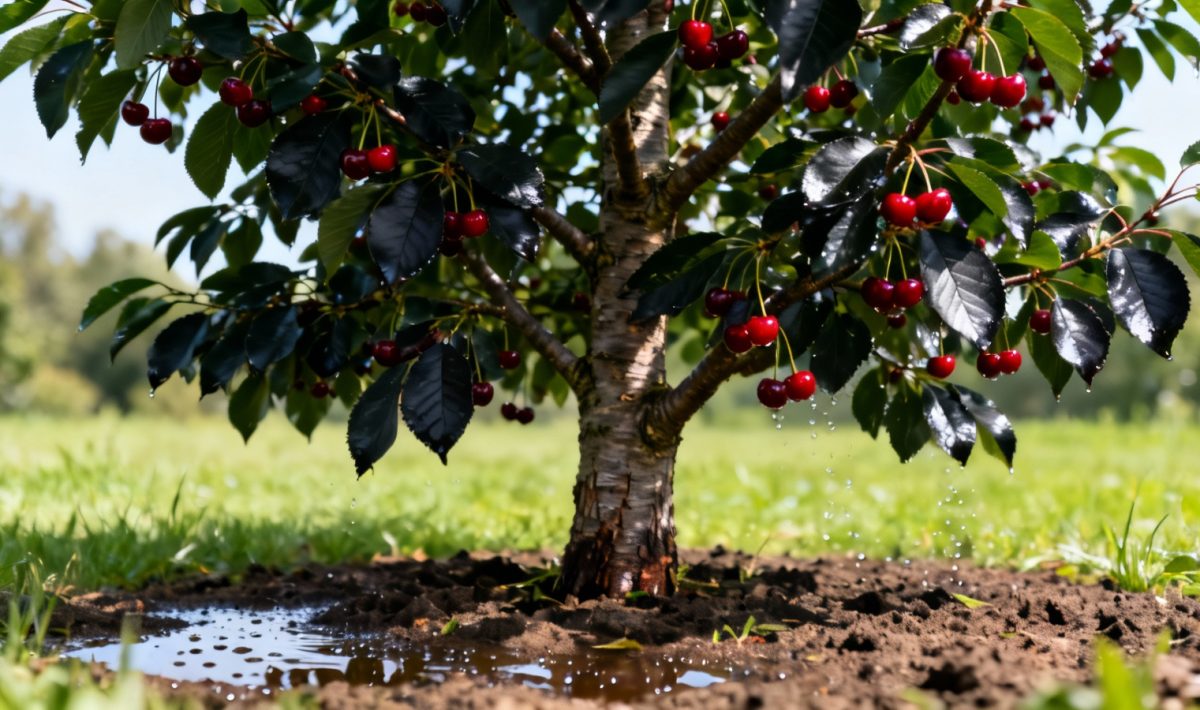
How often should you water your black cherry trees for healthy growth
When it comes to growing black cherry trees successfully, understanding how often should you water your black cherry is crucial for achieving healthy growth and bountiful harvests. These magnificent trees, with their stunning white spring blossoms and dark, flavorful fruits, require specific care to thrive in your garden.
Understanding your black cherry tree’s water needs
Black cherry trees have unique watering requirements that change throughout their life cycle. Young trees need more frequent attention compared to established ones. The key lies in providing consistent moisture without creating waterlogged conditions that can damage the root system.
During the first year after planting, your black cherry tree needs weekly watering sessions. Provide approximately 2.5 to 5 cm of water each time, ensuring the moisture reaches deep into the soil where the developing roots can access it. This deep watering encourages strong root development, which forms the foundation for a healthy, productive tree.
Seasonal watering patterns for black cherry trees
Spring brings active growth, requiring more frequent watering as your tree awakens from dormancy. Water every 7-10 days during this period, especially if natural rainfall is insufficient. The tree uses significant energy producing new leaves and flowers, making adequate hydration essential.
Summer demands the most attention regarding watering frequency. Hot, dry conditions mean you should water your black cherry tree twice weekly. Deep, thorough watering sessions work better than frequent shallow ones. This approach encourages roots to grow deeper, making the tree more drought-resistant over time.
Fall watering should gradually decrease as temperatures cool and growth slows. Continue monitoring soil moisture, but reduce frequency to once every 10-14 days. Winter typically requires minimal intervention unless you experience unusually dry conditions.
Soil conditions and watering adjustments
Your soil type significantly influences how often you need to water your black cherry tree. Sandy soils drain quickly, requiring more frequent watering sessions. Clay soils retain moisture longer, meaning you can space watering sessions further apart.
Testing soil moisture before each watering session prevents overwatering. Insert your finger or a soil probe 5-10 cm into the ground near the tree. If the soil feels dry at this depth, it’s time to water. Moist soil indicates you can wait a few more days.
Much like understanding watering your Norfolk Island pine correctly requires attention to soil conditions, black cherry trees benefit from consistent monitoring of moisture levels throughout the growing season.
Mature tree watering strategies
Established black cherry trees, typically three years or older, develop extensive root systems that access moisture from deeper soil layers. These mature trees require watering every 10-14 days during dry periods, with each session providing 60-300 liters depending on tree size.
Focus watering efforts on the drip line area, where the tree’s canopy ends. This zone contains the highest concentration of feeder roots responsible for water and nutrient uptake. Avoid watering directly against the trunk, which can promote fungal diseases.
Creating a watering schedule helps maintain consistency. Many gardeners find success with early morning watering, allowing the tree to absorb moisture before the day’s heat increases evaporation rates. This timing also reduces the risk of fungal issues that can develop with evening watering.
Signs your black cherry needs water
Recognizing water stress symptoms helps you adjust your watering frequency appropriately. Wilting leaves during hot afternoons indicate insufficient moisture. However, permanent wilting or leaf drop suggests more serious water stress requiring immediate attention.
Fruit quality also reflects watering adequacy. Properly watered trees produce plump, juicy cherries with good color development. Water-stressed trees often produce smaller, less flavorful fruit that may drop prematurely.
Similar to how ideal watering for porcelainflowers requires observing plant signals, black cherry trees communicate their needs through visible symptoms that attentive gardeners can learn to recognize.
Common watering mistakes to avoid
Overwatering ranks among the most common mistakes with black cherry trees. Constantly wet soil creates anaerobic conditions that damage roots and promote disease. Yellow leaves, especially lower ones, often indicate overwatering rather than underwatering.
Shallow, frequent watering encourages surface root development, making trees more vulnerable to drought stress. Instead, focus on deep, less frequent watering sessions that encourage roots to grow deeper into the soil profile.
Ignoring seasonal changes leads to inappropriate watering schedules. Trees in dormancy require significantly less water than actively growing trees. Adjusting your schedule based on temperature, rainfall, and tree activity ensures optimal health.
Tools for effective watering
Soaker hoses provide excellent water delivery for black cherry trees. These porous hoses slowly release water directly into the soil, minimizing evaporation and ensuring deep penetration. Position them in a circle around the tree, extending to the drip line.
Drip irrigation systems offer precise water control, particularly valuable for multiple trees. These systems deliver water directly to root zones, reducing waste and maintaining consistent moisture levels. Timers automate the process, ensuring regular watering even when you’re away.
Just as watering tips for healthy gladiolus emphasize proper equipment selection, choosing appropriate watering tools for your black cherry tree improves efficiency and plant health.
Environmental factors affecting watering frequency
Wind exposure increases water loss through transpiration, requiring more frequent watering. Trees planted in windy locations may need additional water compared to those in sheltered spots. Consider installing windbreaks to reduce water stress in exposed areas.
Temperature fluctuations also influence watering needs. Sudden heat waves increase water demand, while cool periods reduce it. Monitoring weather forecasts helps you anticipate and adjust watering schedules accordingly.
Humidity levels affect how quickly soil moisture evaporates. Low humidity conditions require more frequent watering, while high humidity periods may allow you to reduce watering frequency slightly.
Mulching benefits for water retention
Applying organic mulch around your black cherry tree significantly improves water retention. A 5-10 cm layer of wood chips, shredded bark, or compost reduces evaporation and moderates soil temperature fluctuations.
Mulch also suppresses weeds that compete with your tree for water resources. Keep mulch several centimeters away from the trunk to prevent pest and disease issues while extending it to the drip line for maximum benefit.
Understanding moisture management extends beyond trees to other garden plants, much like learning optimal watering for Tutsan plants requires considering environmental factors and plant-specific needs.
Monitoring and adjusting your watering schedule
Regular monitoring helps you refine your watering approach over time. Keep records of watering dates, amounts, and weather conditions. This information reveals patterns and helps you make informed adjustments to your schedule.
Soil moisture meters provide objective measurements, removing guesswork from watering decisions. These affordable tools give accurate readings of moisture levels at various depths, helping you determine optimal watering timing.
Tree health observations complement technical measurements. Healthy trees display vigorous growth, good leaf color, and abundant fruit production. Poor performance may indicate watering schedule adjustments are needed.
Growing successful herbs alongside fruit trees often requires similar attention to watering details, just as correct watering for thriving spearmint demonstrates the importance of consistent moisture management across different plant types.
Seasonal care beyond watering
While watering forms the foundation of black cherry tree care, additional seasonal tasks support overall health. Spring fertilization provides nutrients for vigorous growth, while fall cleanup removes diseased leaves that might harbor pests.
Pruning during dormant periods improves air circulation and light penetration, reducing disease pressure. Proper pruning also makes watering more effective by eliminating unnecessary growth that competes for resources.
Pest monitoring throughout the growing season helps identify problems early. Many pests are attracted to water-stressed trees, making consistent watering part of an integrated pest management approach.
Successfully growing black cherry trees requires understanding their specific water needs and adapting your care routine accordingly. By following these guidelines and observing your tree’s responses, you’ll develop the skills needed to maintain healthy, productive trees that provide years of beautiful blooms and delicious fruit for your garden.
Allan is a lifelong gardening enthusiast who still gets excited when the first seedlings pop up in spring. With a deep love for nature and a hands-in-the-soil approach, he shares practical tips, plant discoveries, and clever tricks picked up over years of digging, planting, and observing. Whether you’re a new gardener or have a shed full of tools, Allan writes like a neighbor who’s always happy to swap cuttings and stories over the fence.
You can find more about Allan’s work on Malt or connect with him on LinkedIn.