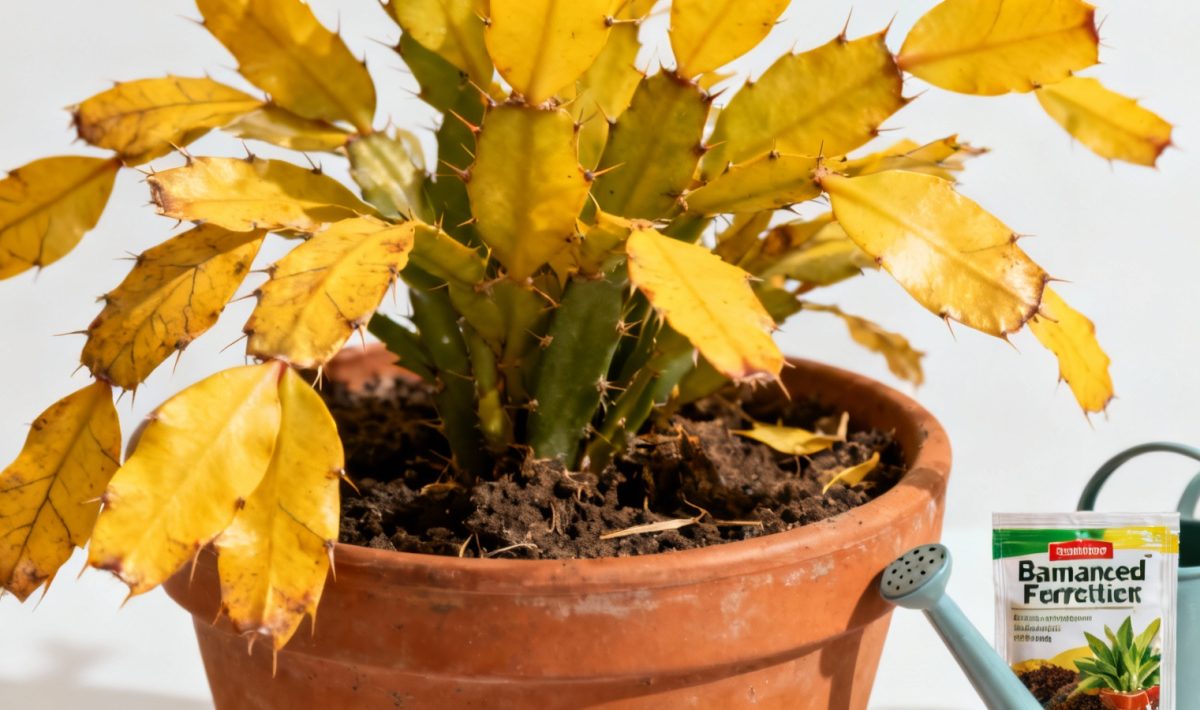
Christmas cactus yellow leaves: causes and care solutions
If you’ve noticed your Christmas cactus developing yellow leaves, you’re not alone in this gardening concern. These beautiful houseplants, scientifically known as Schlumbergera, can be quite particular about their care requirements. Understanding why are my false christmas cactus leaves turning yellow is the first step toward restoring your plant’s health and vibrant color.
Understanding your Christmas cactus and why leaves turn yellow
Christmas cacti are unique houseplants that differ significantly from desert cacti. Originally from the rainforests of Brazil, these plants are epiphytes that grow naturally on trees rather than in arid soil. This tropical origin explains their specific needs for moisture, indirect light, and well-draining potting mix.
Yellow leaves on Christmas cacti typically indicate stress from environmental factors or care issues. Unlike many other houseplants, these plants have segmented, flattened stems rather than true leaves. When these segments turn yellow, it’s your plant’s way of signaling that something in its environment isn’t quite right.
✅ Quick Checklist
Is the soil too wet or too dry?
Is the plant getting 6+ hours of sunlight daily?
Have you fertilized in the last 2 months?
Are there visible pests under the leaves?
Does the pot have adequate drainage?
🔥 FREE
📱
Diagnose your plant in one click!
AI instant diagnosis • Personalized solutions • 50,000+ species
The most frequent culprit behind yellow Christmas cactus segments is improper watering. These plants prefer consistently moist but not waterlogged soil. Overwatering can lead to root rot, which manifests as yellowing and eventual dropping of plant segments. On the flip side, allowing the soil to dry out completely can also stress the plant and cause yellowing.
Light conditions play a crucial role in maintaining healthy color. Christmas cacti thrive in bright, indirect light. Too much direct sunlight can scorch the segments, causing them to turn yellow or even reddish. Conversely, insufficient light can weaken the plant and lead to pale, yellowing segments over time.
Temperature fluctuations and drafts are additional stressors that many plant enthusiasts overlook. These tropical houseplants prefer stable temperatures between 65-70°F and can develop yellow segments when exposed to cold drafts from windows or air conditioning vents.
Proper care techniques for healthy Christmas cacti
Mastering the watering routine
Developing a proper watering schedule is essential for preventing yellow leaves. The key is to water thoroughly when the top inch of soil feels dry to the touch. During the growing season (spring and summer), this typically means watering every 1-2 weeks. In winter, reduce watering frequency as the plant enters a dormant period.
Always use a pot with drainage holes and allow excess water to flow freely from the bottom. Standing water in saucers should be emptied within an hour of watering. This practice prevents root rot, which is one of the primary causes of yellowing in Christmas cacti and many other houseplants.
Similar yellowing issues can affect other popular houseplants, such as causes of yellow snake plant leaves which often stem from comparable watering problems.
Creating optimal light conditions
Position your Christmas cactus near a north or east-facing window where it can receive bright, indirect light throughout the day. If you only have south or west-facing windows available, place the plant a few feet back from the window or use a sheer curtain to filter the intense afternoon sun.
During the darker winter months, you may need to supplement with artificial lighting. A grow light positioned 12-18 inches above the plant and used for 12-14 hours daily can help maintain healthy growth and prevent yellowing from insufficient light.
Soil and fertilization requirements
Christmas cacti require well-draining, slightly acidic soil with a pH between 6.0-6.8. A commercial cactus and succulent mix works well, or you can create your own by mixing equal parts potting soil, perlite, and peat moss. This combination provides the drainage these plants need while retaining adequate moisture.
Feed your Christmas cactus monthly during the growing season with a balanced, water-soluble fertilizer diluted to half strength. Avoid fertilizing during the winter months when the plant is dormant. Over-fertilization can cause salt buildup in the soil, leading to yellowing and other health issues.
Interestingly, outdoor plants like honeysuckle can experience similar yellowing issues. You can learn more about reasons for yellowing honeysuckle leaves which often share common environmental stressors with indoor plants.
✅ Quick Checklist
Is the soil too wet or too dry?
Is the plant getting 6+ hours of sunlight daily?
Have you fertilized in the last 2 months?
Are there visible pests under the leaves?
Does the pot have adequate drainage?
🔥 FREE
📱
Diagnose your plant in one click!
AI instant diagnosis • Personalized solutions • 50,000+ species
Diagnosing and treating yellow Christmas cactus segments
Step-by-step diagnosis process
Begin your diagnosis by examining the yellowing pattern on your Christmas cactus. If only the oldest segments at the base are yellowing, this is often natural aging and not a cause for concern. However, if yellowing appears on newer growth or spreads rapidly throughout the plant, immediate action is needed.
Check the soil moisture level by inserting your finger 2 inches into the potting mix. If it’s soggy, you’re likely dealing with overwatering. If it’s bone dry and pulling away from the pot edges, underwatering is the culprit. Also inspect the roots if possible – healthy roots should be white or light tan, while brown or black roots indicate rot.
Examine your plant for signs of pests, particularly scale insects and spider mites that commonly affect Christmas cacti. These tiny pests can cause yellowing and weakening of the plant segments. Look for small, waxy bumps (scale) or fine webbing (spider mites) on the undersides of segments.
Treatment strategies for different causes
For overwatering issues, immediately reduce watering frequency and ensure proper drainage. Remove any standing water from saucers and consider repotting if the soil remains waterlogged. Trim away any rotted roots with clean scissors and dust the cuts with cinnamon powder to prevent fungal infections.
When dealing with underwatering, gradually increase watering frequency rather than giving the plant a massive drink all at once. Severely dehydrated plants can go into shock if overwatered suddenly. Water lightly every few days until the plant shows signs of recovery.
If pests are present, treat with insecticidal soap or neem oil according to package directions. Isolate the affected plant from other houseplants to prevent spread. Regular monitoring and treatment may be necessary to completely eliminate the infestation.
Prevention strategies for long-term plant health
Maintaining consistent care routines is the best prevention against yellowing Christmas cactus segments. Establish a regular inspection schedule where you check soil moisture, examine for pests, and assess overall plant health. This proactive approach helps you catch problems before they become serious.
Consider the seasonal needs of your Christmas cactus throughout the year. During fall, reduce watering and provide cooler nighttime temperatures (50-65°F) for 6-8 weeks to encourage blooming. This dormancy period is natural and necessary for healthy flower development.
Proper pot selection contributes significantly to plant health. Choose containers that are only slightly larger than the root system, as Christmas cacti prefer to be somewhat root-bound. Terra cotta pots work exceptionally well because they allow excess moisture to evaporate through the porous walls.
Finally, be patient with your Christmas cactus recovery process. These plants can take several weeks to months to fully recover from stress-induced yellowing. With consistent, proper care and attention to their specific needs, your Christmas cactus will regain its healthy green color and continue to be a beautiful addition to your houseplant collection for years to come.
Allan is a lifelong gardening enthusiast who still gets excited when the first seedlings pop up in spring. With a deep love for nature and a hands-in-the-soil approach, he shares practical tips, plant discoveries, and clever tricks picked up over years of digging, planting, and observing. Whether you’re a new gardener or have a shed full of tools, Allan writes like a neighbor who’s always happy to swap cuttings and stories over the fence.
You can find more about Allan’s work on Malt or connect with him on LinkedIn.