
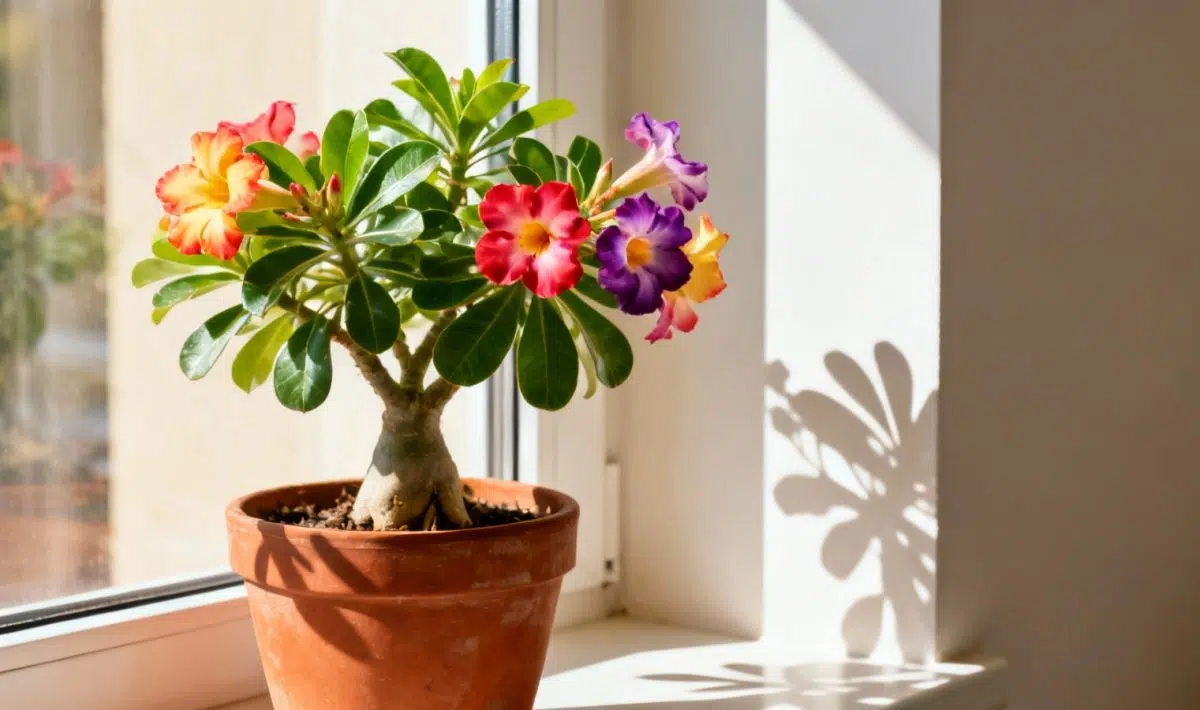
Desert rose plants are absolutely stunning succulents that capture attention with their vibrant flowers and unique swollen stems. But here’s the thing – getting the sunlight right makes all the difference between a thriving adenium obesum and a struggling plant. These beauties have specific light requirements that mirror their natural desert habitat, and understanding them is key to success.
Understanding desert rose sunlight requirements
Your desert rose needs at least 6 to 8 hours of direct sunlight daily for optimal growth and flowering. Think of it this way – these plants evolved in the scorching deserts of Africa and the Middle East, where shade is scarce and sunshine is abundant. When you provide similar conditions, your adenium obesum will reward you with vigorous growth and spectacular blooms.
The quality of sunlight matters just as much as quantity. Morning sun is particularly beneficial because it’s gentler on young plants while still providing the energy they need for photosynthesis. Afternoon sun, while more intense, helps strengthen the plant’s structure and encourages that distinctive swollen base or caudex that makes desert roses so appealing.
Seasonal adjustments for optimal light exposure
Spring through fall represents the active growing season for your desert rose. During these months, full sun exposure works wonderfully for mature plants. Position your adenium where it receives maximum sunlight, preferably facing south or west for the strongest light throughout the day.
Winter brings different challenges though. Even though desert roses can handle cooler temperatures, reduced daylight hours mean you might need to supplement with artificial lighting. LED grow lights work exceptionally well, providing 12-14 hours of consistent illumination when natural sunlight isn’t sufficient.
Much like other sun-loving plants, understanding proper light requirements helps ensure successful cultivation. For comparison, you might find it interesting to explore sunlight requirements for coriander plants which have different but equally specific needs.
Special considerations for young desert rose plants
Seedlings and small desert roses under 25 cm need gentler treatment than mature specimens. These young plants benefit from filtered sunlight or partial shade during the hottest part of the day. Think of it as gradually introducing them to their future full-sun lifestyle.
Start with morning sun exposure and gradually increase the duration over several weeks. This acclimatization process prevents sunburn and stress that could stunt growth or even kill your young adenium. Watch for signs like yellowing or browning leaves, which indicate too much direct sunlight too quickly.
Temperature also plays a role here. When temperatures exceed 40°C (104°F), even mature plants appreciate some afternoon protection. A light shade cloth or positioning near other plants can provide just enough relief without compromising overall light exposure.
Indoor vs outdoor placement strategies
Growing desert roses indoors requires careful attention to light placement. South-facing windows typically provide the best natural light, but you’ll likely need supplemental lighting to meet the 6-8 hour requirement. LED grow lights positioned 12-18 inches above the plant work beautifully for this purpose.
Outdoor placement offers more flexibility. Choose spots that receive full morning sun and continue through most of the afternoon. Avoid areas with heavy shade from buildings or large trees, as insufficient light leads to weak, leggy growth and poor flowering.
Consider seasonal movement too. Many growers successfully move their desert roses outdoors during warm months and back inside for winter protection. This strategy provides optimal growing conditions year-round while protecting against cold damage.
Signs of proper vs insufficient lighting
A well-lit desert rose displays compact, sturdy growth with vibrant green foliage. The stem or caudex develops that characteristic swollen appearance, and flowering occurs regularly during the growing season. Colors remain intense and leaves maintain their natural shape without excessive stretching.
Insufficient lighting creates obvious problems. You’ll notice elongated stems reaching toward light sources, pale or yellowing leaves, and significantly reduced flowering. The caudex may remain thin and underdeveloped, lacking that distinctive desert rose appearance that makes these plants so desirable.
Similar light-loving plants share these characteristics. Understanding optimal sunlight for evening-primrose can provide additional insights into how proper lighting affects plant development across different species.
Quality seeds and growing success
Starting your desert rose journey begins with quality seeds from reputable suppliers. Fresh adenium obesum seeds with good germination rates set the foundation for healthy plants that will thrive in proper lighting conditions. Look for suppliers offering detailed descriptions of their seed quality and storage methods.
Fast delivery and proper shipping protect seed viability during transport. Many suppliers now offer tracking services so you can monitor your order’s progress. Free shipping options make purchasing multiple varieties more economical, allowing you to experiment with different desert rose cultivars.
Storage matters too. Keep your seeds in cool, dry conditions until you’re ready to plant. Well-stored adenium seeds remain viable for several months, giving you flexibility in timing your growing projects around optimal light conditions.
Maximizing flowering through proper light management
Flowering represents the ultimate goal for most desert rose enthusiasts. Adequate sunlight directly influences bloom production, with well-lit plants producing significantly more flowers than those in marginal conditions. The intensity and duration of light exposure affect both flower quantity and quality.
Different cultivars may show varying responses to light levels. Some varieties bloom more readily with slightly less intense afternoon sun, while others require maximum exposure for peak flowering. Experimenting with positioning helps you understand your specific plants’ preferences.
Interestingly, other flowering plants also demonstrate strong relationships between light and blooming patterns. You might find similarities when learning about sunlight needs of common hazel and how proper exposure affects their reproductive cycles.
Common lighting mistakes to avoid
Many new desert rose growers make the mistake of gradually increasing light exposure too slowly. While caution is good, these plants adapt relatively quickly to increased sunlight when done progressively over 7-10 days rather than months.
Another common error involves inconsistent lighting. Plants thrive on routine, so maintaining similar light exposure patterns daily produces better results than sporadic high-intensity periods followed by shade.
Overprotection also hinders development. Some growers keep their adenium obesum in partial shade indefinitely, preventing proper caudex development and reducing flowering potential. Trust your plant’s natural adaptability while monitoring for stress signs.
Supplemental lighting options
LED grow lights offer excellent supplemental lighting for indoor desert roses or during low-light seasons. Full-spectrum LEDs work best, providing the complete light range these plants need for photosynthesis and flowering. Position lights 12-18 inches above plants for optimal coverage.
Fluorescent lights can work but require closer positioning and longer daily exposure to match LED effectiveness. High-pressure sodium lights generate too much heat for most indoor setups and aren’t recommended for home growing.
Timer systems automate lighting schedules, ensuring consistent exposure even when you’re traveling. This consistency matters more than you might think – plants respond well to predictable light cycles that mimic natural sunshine patterns.
Understanding light requirements extends beyond desert roses to many other species. Learning about ideal sunlight for viper’s bugloss demonstrates how different plants have evolved specific strategies for utilizing available light energy.
Seasonal care and light adjustment
Spring marks the beginning of active growth, making it the perfect time to increase light exposure gradually. Move outdoor plants to sunnier locations and begin longer artificial lighting schedules for indoor specimens. This seasonal adjustment aligns with your desert rose’s natural growing cycle.
Summer provides peak growing conditions with maximum natural light availability. Take advantage of long days and strong sunshine to encourage vigorous growth and flowering. Monitor for heat stress though – even desert plants can struggle with extreme temperatures combined with intense sunlight.
Fall requires gradual light reduction as plants prepare for dormancy. Slowly decrease exposure time to help your adenium transition naturally into its rest period. This preparation helps plants survive winter conditions more successfully.
Winter care focuses on maintaining minimal light requirements while respecting the plant’s need for dormancy. Reduced watering combined with moderate lighting keeps plants healthy without forcing unwanted growth during their natural rest period.

Allan is a lifelong gardening enthusiast who still gets excited when the first seedlings pop up in spring. With a deep love for nature and a hands-in-the-soil approach, he shares practical tips, plant discoveries, and clever tricks picked up over years of digging, planting, and observing. Whether you’re a new gardener or have a shed full of tools, Allan writes like a neighbor who’s always happy to swap cuttings and stories over the fence.
You can find more about Allan’s work on Malt or connect with him on LinkedIn.


