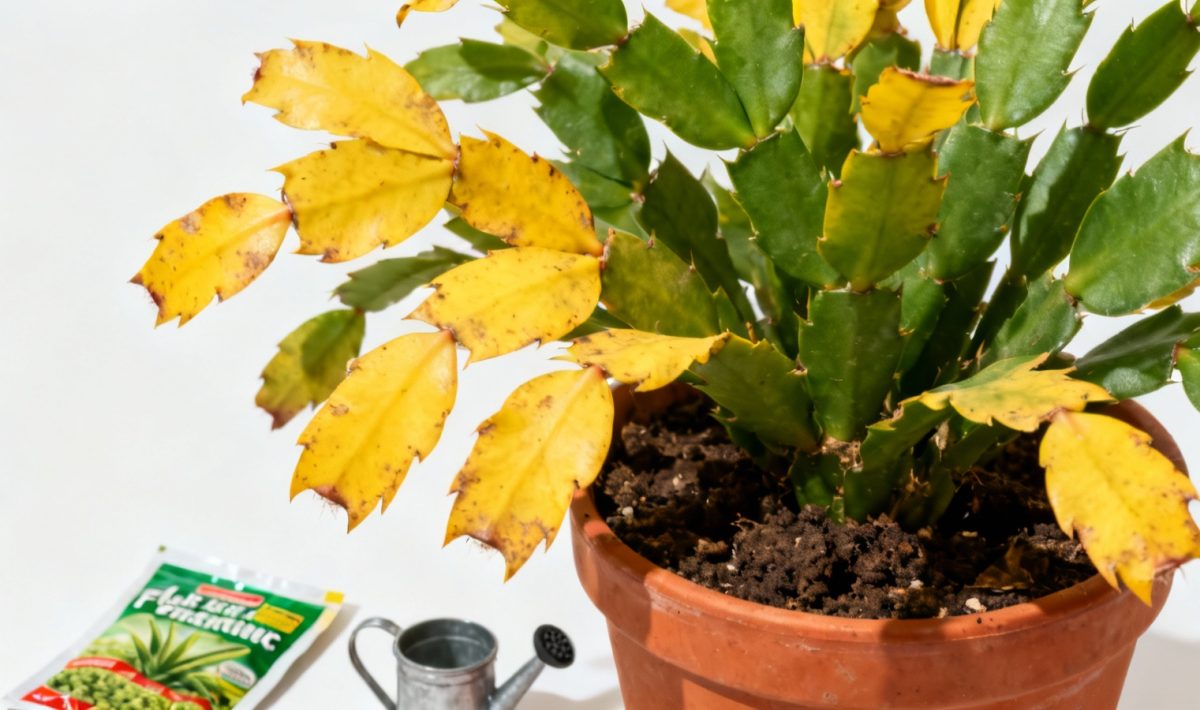
Why are my false christmas cactus leaves turning yellow: causes and solutions
Seeing yellow leaves on your beloved Christmas cactus can be quite concerning, especially when you’ve been caring for this beautiful houseplant with dedication. The good news is that yellowing leaves are often a sign that your plant is trying to tell you something specific about its care needs. Understanding these signals will help you get your Christmas cactus back to its vibrant, healthy state.
Christmas cacti, scientifically known as Schlumbergera, are popular houseplants that bring color and joy to our homes during the holiday season. However, when their segmented leaves start turning yellow, it’s usually an indication that something in their environment or care routine needs adjustment.
Before we dive into the causes of yellowing, it’s helpful to understand what makes these plants unique. Christmas cacti are epiphytic cacti native to the tropical rainforests of Brazil, which means they naturally grow on other plants rather than in soil. This origin explains why they have different care requirements compared to desert cacti.
These houseplants are sold in garden centers worldwide and have become incredibly popular for indoor cultivation. Unlike their desert cousins, Christmas cacti prefer more humid conditions and indirect light. They’re known for their distinctive flattened, segmented stems that many people call “leaves,” though technically they’re modified stems called phylloclades.
✅ Quick Checklist
Is the soil too wet or too dry?
Is the plant getting 6+ hours of sunlight daily?
Have you fertilized in the last 2 months?
Are there visible pests under the leaves?
Does the pot have adequate drainage?
🔥 FREE
📱
Diagnose your plant in one click!
AI instant diagnosis • Personalized solutions • 50,000+ species
The most frequent reason you’ll see yellow leaves on your Christmas cactus is improper watering. These plants are particularly sensitive to both overwatering and underwatering, but overwatering tends to be the bigger problem for most indoor gardeners.
When you water too frequently or the pot doesn’t have proper drainage, the roots can become waterlogged and start to rot. This prevents the plant from absorbing nutrients properly, leading to yellowing leaves that may eventually drop off. On the other hand, if you let the soil get completely dry for extended periods, the plant will also show stress through yellowing.
To get the watering right, check the soil moisture by inserting your finger about an inch deep into the potting mix. Water thoroughly when the top inch feels dry, but make sure excess water can drain from the pot. This balance is crucial for maintaining healthy root systems.
Light conditions affect leaf color
Christmas cacti prefer bright, indirect light rather than direct sunlight. If your plant is getting too much direct sun, especially during the hot afternoon hours, the leaves can become stressed and turn yellow or even reddish. Conversely, insufficient light can also cause yellowing as the plant struggles to photosynthesize effectively.
The ideal spot for your Christmas cactus is near a window with filtered light or in a location that receives morning sun but is protected from harsh afternoon rays. You want about 6-8 hours of bright, indirect light daily for optimal health and vibrant leaf color.
Proper care techniques for healthy plants
Soil and pot considerations
The type of soil and pot you use can significantly impact your plant’s health. Christmas cacti need well-draining soil that retains some moisture but doesn’t become waterlogged. A good mix combines regular potting soil with perlite, orchid bark, or succulent mix to improve drainage.
Your pot should have drainage holes at the bottom – this is non-negotiable for preventing root rot. If you love a decorative pot without holes, use it as a cover pot with a plastic nursery pot inside that has proper drainage. This way, you can remove the inner pot for watering and let excess water drain completely.
Similar to how cylindrical snake plant leaf issues can arise from poor drainage, Christmas cacti also suffer when their roots sit in soggy soil.
Temperature and humidity requirements
These tropical plants prefer temperatures between 65-70°F (18-21°C) during the day and slightly cooler at night. Sudden temperature changes or exposure to cold drafts can stress the plant and cause yellowing leaves. Keep your Christmas cactus away from heating vents, air conditioning units, and drafty windows.
Humidity is another important factor. While they don’t need as much humidity as some tropical houseplants, Christmas cacti appreciate levels around 50-60%. You can increase humidity by placing a water tray near the plant or grouping it with other houseplants.
Fertilizing for optimal health
During the growing season (spring and summer), feed your Christmas cactus with a balanced, diluted fertilizer every 2-4 weeks. Too much fertilizer can actually cause more harm than good, leading to salt buildup in the soil and potentially causing leaf yellowing.
Use a fertilizer diluted to half the recommended strength, and always water the plant before and after fertilizing to prevent root burn. During fall and winter, reduce or stop fertilizing entirely as the plant enters its dormant period.
✅ Quick Checklist
Is the soil too wet or too dry?
Is the plant getting 6+ hours of sunlight daily?
Have you fertilized in the last 2 months?
Are there visible pests under the leaves?
Does the pot have adequate drainage?
🔥 FREE
📱
Diagnose your plant in one click!
AI instant diagnosis • Personalized solutions • 50,000+ species
It’s worth noting that some yellowing can be completely natural. Like many plants, Christmas cacti occasionally shed older segments as part of their normal growth cycle. If you only see a few yellow segments near the base of the plant while the rest looks healthy, this is likely natural aging.
However, if multiple segments are turning yellow simultaneously or the yellowing is spreading rapidly, this indicates a care issue that needs attention.
Pest problems and diseases
Occasionally, pests like mealybugs, scale insects, or spider mites can cause stress that leads to yellowing leaves. Check the undersides of segments and the joints between sections for any signs of small insects or white cottony masses.
If you find pests, isolate the plant immediately and treat it with insecticidal soap or neem oil. Just as yellowing leaves in Kentucky bluegrass can signal various issues, yellowing in houseplants often requires careful diagnosis to identify the root cause.
Recovery steps for yellowing plants
If your Christmas cactus is showing signs of stress, don’t panic. These resilient plants can often recover with the right adjustments to their care routine. Start by evaluating your watering schedule and ensuring proper drainage.
Remove any severely yellowed or mushy segments with clean, sharp scissors to prevent the spread of any potential rot. Adjust the plant’s location if necessary to provide better light conditions, and be patient – recovery can take several weeks to become visible.
Prevention strategies for the future
The best approach to dealing with yellowing leaves is preventing them in the first place. Establish a consistent care routine that includes checking soil moisture regularly, providing stable environmental conditions, and observing your plant for early signs of stress.
Keep a simple care log noting when you water, fertilize, and observe any changes in your plant’s appearance. This will help you identify patterns and adjust your care routine as needed. Remember that consistency is key – sudden changes in care can stress the plant more than gradual adjustments.
With proper attention to watering, light, temperature, and humidity, your Christmas cactus should maintain its beautiful green segments and reward you with stunning blooms during the holiday season. The key is understanding that these plants, despite being called cacti, need more attention to moisture and environmental conditions than their desert relatives.
Allan is a lifelong gardening enthusiast who still gets excited when the first seedlings pop up in spring. With a deep love for nature and a hands-in-the-soil approach, he shares practical tips, plant discoveries, and clever tricks picked up over years of digging, planting, and observing. Whether you’re a new gardener or have a shed full of tools, Allan writes like a neighbor who’s always happy to swap cuttings and stories over the fence.
You can find more about Allan’s work on Malt or connect with him on LinkedIn.