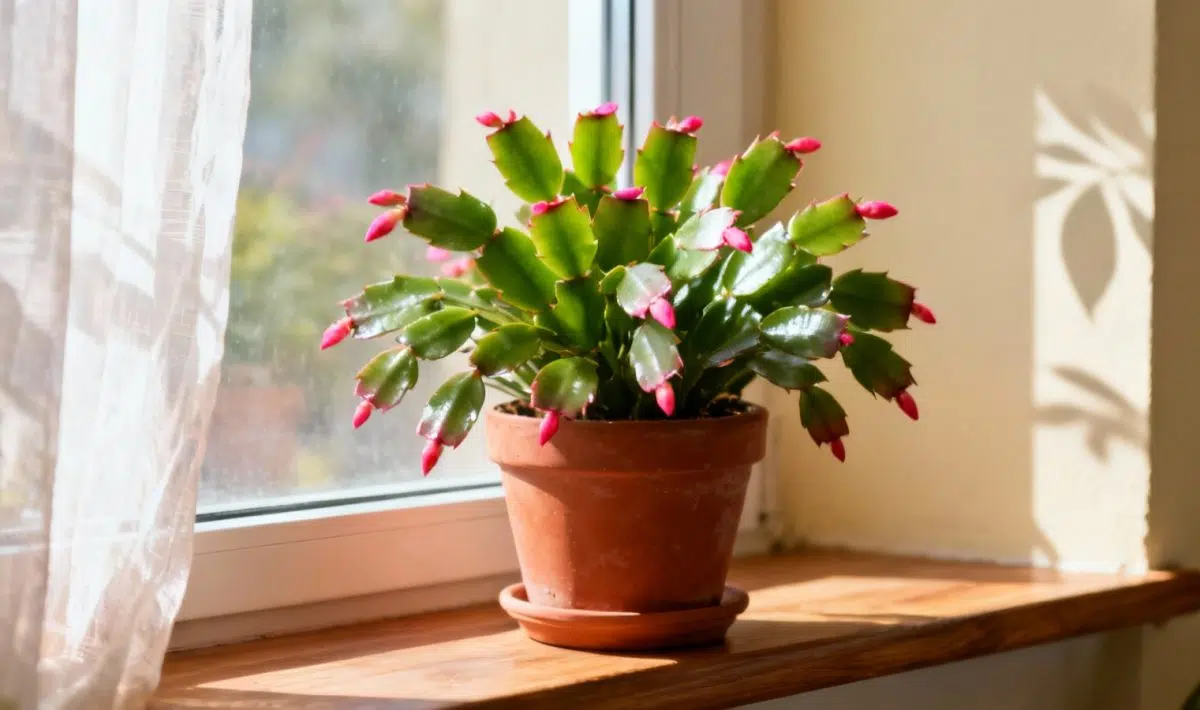
Understanding your false Christmas cactus sunlight needs
The false Christmas cactus, scientifically known as Schlumbergera truncata, is quite different from your typical desert cactus when it comes to light requirements. This beautiful houseplant originally hails from the rainforests of Brazil, where it grows as an epiphyte in the filtered light beneath the forest canopy. Understanding this natural habitat is key to providing the right amount of sunlight for your plant to thrive.
Unlike its desert cousins that bask in direct sunlight all day, the false Christmas cactus prefers bright, indirect light for about 8 to 10 hours daily. Direct sunlight can actually harm your plant, causing the leaves to turn yellow or develop brown, scorched patches. The ideal setup mimics the dappled light it would receive in its native environment.
Optimal light conditions for healthy growth
Your false Christmas cactus will flourish when placed near a bright window that doesn’t receive direct afternoon sun. East-facing windows are perfect, as they provide gentle morning light that gradually fades throughout the day. North-facing windows can work too, though you might need to supplement with artificial light during darker months.
The plant should receive approximately 1,000 to 2,000 foot-candles of light intensity. If you’re unsure about your lighting conditions, you can use a simple light meter or smartphone app to measure the brightness in different areas of your home. Much like how you might consider the sunlight requirements for catnip growth when planning your herb garden, understanding these specific needs will help your cactus thrive.
Signs your plant needs more or less light
When your false Christmas cactus doesn’t receive enough bright light, it will show you clear signs. The plant may become leggy, with long, weak growth reaching toward the nearest light source. The segments will appear pale green rather than the rich, vibrant color of a healthy plant.
On the flip side, too much direct sunlight causes different problems. You’ll notice the leaf segments turning reddish or purple, which is the plant’s way of protecting itself from excessive light. Brown spots or scorched areas are definite indicators that your cactus is getting burned by too much direct sun.
Seasonal light adjustments for blooming
Here’s where things get interesting with your false Christmas cactus care routine. To encourage blooming, you need to manipulate the light cycle during fall. The plant requires 12 to 14 hours of complete darkness each night for several weeks to set buds, just like nature would provide in its native habitat.
During this blooming preparation period, any artificial light – even from street lamps or indoor lighting – can disrupt the process. You might need to move your plant to a completely dark room each evening or cover it with a box. This careful light management is crucial for getting those beautiful flowers that make this plant so special.
The soil also plays an important role during this time. A well-draining, slightly acidic soil mix will support the plant’s energy needs while it’s preparing to bloom. Much like how different plants have varying requirements – for instance, the optimal sunlight for wine grape differs significantly from houseplants – your cactus has its own specific needs.
Indoor placement strategies
The best locations in your home for a false Christmas cactus are spots that receive bright, filtered light throughout most of the day. Consider placing it on a plant stand near an east or north window, or even in a bright bathroom where it can benefit from the humidity.
Avoid placing your plant directly on windowsills where it might get too much direct sun, especially during summer months. Instead, position it a few feet back from the window where the light is still bright but diffused. You can also use sheer curtains to filter intense sunlight if needed.
If natural light is limited in your space, grow lights can supplement what your plant receives. LED grow lights positioned 12 to 18 inches above the plant can provide the necessary illumination without generating excessive heat.
Common lighting mistakes to avoid
One common mistake is treating your false Christmas cactus like a desert cactus and placing it in the sunniest spot available. This approach will stress the plant and prevent it from reaching its full potential. Remember, this plant evolved in forest conditions, not desert ones.
Another frequent error is not adjusting light exposure seasonally. During winter months, you might need to move your plant closer to windows or add supplemental lighting as natural daylight hours decrease. Just as you might adjust care for other plants – similar to how sunlight needs for woodland strawberries vary by season – your cactus benefits from this attention to changing conditions.
Combining light with other care factors
Proper lighting works best when combined with appropriate watering, humidity, and temperature conditions. Your false Christmas cactus prefers temperatures between 65-75°F (18-24°C) and humidity levels around 50-60%. These conditions, paired with the right amount of bright, indirect light, create an ideal growing environment.
The plant should be watered when the top inch of soil feels dry, but never let it sit in soggy conditions. Good drainage is essential, just as it is for many other plants you might grow. Consider how ideal sunlight for garden thyme is just one part of successful cultivation – the same holistic approach applies here.
Troubleshooting light-related problems
If your false Christmas cactus isn’t blooming despite proper care, light exposure is often the culprit. Make sure you’re providing those crucial dark periods in fall, and check that the plant is getting enough bright light during its growing season from spring through early fall.
Drooping or wilted segments can indicate either too much direct sun or insufficient light combined with overwatering. Assess your plant’s location and adjust accordingly. The goal is to find that sweet spot where your cactus receives plenty of bright light without any harsh, direct rays.
Much like how cantaloupe sunlight requirements are specific to that plant’s needs, your false Christmas cactus has evolved for particular light conditions. By respecting these requirements and making small adjustments as needed, you’ll be rewarded with a healthy, blooming plant that brings joy to your home for years to come.
Allan is a lifelong gardening enthusiast who still gets excited when the first seedlings pop up in spring. With a deep love for nature and a hands-in-the-soil approach, he shares practical tips, plant discoveries, and clever tricks picked up over years of digging, planting, and observing. Whether you’re a new gardener or have a shed full of tools, Allan writes like a neighbor who’s always happy to swap cuttings and stories over the fence.
You can find more about Allan’s work on Malt or connect with him on LinkedIn.