
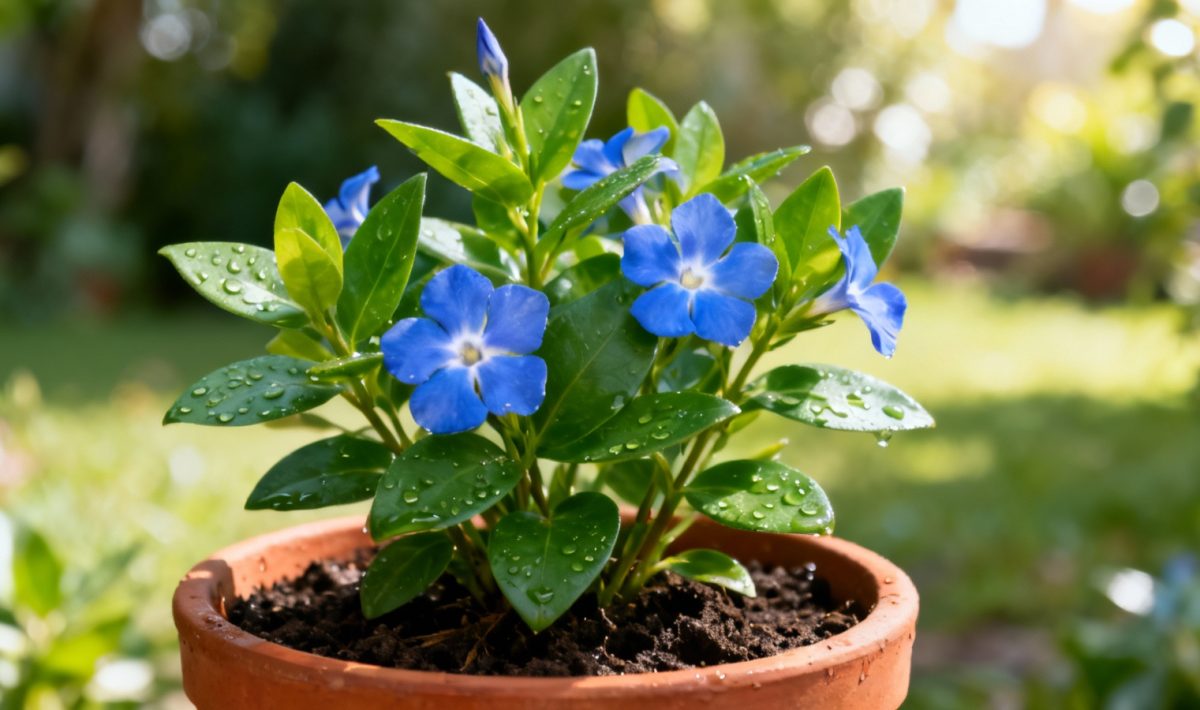
Understanding your greater periwinkle’s water needs
Greater periwinkle, or Vinca major, is honestly one of the most forgiving ground cover plants you can grow in your garden. When it comes to watering, this beautiful variegated foliage plant has some pretty specific preferences that, once you understand them, will make your life so much easier.
The key thing to remember is that how often should you water your greater periwinkle really depends on whether your plant is newly installed or well-established. During the first few weeks after planting, you’ll want to keep the soil consistently moist to help those roots settle in properly. Think of it as giving your new plant friend the best possible start in life.
Once your Vinca major has had time to establish itself – usually after about 6-8 weeks – it becomes remarkably drought-tolerant. In fact, established plants can go for 2-3 months without water during cooler seasons, though they’ll look their absolute best with occasional deep watering during dry spells.
Seasonal watering schedules for optimal growth
Spring brings new growth and increased water needs for your periwinkle. During this active growing season, you’ll want to water when the top inch of soil feels dry to the touch. This usually works out to about once or twice a week, depending on your local climate and rainfall.
Summer can be tricky – while your established Vinca major can handle some drought, prolonged dry spells will cause the foliage to look less lush. A good rule of thumb is to give it a thorough soaking once a week during hot weather, making sure the water penetrates deep into the soil rather than just wetting the surface.
Fall and winter require much less intervention from you. Your greater periwinkle will naturally slow down its growth, and you can often rely on natural rainfall. Only water if you’re experiencing an unusually dry winter or if you notice the leaves starting to look stressed.
Signs your plant needs water
Your Vinca major will actually tell you when it’s thirsty if you know what to look for. The most obvious sign is slightly wilted or drooping leaves, especially during the warmer parts of the day. You might also notice that the normally glossy green foliage starts to look a bit dull or less vibrant.
Another reliable indicator is the soil itself – stick your finger about an inch into the ground near the plant’s base. If it feels completely dry, it’s time to water. However, if you can still feel some moisture, hold off for a few more days.
Best watering techniques for healthy periwinkle
When you do water your greater periwinkle, the technique matters just as much as the timing. Deep, infrequent watering is far better than frequent light sprinklings. This encourages the roots to grow deeper, making your plant more resilient during dry periods.
I always recommend watering early in the morning when possible. This gives the plant time to absorb the water before the heat of the day and reduces the risk of fungal problems that can occur when foliage stays wet overnight.
If you’re growing your Vinca in pots rather than as ground cover, you’ll need to be more attentive to watering. Container plants dry out much faster than those planted directly in the garden soil. Check them every few days and water when the top inch of potting mix feels dry.
Soil considerations and drainage
Your greater periwinkle will thrive in well-draining soil that doesn’t stay soggy after watering. While these plants appreciate consistent moisture during their establishment phase, they absolutely hate having their roots sitting in waterlogged conditions.
If you’re dealing with heavy clay soil, consider amending it with compost or coarse sand to improve drainage. On the flip side, if your soil is very sandy and drains too quickly, working in some organic matter will help it retain moisture for longer periods.
The ideal soil for Vinca major stays evenly moist but never soggy. Think of it like a well-wrung sponge – damp but not dripping. This balance is especially important for plants growing in full sun versus those in shade, as sun-exposed plants will naturally need more frequent watering.
Common watering mistakes to avoid
One of the biggest mistakes I see gardeners make is overwatering their established greater periwinkle. While the intention is good, too much water can actually cause more problems than too little. Overwatering can lead to root rot, yellowing leaves, and increased susceptibility to fungal diseases.
On the other hand, underwatering newly planted periwinkle is equally problematic. Those first few weeks are critical for root establishment, and letting the soil dry out completely during this time can set your plant back significantly or even kill it.
Another common error is watering too frequently with small amounts. This creates shallow root systems that make your plant more vulnerable to drought stress. Instead, water thoroughly but less often to encourage deep root growth.
Adapting to your local conditions
Your local climate plays a huge role in determining the perfect watering schedule for your greater periwinkle. If you live in an area with high humidity, your plants will need less frequent watering than those in dry, arid regions.
Similarly, if your Vinca major is planted in a shaded area versus full sun, the watering requirements will be quite different. Shade-grown plants typically need less water since they’re not dealing with the stress of intense sunlight and heat. For gardeners dealing with other ground cover plants, you might find our watering tips for African lilies helpful for comparison.
Wind exposure is another factor that’s often overlooked. Plants in windy locations will dry out faster and may need more frequent attention, especially during the growing season.
Special considerations for different growing situations
If you’re growing greater periwinkle as a ground cover under trees, you’ll need to account for competition from tree roots. These areas often require more frequent watering since the tree roots are also drawing moisture from the soil.
For those cultivating Vinca major in containers or hanging baskets, daily checks during warm weather are essential. Container plants can go from perfectly moist to bone dry in a matter of hours during hot summer days.
Rock gardens present their own unique challenges. While the excellent drainage is perfect for preventing root rot, it also means water moves through quickly. You may need to water more frequently but with smaller amounts to keep the soil consistently moist without creating runoff. Understanding watering needs for different plant types can be helpful – our watering guidelines for European beeches offers insights into managing moisture for woody plants in similar conditions.
If you notice your greater periwinkle’s leaves turning yellow, this could indicate either overwatering or underwatering – I know, not very helpful! The key is to look at other clues. Yellow leaves combined with mushy, dark roots suggest overwatering, while yellowing accompanied by dry, brittle roots points to underwatering.
Brown leaf edges often indicate irregular watering – either too much followed by too little, or vice versa. The goal is consistency in your watering routine, which helps the plant maintain steady growth and healthy foliage.
Sometimes you might notice that your Vinca isn’t flowering as much as expected. While several factors can influence blooming, inconsistent moisture is often a culprit. These plants produce their best display of blue flowers when they’re not stressed by drought or waterlogged conditions. For gardeners interested in flowering plants with different water requirements, our tips on watering calla lilies provides valuable insights into managing moisture for spectacular blooms.
Creating a sustainable watering routine
The best approach to watering your greater periwinkle is developing a routine that works with your schedule and local conditions. Start by checking your plants twice a week during the growing season, adjusting frequency based on weather patterns and plant response.
Consider investing in a simple moisture meter if you’re unsure about soil conditions. These inexpensive tools take the guesswork out of determining when your plants actually need water versus when you think they might.
Remember that established greater periwinkle is incredibly resilient. Once you get the hang of reading your plant’s signals, you’ll find that it’s quite forgiving of the occasional missed watering. For those managing diverse garden plants, our how to water dog roses effectively guide can help you develop comprehensive watering strategies for mixed plantings.
The key to success with Vinca major lies in understanding that less is often more once the plant is established. With proper initial care and a sensible ongoing watering routine, your greater periwinkle will reward you with lush, variegated foliage and charming blue flowers for years to come.

Allan is a lifelong gardening enthusiast who still gets excited when the first seedlings pop up in spring. With a deep love for nature and a hands-in-the-soil approach, he shares practical tips, plant discoveries, and clever tricks picked up over years of digging, planting, and observing. Whether you’re a new gardener or have a shed full of tools, Allan writes like a neighbor who’s always happy to swap cuttings and stories over the fence.
You can find more about Allan’s work on Malt or connect with him on LinkedIn.


