How much sunlight does madagascar periwinkle need for optimal growth
Madagascar periwinkle, scientifically known as Catharanthus roseus, is a stunning flowering plant that brings vibrant colors to gardens worldwide. Understanding how much sunlight does Madagascar periwinkle need is crucial for any gardener looking to cultivate these beautiful flowers successfully. These resilient plants have specific light requirements that directly impact their growth, blooming potential, and overall health.
Vinca plants thrive in full sun conditions, requiring at least six hours of direct sunlight daily for optimal performance. This generous amount of sunshine ensures robust growth and prolific flower production throughout the growing season. Without adequate light exposure, these plants struggle to reach their full potential and may produce fewer blooms.
The relationship between sunlight and vinca health becomes particularly evident during summer months. Plants positioned in bright, sunny locations develop stronger stems, more vibrant flower colors, and better resistance to common plant diseases. Morning sun exposure is especially beneficial, as it provides gentle warmth without the harsh intensity of afternoon rays.
However, in extremely hot climates, providing some afternoon shade can prevent leaf scorch and maintain plant vigor. This balance between adequate light and protection from excessive heat creates ideal growing conditions for Madagascar periwinkle plants.
Different vinca varieties and their light preferences
Various periwinkle varieties exhibit slightly different tolerance levels to sunlight intensity. Catharanthus roseus cultivars generally share similar light requirements, but some hybrid varieties show improved heat tolerance and can handle more intense sun exposure than traditional types.
Compact varieties like ‘Cooler’ series perform well in full sun while maintaining their neat, bushy appearance. Trailing varieties used in hanging baskets also prefer bright conditions but may benefit from slight protection during peak afternoon hours in very hot regions.
Understanding these subtle differences helps gardeners select appropriate varieties for their specific growing conditions and climate zones. Each type brings unique characteristics while maintaining the fundamental need for abundant sunlight.
Popular vinca varieties for full sun conditions
Several outstanding periwinkle varieties excel in sunny locations, each offering distinct advantages for different garden applications. The ‘Titan’ series produces large flowers and demonstrates exceptional heat tolerance, making it perfect for challenging sunny spots where other plants might struggle.
‘Mediterranean’ varieties offer excellent drought resistance alongside their sun-loving nature, requiring minimal care once established. These characteristics make them ideal for low-maintenance garden areas that receive intense daily sunlight.
Signs of proper and improper light exposure
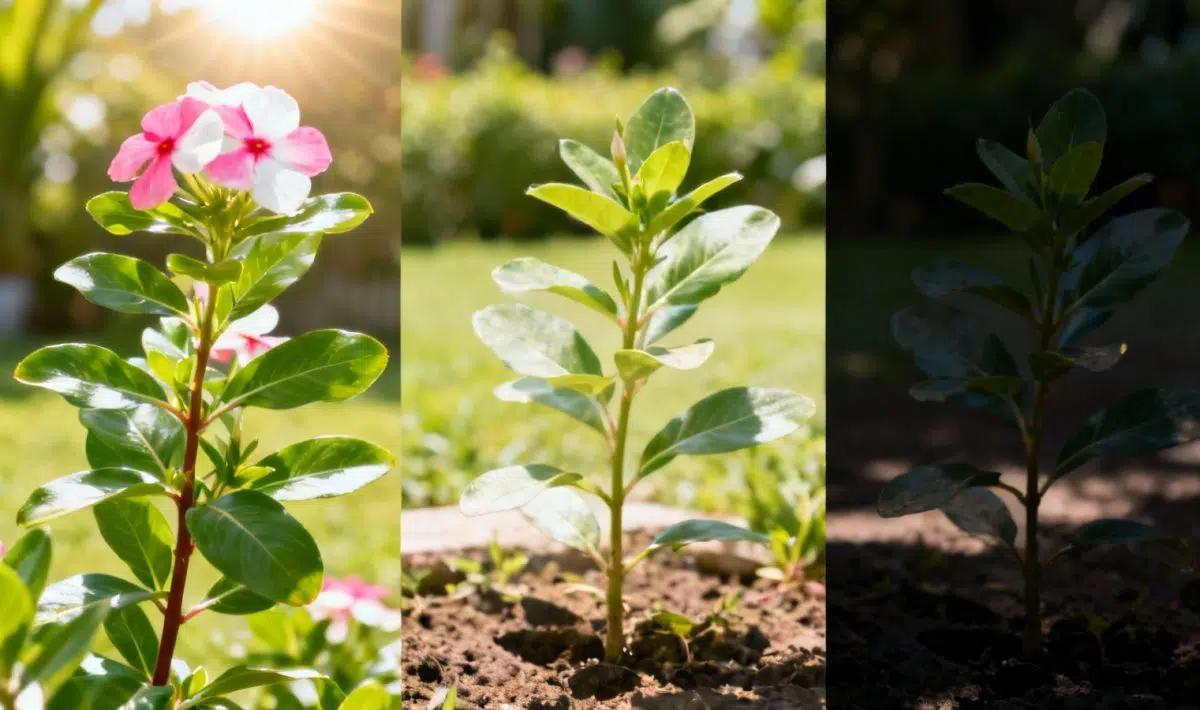
Recognizing the visual cues that indicate whether your vinca receives appropriate sunlight helps ensure healthy plant development. Well-lit plants display compact, bushy growth with dark green foliage and abundant flower production throughout the growing season.
Insufficient light typically results in leggy, stretched growth as plants reach toward available light sources. Flowers become sparse, and the overall plant appearance becomes thin and weak. Just as necessary sunlight for growing pineapples affects fruit development, inadequate light severely impacts vinca flowering performance.
Excessive sun exposure, particularly in very hot climates, can cause leaf yellowing or browning around the edges. While these plants love sunshine, protection from the most intense midday heat prevents potential damage and maintains optimal appearance.
Optimizing light conditions throughout the growing season
Seasonal changes affect light intensity and duration, requiring gardeners to monitor and adjust vinca placement accordingly. Early spring planting benefits from gradually increasing sun exposure as plants establish their root systems and adapt to outdoor conditions.
During peak summer months, ensuring consistent moisture alongside full sun exposure prevents stress and maintains continuous blooming. This approach mirrors successful cultivation of other sun-loving plants, much like understanding ideal sunlight for watermelon plants helps optimize their growing conditions.
Fall care involves maintaining adequate light while preparing plants for seasonal transitions. Container-grown vinca can be relocated to capture optimal light angles as the sun’s position changes throughout the year.
Soil and care considerations for sun-exposed vinca
Proper soil preparation becomes especially important when growing Madagascar periwinkle in full sun conditions. Well-draining soil prevents root rot while allowing plants to access necessary nutrients for sustained growth and flowering in bright locations.
Adding organic matter improves soil structure and water retention, helping plants cope with the increased moisture demands of sunny locations. This foundation supports healthy root development and overall plant vigor throughout the growing season.
Regular fertilization supports the increased metabolic demands of plants growing in full sun. Monthly applications of balanced fertilizer encourage continuous blooming and maintain plant health during periods of intense light exposure.
Watering strategies for full sun locations
Consistent moisture management becomes critical when growing vinca in sunny positions, as increased light exposure accelerates soil drying and plant water uptake. Deep, infrequent watering encourages strong root development while preventing surface root formation.
Morning watering allows plants to absorb moisture before peak sun exposure, reducing stress and supporting healthy growth throughout hot days. This timing also minimizes disease risk by allowing foliage to dry quickly in the morning sun.
Mulching around plants helps retain soil moisture and moderate root zone temperatures in full sun locations. Organic mulches break down gradually, adding nutrients to support continued plant growth and flowering performance.
Companion planting with sun-loving plants
Creating attractive garden combinations involves pairing Madagascar periwinkle with other plants that share similar light requirements. This approach ensures all plants receive appropriate care while creating visually appealing garden displays.
Herbs like spearmint appreciate similar growing conditions, though they may require sunlight requirements for growing spearmint to be carefully managed alongside flowering plants. Combining these creates functional and beautiful garden spaces.
Ornamental grasses and other flowering annuals that thrive in full sun make excellent companions for vinca plantings. These combinations create textural interest while ensuring all plants receive their preferred light levels.
Creating seasonal displays
Planning seasonal garden displays with sun-loving plants extends color and interest throughout the growing season. Early summer combinations might include vinca with cool-season flowers, while late summer pairings focus on heat-tolerant species.
Understanding how different plants respond to sun exposure helps create successful mixed plantings. Some plants, like sunlight needs of Japanese meadowsweet, may require different positioning within the same garden area to accommodate varying light preferences.
Container gardening allows for flexible arrangements that can be adjusted as light conditions change throughout the season. This approach provides maximum control over growing conditions for optimal plant performance.
Troubleshooting common light-related problems
Identifying and addressing light-related issues quickly prevents long-term damage to Madagascar periwinkle plants. Common problems include insufficient flowering, weak growth, or heat stress symptoms that indicate suboptimal light conditions.
Plants showing signs of insufficient light can often be relocated to brighter positions or have nearby obstacles removed to increase sun exposure. Container plants offer the most flexibility for adjusting light conditions as needed.
Heat stress in very sunny locations can be mitigated through careful watering, mulching, and strategic placement of shade during the hottest parts of the day. These adjustments maintain plant health while preserving the benefits of full sun exposure.
Seasonal adjustments and long-term care
Long-term success with Madagascar periwinkle requires understanding how seasonal light changes affect plant performance. Winter care for perennial varieties or seed collection for annual types depends on maintaining appropriate light levels through changing seasons.
Planning future plantings involves considering how mature trees or structures might affect light availability over time. This foresight ensures continued success with sun-loving plants like vinca in evolving garden spaces.
Even evergreen plants require consideration of their light needs, similar to understanding sunlight conditions for oriental arborvitae when planning permanent landscape features alongside seasonal flowers.
Madagascar periwinkle rewards gardeners who provide optimal sunlight conditions with months of continuous, colorful blooms. By ensuring these plants receive at least six hours of direct daily sunlight and monitoring their response to local conditions, you can enjoy the full beauty and resilience that makes vinca such a beloved garden choice.
Allan is a lifelong gardening enthusiast who still gets excited when the first seedlings pop up in spring. With a deep love for nature and a hands-in-the-soil approach, he shares practical tips, plant discoveries, and clever tricks picked up over years of digging, planting, and observing. Whether you’re a new gardener or have a shed full of tools, Allan writes like a neighbor who’s always happy to swap cuttings and stories over the fence.
You can find more about Allan’s work on Malt or connect with him on LinkedIn.