
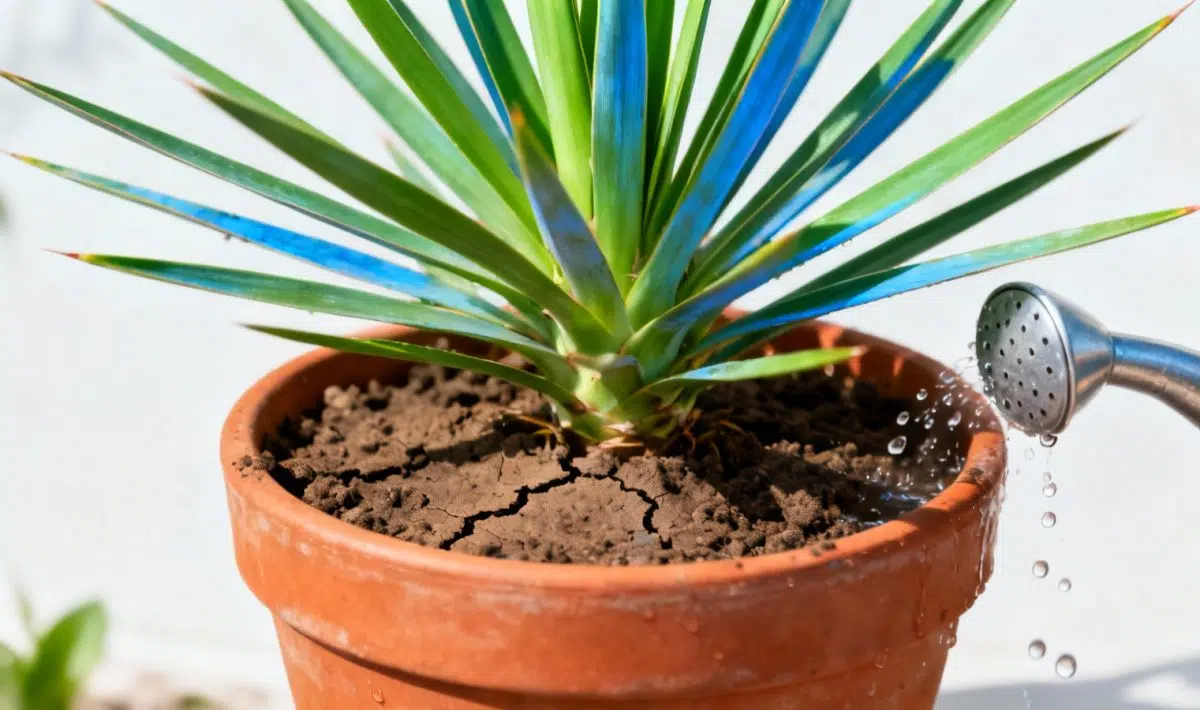
Understanding your Adam’s needle watering needs
Knowing how often should you water your Adam’s needle can make the difference between a thriving plant and a struggling one. The Yucca filamentosa, commonly called Adam’s needle, is an evergreen succulent that’s surprisingly forgiving when it comes to watering mistakes. However, getting the frequency right will reward you with robust foliage and spectacular blooms.
This drought-tolerant plant evolved in harsh conditions, which means it stores water efficiently in its thick, sword-like leaves. You’ll find that proper watering schedules depend on several factors including season, soil type, and whether your plant is grown from seeds or established specimens.
Seasonal watering schedules for Adam’s needle
During spring and summer growing seasons, your Yucca filamentosa will need water approximately once per week. The plant’s metabolism kicks into high gear during these warmer months, especially when temperatures consistently stay above 70°F. Check soil moisture by inserting your finger about 3 inches deep – if it feels dry, it’s time for a thorough watering session.
Winter brings a completely different watering routine. From November through February, reduce watering to every 2-3 weeks. The plant enters a dormant phase where its water needs drop significantly. Over-watering during this period can quickly lead to root rot, which is much more dangerous to your plant than under-watering.
Factors that influence watering frequency
Several environmental conditions will affect how often you should water your Adam’s needle. Hot, windy weather increases water evaporation from both soil and plant surfaces, meaning you might need to water more frequently than the standard schedule suggests.
Soil composition plays a crucial role too. Well-draining sandy soils dry out faster than clay-heavy mixtures. If you’re working with seeds or young plants, consider that newly germinated Yucca filamentosa requires more consistent moisture for the first few weeks after planting.
Container-grown plants need more frequent attention than those planted directly in garden beds. Pots heat up faster and lose moisture more quickly, especially during summer months. You may need to water potted specimens twice weekly during peak growing season.
Best practices for watering Adam’s needle effectively
When watering your Yucca filamentosa, aim for deep, thorough soaking rather than frequent light sprinkles. Water slowly at the base of the plant until you see excess drainage from the bottom of containers or until the surrounding soil is moistened to about 6 inches deep in garden plantings.
Morning watering works best for most gardeners. This timing allows plants to absorb moisture before the day heats up and reduces the risk of fungal issues that can develop when foliage stays wet overnight. For those growing from seeds, maintaining consistent but not soggy conditions helps ensure good germination rates.
Many plant enthusiasts find that understanding watering needs for various species helps improve their overall gardening skills. For instance, learning about watering tips for African lilies can provide insights into caring for other drought-tolerant perennials in your garden.
Signs your watering schedule needs adjustment
Your Adam’s needle will communicate its watering needs through visual cues. Overwatered plants often develop yellow or brown leaf tips, soft or mushy stem bases, or an overall droopy appearance despite moist soil. These symptoms typically appear first on lower, older leaves.
Under-watered specimens show different signs: leaves may appear slightly wrinkled or develop brown, crispy edges. However, don’t panic if you see some natural browning on the oldest leaves – this is normal aging for Yucca filamentosa and doesn’t indicate watering problems.
The color and texture of foliage can also indicate plant health. Well-watered Adam’s needle displays vibrant green leaves with firm, upright growth. Plants receiving appropriate moisture will also produce the characteristic white flower spikes more readily during blooming season.
Special considerations for seeds and young plants
Growing Adam’s needle from seeds requires a modified watering approach during the initial germination period. Keep the growing medium consistently moist but not waterlogged for the first 2-3 weeks. Once seedlings emerge and develop their first true leaves, gradually transition to the standard watering schedule.
Young plants benefit from more frequent but lighter watering sessions until their root systems become established. This usually takes about 6-8 weeks for nursery-grown specimens and longer for seed-grown plants. During this establishment period, you might water every 4-5 days rather than weekly.
Consider the shipping and handling stress that plants experience when ordering online. Recently delivered Adam’s needle plants may need a few extra watering sessions to recover from transport stress, especially during hot weather. Monitor these plants closely for the first month after planting.
Creating the ideal growing environment
Beyond watering frequency, successful Adam’s needle cultivation depends on proper drainage and soil preparation. These hardy plants thrive in well-draining soil with good air circulation around the root zone. Poor drainage causes more plant deaths than under-watering ever will.
Much like other water-wise plants, understanding the needs of different species can enhance your gardening success. Exploring caring for dragon fruit plants offers valuable insights into managing moisture for drought-adapted species.
Temperature fluctuations also affect watering needs. During unseasonably warm spring weather or late fall heat waves, you may need to increase watering frequency temporarily. Conversely, cool, cloudy periods might allow you to extend time between watering sessions.
Troubleshooting common watering mistakes
One frequent mistake involves watering too frequently with small amounts rather than deeply but less often. This approach encourages shallow root development and makes plants more susceptible to drought stress. Always aim for thorough watering that reaches the entire root zone.
Another common error is ignoring seasonal changes in plant water needs. Many gardeners continue summer watering schedules well into fall, which can weaken plants before winter dormancy. Gradually reducing water frequency as temperatures drop helps prepare your Adam’s needle for seasonal changes.
Not all plants have the same watering requirements, and learning about diverse species can improve your overall plant care skills. For example, understanding watering mandarin orange trees demonstrates how different plant types require varying moisture management strategies.
Long-term care and maintenance
Established Adam’s needle plants become increasingly drought-tolerant with age. Mature specimens often survive on natural rainfall alone in many climates, requiring supplemental watering only during extended dry periods or exceptionally hot summers.
Regular monitoring remains important even for established plants. Check soil moisture levels periodically, especially during the first growing season after planting. Well-established Yucca filamentosa can tolerate brief periods of drought much better than newly planted specimens.
Consider mulching around your Adam’s needle to help retain soil moisture and reduce watering frequency. A 2-3 inch layer of organic mulch helps moderate soil temperature and reduces water evaporation, particularly beneficial during hot summer months.
Maximizing plant health through proper watering
Consistent, appropriate watering schedules contribute to stronger, more resilient Adam’s needle plants. Well-watered specimens typically show better resistance to pests and diseases while producing more impressive flower displays during blooming season.
The quality of your watering technique matters as much as frequency. Slow, deep watering encourages robust root development and helps plants withstand periods of water stress. This approach works well for various plant types, much like the principles used when keeping greater periwinkle healthy in garden settings.
Remember that Adam’s needle plants grown from quality seeds often develop stronger root systems than those propagated through other methods. These robust root systems help mature plants tolerate irregular watering schedules and seasonal variations more effectively.
Planning for seasonal changes
As autumn approaches, begin reducing watering frequency gradually rather than making sudden changes. This helps your Yucca filamentosa prepare for winter dormancy naturally. In regions with freezing temperatures, ensure plants are well-hydrated but not soggy before the first frost.
Spring awakening requires careful attention to emerging growth patterns. New shoots and flower spikes indicate increased water needs, signaling the time to resume more frequent watering schedules. Different plant species require varying seasonal care approaches, similar to strategies used for watering advice for European beeches during their growing cycles.
Understanding how often should you water your Adam’s needle ultimately comes down to observing your specific plant and environmental conditions. With proper attention to seasonal needs, soil conditions, and plant signals, you’ll develop an effective watering routine that keeps your Yucca filamentosa healthy and beautiful for years to come.

Allan is a lifelong gardening enthusiast who still gets excited when the first seedlings pop up in spring. With a deep love for nature and a hands-in-the-soil approach, he shares practical tips, plant discoveries, and clever tricks picked up over years of digging, planting, and observing. Whether you’re a new gardener or have a shed full of tools, Allan writes like a neighbor who’s always happy to swap cuttings and stories over the fence.
You can find more about Allan’s work on Malt or connect with him on LinkedIn.


