
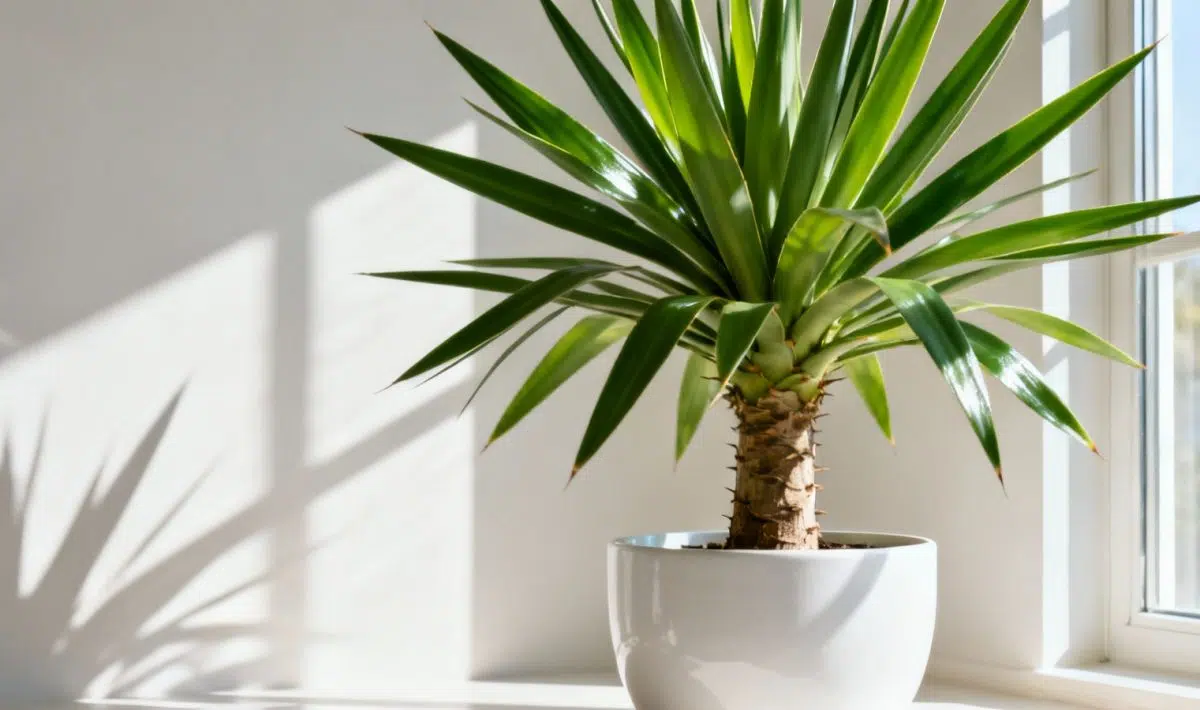
Understanding spineless yucca light needs
The spineless yucca, scientifically known as Yucca elephantipes, stands out as one of the most adaptable houseplants available for purchase today. This remarkable plant brings a touch of desert elegance to any interior space while being surprisingly tolerant of various light conditions. However, understanding how much sunlight does spineless yucca need will make the difference between a thriving specimen and a struggling one.
Originally from Central America and Mexico, this striking plant has adapted to diverse environments over the years. In its natural habitat, the yucca receives abundant direct sunlight, but it has proven remarkably flexible when grown as an indoor plant. The key lies in finding the right balance between providing adequate light and protecting it from harsh conditions.
Professional growers recommend giving your spineless yucca as much light as possible while avoiding direct sun exposure through glass, which can scorch the leaves. This approach ensures healthy growth and maintains the plant’s distinctive architectural form that makes it such a popular choice among plant enthusiasts.
Optimal light conditions for indoor growth
When growing spineless yucca indoors, bright indirect light proves ideal for maintaining healthy foliage and steady growth. Position your plant within 1-2 meters of a south, east, or west-facing window where it can receive several hours of filtered sunlight daily. This placement mimics the dappled light conditions found at the edge of its native desert environment.
The plant demonstrates remarkable tolerance to lower light situations, though this affects its appearance and growth rate. In dimmer conditions, your yucca may become more elongated and sparse, losing some of its compact, tree-like form. While it won’t die in these circumstances, providing better illumination will reward you with a fuller, more vibrant specimen.
During winter months, when natural light decreases significantly, consider moving your plant closer to windows or supplementing with artificial lighting. Much like understanding sunlight requirements for healthy selloum, proper light management becomes crucial for maintaining plant health throughout seasonal changes.
Signs your yucca needs more light
Several clear indicators suggest your spineless yucca requires additional illumination. Pale or yellowing leaves often signal insufficient light, as the plant cannot produce enough chlorophyll for proper photosynthesis. You might also notice the stem stretching toward the nearest light source, creating an unbalanced appearance.
Slow growth represents another common symptom, particularly when combined with weak, droopy foliage. A healthy yucca should maintain upright, sword-like leaves with good color saturation. If your plant looks lackluster despite proper watering and care, relocating it to a brighter spot often resolves these issues.
Outdoor lighting requirements
For those fortunate enough to grow their spineless yucca outdoors year-round, full sun to partial shade conditions work exceptionally well. The plant thrives with 6-8 hours of direct sunlight daily, developing a more robust trunk and denser foliage than indoor specimens. This mirrors the intensive light requirements seen in other sun-loving plants, similar to how optimal sunlight for Jimsonweed growth demands careful attention to exposure levels.
However, gradual acclimation proves essential when moving indoor plants outside. Start by placing your yucca in a partially shaded area for a week, then gradually increase sun exposure. This prevents shock and leaf burn, allowing the plant to adapt its cellular structure to handle direct UV radiation.
In extremely hot climates, providing afternoon shade can prevent stress while still meeting the plant’s substantial light requirements. Morning and early afternoon sun typically provides the most beneficial energy without overwhelming the plant during peak heat hours.
Seasonal adjustments for optimal care
Light management varies significantly throughout the year, requiring attentive adjustment of your plant’s position. During summer months, when sun intensity peaks, your indoor yucca benefits from bright indirect light rather than direct exposure through windows. The concentrated rays can quickly damage leaves that aren’t properly acclimated.
Winter presents the opposite challenge, as reduced daylight hours and weaker sun intensity can leave your plant struggling. Moving containers closer to windows or rotating them weekly ensures even light distribution. Some enthusiasts supplement with grow lights during the darkest months, particularly in northern climates where natural light becomes severely limited.
Spring and fall offer ideal conditions for transitioning plants between indoor and outdoor locations. These seasons provide moderate temperatures and gentler sun exposure, making acclimation easier for both plant and owner. Just as sunlight needs for growing rutabaga require seasonal consideration, your yucca benefits from thoughtful timing when making environmental changes.
Maximizing light exposure indoors
Several practical strategies can help optimize light conditions for your spineless yucca without major home modifications. Placing reflective surfaces near your plant, such as mirrors or white walls, bounces additional light toward the foliage. This simple technique significantly increases the amount of usable illumination without moving the plant itself.
Regular rotation ensures even growth and prevents your yucca from leaning persistently toward its light source. Turn the pot a quarter rotation weekly, allowing all sides to receive equal exposure. This practice maintains the plant’s naturally symmetrical appearance and promotes balanced development.
Keeping windows clean dramatically improves light transmission, especially during winter when every photon counts. Dust and grime can reduce available light by surprising amounts, making this simple maintenance task more important than many realize.
Artificial lighting solutions
When natural light proves insufficient, LED grow lights offer excellent supplementation for spineless yucca. Full-spectrum bulbs positioned 12-18 inches above the plant provide concentrated illumination during dark winter months or in naturally dim spaces. Run these lights for 12-14 hours daily to compensate for reduced natural exposure.
The initial investment in quality grow lights pays dividends through improved plant health and appearance. Much like ensuring proper illumination for herbs such as understanding cultivation tips for oregano sunlight, investing in adequate artificial lighting transforms indoor gardening success rates.
Position artificial lights to avoid hot spots while ensuring even coverage across the entire plant canopy. Heat buildup from traditional bulbs can stress your yucca, making LEDs the preferred choice for most indoor applications.
Common lighting mistakes to avoid
Many new plant owners make the mistake of assuming that any bright spot will suffice for their spineless yucca. However, fluorescent office lighting or dim living room corners rarely provide adequate intensity for healthy growth. These plants evolved in high-light environments and need correspondingly bright conditions to thrive indoors.
Another frequent error involves placing plants too close to heating vents or air conditioning units while trying to optimize light exposure. The combination of temperature fluctuations and light stress can quickly damage even the most tolerant yucca specimens.
Sudden changes in light conditions often shock plants more than gradually insufficient illumination. When relocating your yucca, make transitions slowly over several days rather than moving it immediately to drastically different conditions. This gentle approach prevents leaf drop and other stress responses that can take weeks to resolve.
Long-term care and light management
Successful spineless yucca cultivation requires consistent attention to lighting conditions throughout the plant’s life. Young specimens need somewhat less intense light than mature plants, but the basic requirements remain similar. As your yucca grows larger, it may need repositioning to maintain adequate clearance from ceilings while staying close enough to windows for proper illumination.
Professional plant care involves monitoring your yucca’s response to its current light situation and making adjustments as needed. A thriving plant will show steady growth, maintain good leaf color, and develop the characteristic thick trunk that makes this species so attractive as a houseplant.
Remember that light requirements may change as surrounding conditions evolve. New buildings, growing trees outside windows, or interior renovations can all affect the amount of natural light reaching your plant. Regular assessment ensures your spineless yucca continues receiving the illumination it needs to flourish as a stunning centerpiece in your indoor plant collection.

Allan is a lifelong gardening enthusiast who still gets excited when the first seedlings pop up in spring. With a deep love for nature and a hands-in-the-soil approach, he shares practical tips, plant discoveries, and clever tricks picked up over years of digging, planting, and observing. Whether you’re a new gardener or have a shed full of tools, Allan writes like a neighbor who’s always happy to swap cuttings and stories over the fence.
You can find more about Allan’s work on Malt or connect with him on LinkedIn.


