
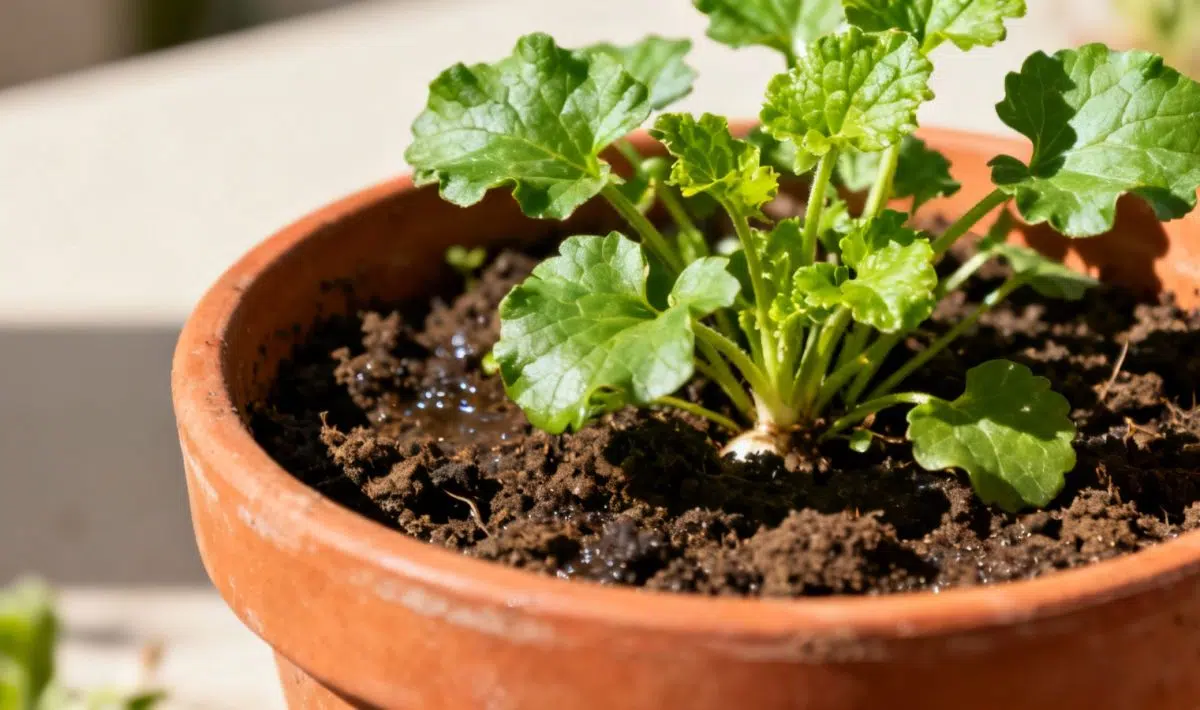
Growing garlic mustard successfully depends greatly on understanding its water requirements. This hardy plant has specific hydration needs that, when met properly, can produce abundant harvests of flavorful leaves and seeds perfect for your homemade mustard production.
Understanding garlic mustard’s water needs
Garlic mustard plants thrive with consistent moisture but are surprisingly tolerant of varying conditions. You should water your garlic mustard approximately once or twice per week, providing about one inch of water each time. The key is maintaining steady soil moisture without creating waterlogged conditions that can lead to root rot.
These plants prefer soil that feels like a wrung-out sponge – moist but not soggy. During hot summer months, you may need to increase watering frequency, while cooler spring and fall periods often require less frequent irrigation. The best approach is checking soil moisture by inserting your finger two inches deep into the earth around the plant base.
Factors that influence watering frequency
Several environmental factors affect how often you should water your garlic mustard. Soil type plays a crucial role – sandy soils drain quickly and require more frequent watering, while clay soils retain moisture longer and need less frequent irrigation.
Weather conditions also significantly impact watering schedules. Hot, windy days increase evaporation rates, requiring additional water. Conversely, cool, humid conditions or recent rainfall reduce the need for supplemental irrigation. Container-grown garlic mustard in pots or jars typically needs daily watering during warm weather because containers dry out faster than garden beds.
Plant maturity affects water requirements too. Young seedlings with developing root systems need gentle, frequent watering to establish themselves. Mature plants with extensive root networks can access deeper soil moisture and tolerate longer periods between waterings.
Seasonal watering adjustments
Spring watering should focus on supporting new growth as plants emerge from winter dormancy. This is when garlic mustard produces its characteristic heart-shaped leaves that are perfect for culinary use. During this phase, moderate watering every 3-4 days helps establish strong root systems.
Summer brings the greatest water demands. Hot temperatures and active growth require consistent moisture to prevent stress that can cause plants to bolt prematurely. Just as understanding best practices for watering coriander helps with herb cultivation, maintaining proper hydration for garlic mustard ensures continued leaf production through the growing season.
Fall watering gradually decreases as temperatures cool and growth slows. This is typically when plants focus energy on seed production for your homemade mustard projects.
Watering techniques for optimal results
Morning watering proves most effective for garlic mustard plants. Early irrigation allows leaves to dry before evening, reducing disease risks while ensuring plants have adequate moisture for the day’s photosynthesis activities.
Deep, less frequent watering encourages strong root development compared to shallow, daily sprinkling. Water slowly at soil level rather than overhead to minimize leaf moisture that can promote fungal issues. Soaker hoses or drip irrigation systems work exceptionally well for garlic mustard cultivation.
Mulching around plants helps retain soil moisture and reduces watering frequency. Organic materials like straw or shredded leaves create insulation that keeps roots cool and reduces evaporation.
Container growing considerations
Growing garlic mustard in containers requires more attention to watering schedules. Small pots dry out quickly and may need daily watering during hot weather. Larger containers with more soil volume provide better moisture retention.
Drainage holes are essential for container growing – standing water kills garlic mustard roots faster than drought conditions. Use saucers under pots to catch excess water, but empty them after 30 minutes to prevent root problems.
Similar to guidelines for watering chives effectively, container-grown garlic mustard benefits from consistent monitoring and adjustment based on plant response and environmental conditions.
Signs of proper hydration
Well-watered garlic mustard displays vibrant green foliage that stands upright without wilting. Leaves feel firm and crisp to the touch, indicating adequate internal water pressure. New growth appears regularly, and plants maintain their characteristic spicy aroma when leaves are crushed.
Overwatering symptoms include yellowing lower leaves, soft stems, and a musty odor around the root zone. These signs indicate reduced oxygen in waterlogged soil, which can quickly kill plants if not corrected promptly.
Underwatering manifests as wilted, drooping leaves that may develop brown edges. Plants appear stunted and stop producing new growth when severely water-stressed.
Troubleshooting common watering problems
If your garlic mustard shows stress signs despite regular watering, check soil drainage first. Poor drainage often masquerades as drought stress because waterlogged roots cannot absorb nutrients effectively.
Inconsistent watering creates more problems than slightly dry conditions. Plants that experience wet-dry cycles often develop bitter-tasting leaves and may bolt prematurely, reducing your harvest for homemade mustard production.
Temperature extremes affect water uptake efficiency. During heat waves, plants may appear wilted even with adequate soil moisture because they cannot absorb water fast enough to replace what they lose through transpiration.
Advanced watering strategies
Experienced gardeners often use moisture meters to track soil conditions accurately. These simple tools eliminate guesswork and help establish consistent watering routines that promote healthy garlic mustard growth.
Group planting allows more efficient watering since plants with similar needs can be irrigated together. This technique works particularly well when growing multiple mustard varieties for different culinary applications.
Understanding that watering tips for healthy arborvitae emphasize consistency over quantity applies equally to garlic mustard cultivation – regular, moderate watering produces better results than sporadic heavy irrigation.
Harvesting timing and water management
Young leaves harvested for fresh use require consistent moisture to maintain tenderness and mild flavor. Older leaves intended for fermentation or drying can tolerate slightly drier conditions, which may actually concentrate flavors beneficial for mustard production.
Seed collection timing relates directly to watering schedules. Reducing irrigation as seeds mature helps concentrate natural oils and improves storage quality for future mustard-making projects.
Just as watering advice for Peruvian lilies focuses on timing for optimal flowering, strategic water management for garlic mustard can enhance both leaf quality and seed production for your culinary endeavors.
Long-term success with garlic mustard
Successful garlic mustard cultivation rewards gardeners with abundant harvests perfect for homemade mustard production. This versatile plant adapts well to various growing conditions when provided with appropriate water management.
Remember that consistency trumps perfection in watering schedules. Plants that receive regular, moderate irrigation throughout their growing cycle produce more usable leaves and viable seeds than those subjected to erratic watering patterns.
With proper attention to watering frequency and techniques, your garlic mustard plants can provide fresh ingredients for delicious homemade mustards, adding unique flavors to your kitchen creations while connecting you to traditional food preservation methods.

Allan is a lifelong gardening enthusiast who still gets excited when the first seedlings pop up in spring. With a deep love for nature and a hands-in-the-soil approach, he shares practical tips, plant discoveries, and clever tricks picked up over years of digging, planting, and observing. Whether you’re a new gardener or have a shed full of tools, Allan writes like a neighbor who’s always happy to swap cuttings and stories over the fence.
You can find more about Allan’s work on Malt or connect with him on LinkedIn.


