
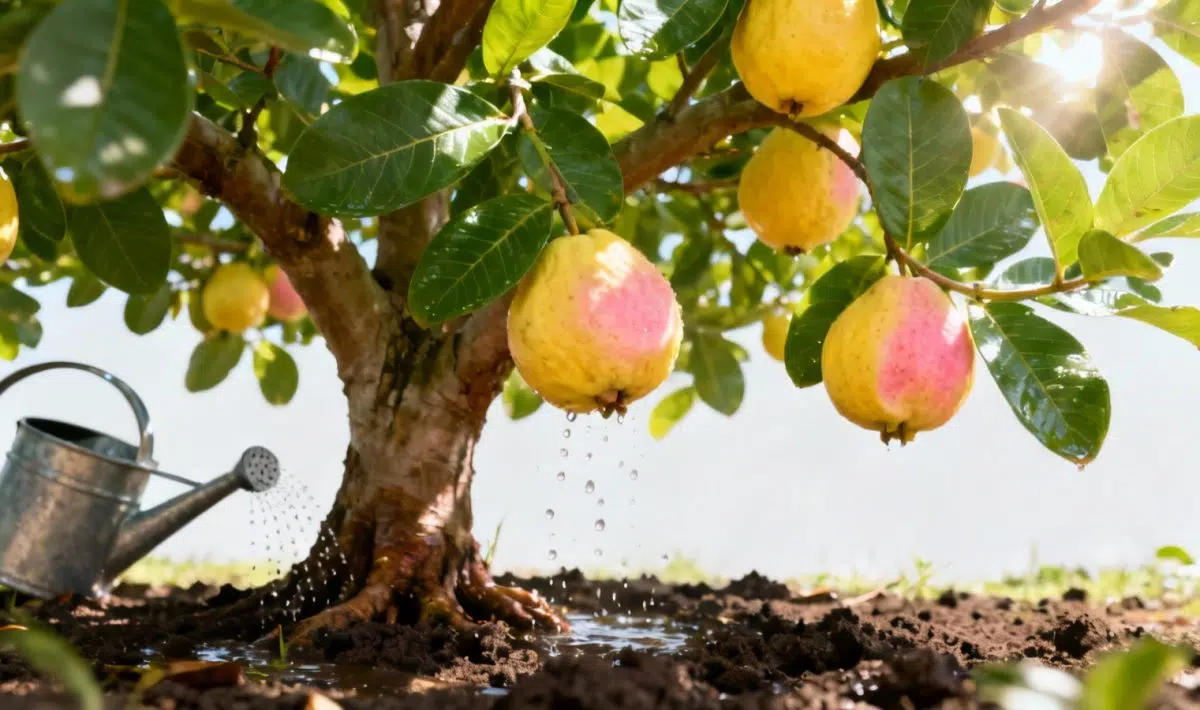
Growing guava trees successfully starts with understanding their water needs. These tropical fruit plants require consistent moisture without becoming waterlogged. How often should you water your guava depends on several factors including climate, soil type, and tree maturity. Getting the watering schedule right ensures healthy growth and abundant fruit production throughout the growing season.
Understanding guava tree water requirements
Guava trees are tropical plants that naturally thrive in warm, humid environments. They need regular watering but are surprisingly adaptable to different moisture conditions. Young plants require more frequent watering than mature trees, which develop deeper root systems over time. The key is maintaining consistent soil moisture without creating waterlogged conditions that can lead to root rot.
Most guava varieties prefer well-draining soil that retains some moisture. Red guava and other tropical varieties share similar water needs, though some cultivars may be slightly more drought-tolerant. Understanding your specific variety helps you tailor the watering approach for optimal results.
Optimal watering frequency throughout the year
During the growing season, guava trees typically need watering once or twice per week. In summer months, when temperatures are high and evaporation rates increase, daily watering may be necessary for young plants or those in containers. Mature trees with established root systems can often go longer between watering sessions.
Spring and fall require moderate watering schedules. As temperatures cool, reduce watering frequency to every 7-10 days. Winter watering should be minimal, perhaps every 2-3 weeks, depending on rainfall and soil moisture levels. This seasonal adjustment prevents overwatering during dormant periods.
Just as other fruit trees have specific needs, you might find it helpful to understand watering frequency for pomegranate trees when planning your garden’s irrigation schedule.
Factors affecting watering schedules
Soil type significantly impacts how often you should water guava trees. Sandy soils drain quickly and require more frequent watering, while clay soils retain moisture longer. Adding organic matter improves soil structure and water retention, creating better growing conditions for your plants.
Tree age and size also determine watering needs. Newly planted guava trees need daily attention for the first few weeks. Young trees (1-3 years) benefit from twice-weekly watering during active growth. Mature trees can typically survive on weekly watering, though this varies with weather conditions.
Container-grown guava plants dry out much faster than those planted in the ground. Potted plants may need daily watering during hot weather, especially if they’re in smaller containers. Check soil moisture regularly by inserting your finger about two inches deep into the soil.
Recognizing proper hydration levels
Well-watered guava trees display vibrant green foliage and steady growth. The soil should feel moist but not soggy when you check it. Healthy plants produce regular new growth and, for mature trees, consistent fruit development. Leaves remain firm and don’t show signs of wilting during normal daytime temperatures.
Overwatered guava trees often develop yellowing leaves that may drop prematurely. The soil remains constantly wet, and you might notice a musty smell around the root area. Root rot can develop quickly in waterlogged conditions, potentially killing the tree if not corrected promptly.
Underwatered trees show different symptoms. Leaves may curl, turn brown at the edges, or drop during the day. The soil feels dry several inches below the surface. Fruit production may decrease, and existing fruits might drop before ripening. Much like other plants that require careful moisture management, understanding these signs helps prevent problems. For comparison, you can learn about optimal watering schedule for scarlet stars to see how different plants communicate their water needs.
Effective watering techniques
Deep, infrequent watering encourages deep root development in guava trees. Water slowly and thoroughly, allowing moisture to penetrate several inches into the soil. This method creates stronger, more drought-resistant plants than frequent shallow watering.
Drip irrigation systems work excellently for guava trees. They deliver water directly to the root zone with minimal waste. Set timers to provide consistent moisture levels throughout the growing season. This automated approach ensures your trees receive adequate water even when you’re away.
Mulching around guava trees helps retain soil moisture and reduces watering frequency. Apply a 3-4 inch layer of organic mulch around the base, keeping it away from the trunk. Good mulch options include shredded bark, compost, or dried leaves. This technique is beneficial for many garden plants, similar to how you might approach cabbage watering requirements explained for vegetable gardens.
Seasonal watering adjustments
Summer watering requires the most attention. High temperatures and increased evaporation rates mean more frequent watering sessions. Check soil moisture daily and water when the top inch becomes dry. Early morning watering is most effective, giving plants time to absorb moisture before the heat of the day.
During autumn, gradually reduce watering frequency as temperatures drop and daylight hours decrease. This helps prepare the tree for winter dormancy. Continue monitoring soil moisture, but allow it to dry out more between watering sessions.
Winter watering should be minimal in most climates. Overwatering during dormant periods can cause more harm than underwatering. Only water when the soil becomes quite dry, and use less water than during active growing periods. Even hardy trees like those discussed in how to water silver birch trees require seasonal adjustments for optimal health.
Growing guava from seeds
Starting guava plants from seeds requires different watering considerations. Fresh seeds need consistent moisture to germinate successfully. Keep the soil evenly moist but not waterlogged during the germination period, which typically takes 2-4 weeks.
Once seedlings emerge, gradually reduce watering frequency while maintaining adequate moisture. Young plants are more sensitive to both drought and overwatering than mature trees. Use a spray bottle for gentle watering that won’t disturb delicate roots.
Seedlings benefit from organic growing conditions with good drainage. This foundation supports healthy root development and eventual fruit production. For gardeners interested in various plant propagation methods, understanding different moisture requirements helps with success rates, much like the specific needs outlined for watering guidelines for mother of thousands plants.
Maximizing fruit production through proper watering
Consistent watering schedules directly impact fruit quality and quantity. Guava trees under water stress may drop flowers or developing fruits. Maintaining steady soil moisture during flowering and fruit development stages is crucial for good harvests.
Avoid irregular watering patterns that can cause fruit splitting or poor flavor development. Sweet, high-quality guava fruits develop when trees receive adequate, consistent water throughout the growing season. This attention to detail pays off with better fruit production year after year.
With proper watering techniques and attention to seasonal needs, your guava trees will thrive and produce abundant tropical fruits. Remember that consistency is key, and adjusting your approach based on weather, soil conditions, and tree maturity will ensure the best results for your homegrown guava harvest.

Allan is a lifelong gardening enthusiast who still gets excited when the first seedlings pop up in spring. With a deep love for nature and a hands-in-the-soil approach, he shares practical tips, plant discoveries, and clever tricks picked up over years of digging, planting, and observing. Whether you’re a new gardener or have a shed full of tools, Allan writes like a neighbor who’s always happy to swap cuttings and stories over the fence.
You can find more about Allan’s work on Malt or connect with him on LinkedIn.


