
Understanding the common houseleek
The Common houseleek – Sempervivum tectorum stands out as one of nature’s most resilient and charming succulents. This hardy plant forms beautiful geometric rosettes that have captivated gardeners for centuries. Originally found growing wild on rooftops and rocky slopes throughout Europe, this remarkable species has earned its place as a beloved choice for both beginners and experienced plant enthusiasts.
What makes this plant truly special is its incredible ability to thrive in harsh conditions where many other plants would simply give up. The thick, fleshy leaves store water efficiently, while the compact rosette structure helps minimize moisture loss. Each plant produces numerous offsets, creating charming clusters that spread naturally across your garden space.
Key characteristics of sempervivum tectorum
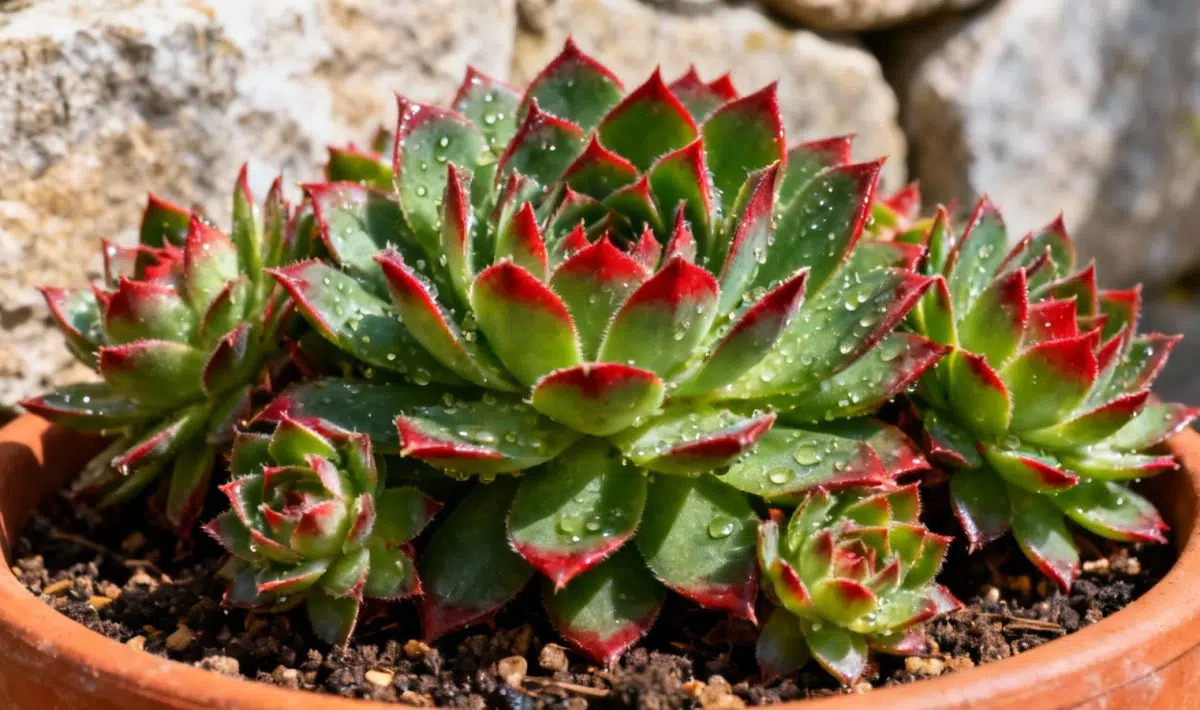
This distinctive succulent displays remarkable variety in its appearance depending on growing conditions and seasonal changes. The rosettes typically measure between 2 to 4 inches across, with thick, pointed leaves arranged in perfect symmetrical patterns. Colors range from vibrant green to deep red-purple, often with contrasting tips that create stunning visual interest.
The leaves themselves feel firm and slightly waxy to the touch, a clear adaptation to drought conditions. During winter months, many varieties develop richer colors as a natural response to cold temperatures. This seasonal color change adds another layer of appeal, making the plant attractive throughout the year.
One fascinating characteristic is the plant’s monocarpic nature – after flowering, the main rosette dies but not before producing multiple offsets. This natural cycle ensures continuous propagation and keeps your collection thriving. The flower stalks can reach impressive heights of 12 inches or more, topped with clusters of star-shaped pink or red blooms.
Essential care requirements
Caring for these robust plants is refreshingly straightforward once you understand their basic needs. The most critical factor is providing excellent drainage, as waterlogged soil quickly leads to root rot. A well-draining soil mix specifically designed for succulents works perfectly, or you can create your own blend using regular potting soil mixed with coarse sand and perlite.
Sunlight plays a crucial role in maintaining healthy, compact growth. These plants absolutely love full sun and need at least six hours of direct sunlight daily. Without adequate light, the rosettes become loose and elongated, losing their characteristic tight formation. For indoor growing, place them near your brightest south-facing window.
Watering requires a thoughtful approach – less is definitely more with these drought-tolerant beauties. Allow the soil to dry completely between waterings, then provide a thorough drink. During winter months, reduce watering frequency significantly as the plant enters its dormant period. Just as you might learn about common lantana care for different plant types, understanding each species’ specific water needs ensures success.
Temperature and seasonal considerations
These hardy perennials handle temperature extremes remarkably well, tolerating both freezing winters and hot summers. They’re rated for USDA zones 3-8, making them suitable for most climate conditions. However, they perform best when temperatures stay between 65-75°F during the growing season.
Winter protection isn’t usually necessary in their hardiness range, but good drainage becomes even more critical during wet, cold periods. If you live in an area with heavy winter rains, consider planting in raised beds or containers that can be moved to protected locations.
Cultivation techniques for success
Starting your houseleek collection begins with choosing the right location and preparing suitable growing conditions. These plants excel in rock gardens, along stone walls, or in shallow containers where their spreading habit can be appreciated. The key is selecting spots that receive morning sun and have natural or amended drainage.
Soil preparation doesn’t need to be complicated, but it should prioritize drainage above all else. Mix regular garden soil with equal parts coarse sand or fine gravel. If your native soil is heavy clay, consider building raised beds or using containers instead. These plants actually prefer poor, lean soils over rich, fertile ground.
When planting, space individual rosettes about 6 inches apart to allow for natural spreading. The plants will gradually fill in the gaps as they produce offsets. Plant at the same depth they were growing previously, ensuring the crown stays slightly above soil level to prevent moisture accumulation around the base.
Container growing options
Container cultivation opens up wonderful possibilities for enjoying these plants year-round. Choose pots with multiple drainage holes and use a fast-draining succulent mix. Terra cotta pots work exceptionally well as they allow excess moisture to evaporate through the porous walls.
Size your containers appropriately – shallow, wide pots work better than deep, narrow ones. This matches the plant’s natural growth habit and prevents soil from staying wet too long at the bottom. For visual impact, group several different varieties together in larger containers or arrange multiple small pots at varying heights.
Propagation methods and timing
Propagating houseleeks is one of the most rewarding aspects of growing these plants. The easiest and most reliable method involves dividing the natural offsets that form around the mother plant. These “chicks” develop their own root systems while still attached, making separation simple and success rates very high.
The best time for division is during spring or early summer when plants are actively growing. Carefully remove offsets that have developed at least some independent roots. Use a clean, sharp knife if necessary to separate stubborn connections. Allow cut surfaces to dry for a day before planting to prevent rot.
Similar to how you might explore common hollyhock care tips for tall flowering plants, understanding the right timing for propagation ensures the best results. Each offset should be treated as an independent plant once separated, with the same care requirements as mature specimens.
Leaf propagation techniques
While less common, individual leaves can sometimes be propagated with patience and proper technique. Remove healthy leaves cleanly from the base, allow them to callus for several days, then place on barely moist succulent soil. Not all leaves will successfully root, but those that do create fascinating miniature rosettes.
This method requires more attention and care than division, but it’s an interesting way to multiply special varieties. Keep the propagation area in bright, indirect light and mist very lightly when the soil becomes completely dry.
Common challenges and solutions
Even these hardy plants can encounter occasional problems, though most issues stem from overwatering or poor drainage. Root rot appears as soft, blackened areas at the base of the plant and requires immediate action. Remove affected plants, trim away damaged roots, and replant in fresh, dry soil after allowing cuts to heal.
Pest problems are relatively rare, but aphids occasionally target new growth and flower stalks. A strong spray of water usually dislodges them effectively. Scale insects can sometimes attach to leaves but are easily removed with a cotton swab dipped in rubbing alcohol.
Stretching or etiolation occurs when plants don’t receive adequate light. The rosettes become loose and the spaces between leaves increase noticeably. Moving affected plants to brighter locations helps, though the stretched growth won’t tighten up – you’ll see improvement in new growth only.
Seasonal maintenance tasks
Regular maintenance keeps your plants looking their best throughout the year. Remove spent flower stalks after blooming completes, as leaving them can encourage pest problems. Dead or damaged leaves should be cleaned away promptly, always removing them completely rather than leaving stubs that might rot.
Spring represents the ideal time for major maintenance activities like division, repotting, and soil refresh. This timing allows plants to establish well before winter arrives. Just as gardeners might discover buckthorn care techniques for other hardy plants, establishing a seasonal care routine ensures long-term success.
Design applications and companion plants
These versatile plants shine in numerous garden design applications. Rock gardens provide the perfect setting, where their drought tolerance and spreading habit create natural-looking colonies among stones. They work beautifully cascading over retaining walls or filling gaps in flagstone pathways.
For contemporary landscape designs, mass plantings create striking geometric patterns that complement modern architecture. The plants’ sculptural quality makes them excellent focal points in minimalist garden schemes. Their low maintenance requirements suit busy lifestyles while still providing year-round visual interest.
Companion planting opens creative possibilities when you combine houseleeks with other drought-tolerant species. Sedums, ornamental grasses, and Mediterranean herbs create harmonious combinations that thrive under similar conditions. When planning mixed plantings, you might understand how to care for Ti plants for contrast in tropical-themed areas or explore other complementary species.
Indoor and container combinations
Indoor applications showcase these plants’ versatility in controlled environments. Arrange multiple varieties in shallow dishes for living centerpieces that require minimal care. Their compact size makes them perfect for windowsill gardens or office desk displays where space is limited.
Creative container combinations work wonderfully when you pair houseleeks with other succulents of similar care requirements. Consider texture and color contrasts when selecting companions – the rosette forms provide excellent structure while trailing varieties add softness to arrangements.
Varieties and selection tips
The world of Sempervivum offers an exciting array of varieties beyond the basic species. Some cultivars develop intense red coloration, while others feature silver-green leaves with contrasting margins. Size variations range from tiny varieties perfect for fairy gardens to larger forms that make bold statements in landscape settings.
When selecting plants, choose specimens with tight, well-formed rosettes and healthy root systems. Avoid plants with loose or stretched growth, as these indicate inadequate light conditions during production. Many specialty nurseries offer rare varieties, though common forms work just as well for most garden applications.
Understanding the mature size helps with proper spacing and design planning. Some varieties stay compact at 2 inches across, while others can reach 6 inches or more. Research specific cultivars when planning formal designs where consistency matters. Whether you’re interested in houseleeks or get tips on rutabaga cultivation for edible gardening, selecting the right varieties ensures project success.
Seasonal color changes
One of the most delightful aspects of growing these plants is watching their seasonal transformations. Many varieties develop enhanced red, purple, or bronze tones during cooler months, creating stunning winter displays when most other plants look dormant. This natural color cycling adds dynamic interest to year-round plantings.
Understanding these color patterns helps with garden planning and plant placement. Position varieties known for dramatic winter colors where they’ll be easily visible during the cooler months. The interplay between different cultivars creates ever-changing tapestries that reward close observation throughout the seasons.
Final thoughts on growing success
Growing Common houseleek successfully comes down to respecting their natural preferences while providing consistent, appropriate care. These remarkable plants reward minimal intervention with maximum visual impact, making them ideal for both experienced gardeners and those just beginning their plant journey.
The key to long-term success lies in understanding that these plants evolved in challenging conditions and actually prefer lean treatment over pampered care. Resist the urge to over-fertilize or over-water – your plants will thank you with compact growth and vibrant colors. Just as you might learn how to grow painted-leaf begonias for indoor color, mastering houseleek care opens doors to many other succulent adventures.
With proper attention to drainage, sunlight, and seasonal rhythms, your houseleek collection will provide years of low-maintenance beauty while multiplying naturally to share with friends and expand your own garden displays. These living sculptures truly embody the principle that sometimes the most beautiful gardens require the least effort.

Allan is a lifelong gardening enthusiast who still gets excited when the first seedlings pop up in spring. With a deep love for nature and a hands-in-the-soil approach, he shares practical tips, plant discoveries, and clever tricks picked up over years of digging, planting, and observing. Whether you’re a new gardener or have a shed full of tools, Allan writes like a neighbor who’s always happy to swap cuttings and stories over the fence.
You can find more about Allan’s work on Malt or connect with him on LinkedIn.


