
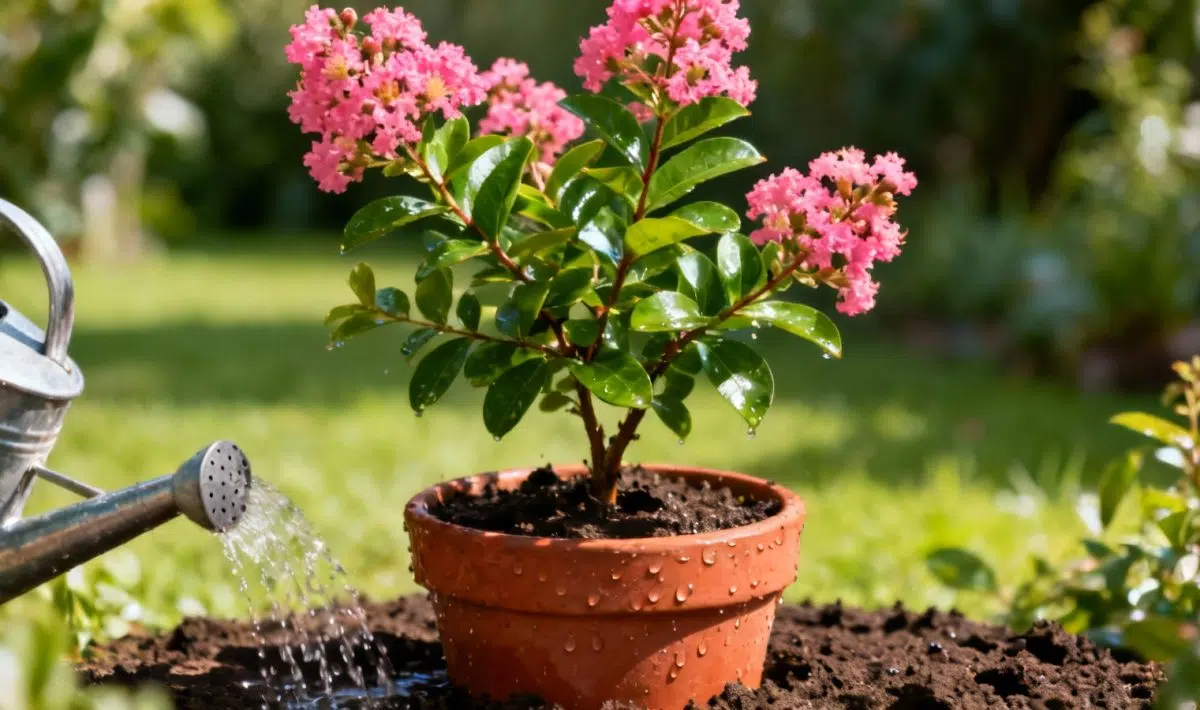
Understanding your crepe myrtle’s watering needs
Determining how often should you water your crepe myrtle isn’t as straightforward as following a rigid schedule. These beautiful flowering trees have varying needs depending on several key factors, and understanding them will help you create the perfect care routine for your garden. Whether you’re growing the vibrant red Chisam Fire variety or any other crepe myrtle cultivar, proper hydration is essential for those bright, colorful flowers that make these plants so popular worldwide.
Crepe myrtles are remarkably adaptable trees that can thrive in different conditions once established. However, during their first year after planting, they require more attention and consistent moisture to develop strong root systems. The key is finding the right balance between providing adequate water and avoiding overwatering, which can be just as damaging as drought stress.
Factors that influence watering frequency for crepe myrtles
Soil type and drainage considerations
The type of soil in your garden plays a crucial role in determining your watering schedule. Well-draining soil is perfect for crepe myrtles, as it prevents waterlogged conditions that can lead to root rot. Sandy soils drain quickly and may require more frequent watering, typically every 3-4 days during hot weather. Clay soils retain moisture longer, so you might only need to water once or twice a week.
To test your soil drainage, dig a hole about 12 inches deep and fill it with water. If the water drains within 24 hours, you have good drainage. Poor drainage means you’ll need to adjust your watering frequency and possibly improve soil structure by adding organic matter.
Climate and seasonal variations
Your local climate significantly impacts how often you should water your crepe myrtle. In hot, dry regions, these plants may need watering 2-3 times per week during summer months. Cooler, more humid areas might require watering only once a week or even less frequently during rainy periods.
During spring when new growth emerges, maintain consistent moisture to support the development of those beautiful flowers. Summer requires the most attention, especially during heat waves. Fall watering can be reduced as temperatures drop, and winter watering is minimal in most climates since the tree becomes dormant.
Establishing the right watering schedule
First year after planting guidelines
Newly planted crepe myrtles need special attention during their establishment period. For a tree planted from a 5-gallon container, aim for approximately 10 gallons of water per week during the growing season, divided into two deep watering sessions. This ensures the root system develops properly and the plant can access moisture at different soil depths.
Water slowly and deeply, allowing the moisture to penetrate 12-18 inches into the soil. This encourages roots to grow downward rather than staying shallow, which makes the tree more drought-tolerant once established. Just like establishing a watering schedule for cucumber plants requires attention to detail, your crepe myrtle benefits from this careful approach during its first year.
Mature tree watering requirements
Once your crepe myrtle is established (typically after 2-3 years), it becomes much more drought-tolerant. Mature trees often thrive with minimal supplemental watering, relying primarily on natural rainfall. However, during extended dry periods or extreme heat, providing deep watering once a week can help maintain the tree’s health and flower production.
Focus on quality over quantity with mature trees. A thorough soaking that reaches the entire root zone is more beneficial than frequent shallow watering. This approach encourages the tree to develop a robust, deep root system that can access groundwater during dry spells.
Recognizing water stress in your crepe myrtle
Signs of underwatering
Your crepe myrtle will show clear signs when it needs more water. Leaves may appear wilted during the hottest part of the day, even if soil feels moist in the morning. Leaf drop, especially of older leaves, can indicate water stress. Flowers may be smaller than usual or drop prematurely when the tree is struggling with inadequate moisture.
Another telltale sign is when the normally bright and vibrant foliage loses its luster and appears dull. The bark might also show stress cracks if the tree has been severely water-stressed for an extended period.
Signs of overwatering
Overwatering can be just as problematic as underwatering for crepe myrtles. Yellowing leaves that don’t recover with reduced watering often indicate too much moisture. Fungal problems, including leaf spot diseases, become more common when soil stays consistently wet.
Root rot is a serious concern with overwatered crepe myrtles. If you notice a decline in overall tree vigor despite regular watering, check the soil moisture levels and adjust your schedule accordingly. The soil should feel moist but not soggy at a depth of 2-3 inches.
Effective watering techniques for best results
Deep watering methods
The most effective way to water your crepe myrtle is through deep, infrequent watering sessions. Position your hose or sprinkler system to deliver water slowly at the base of the tree, allowing it to soak into the soil gradually. This method ensures water reaches the deeper root zones where it’s most beneficial.
Soaker hoses work exceptionally well for crepe myrtles, providing steady, gentle irrigation over extended periods. Set up the hose in a circle around the tree’s drip line (the area under the outer edge of the canopy) for optimal coverage.
Mulching for moisture retention
Applying a 2-3 inch layer of organic mulch around your crepe myrtle is one of the most effective ways to maintain soil moisture and reduce watering frequency. Wood chips, shredded bark, or compost work well as mulching materials. Keep mulch about 6 inches away from the tree trunk to prevent pest and disease issues.
Mulch not only retains moisture but also moderates soil temperature and gradually improves soil structure as it decomposes. This creates an ideal environment for root development and overall tree health, making your watering efforts more effective and reducing the frequency needed.
Seasonal watering adjustments
Spring is the time to resume regular watering as your crepe myrtle breaks dormancy and begins producing new growth. Start with moderate watering and increase frequency as temperatures rise and new leaves emerge. This is when the tree needs consistent moisture to support the energy-intensive process of leaf and flower development.
Summer requires the most attention to watering, especially during heat waves or drought conditions. Monitor your tree daily during extreme weather and be prepared to increase watering frequency if needed. However, always check soil moisture before watering to avoid overdoing it.
Fall watering should gradually decrease as temperatures drop and the tree begins preparing for dormancy. Reduce frequency but don’t stop completely until the tree is fully dormant. Winter watering is minimal in most climates, only necessary during unusually warm, dry spells when the tree might break dormancy temporarily.
Remember that every garden is unique, and these guidelines should be adjusted based on your specific conditions. Pay attention to your tree’s signals, monitor soil moisture regularly, and don’t be afraid to modify your schedule as needed. With proper watering practices, your crepe myrtle will reward you with years of stunning blooms and healthy growth.

Allan is a lifelong gardening enthusiast who still gets excited when the first seedlings pop up in spring. With a deep love for nature and a hands-in-the-soil approach, he shares practical tips, plant discoveries, and clever tricks picked up over years of digging, planting, and observing. Whether you’re a new gardener or have a shed full of tools, Allan writes like a neighbor who’s always happy to swap cuttings and stories over the fence.
You can find more about Allan’s work on Malt or connect with him on LinkedIn.


