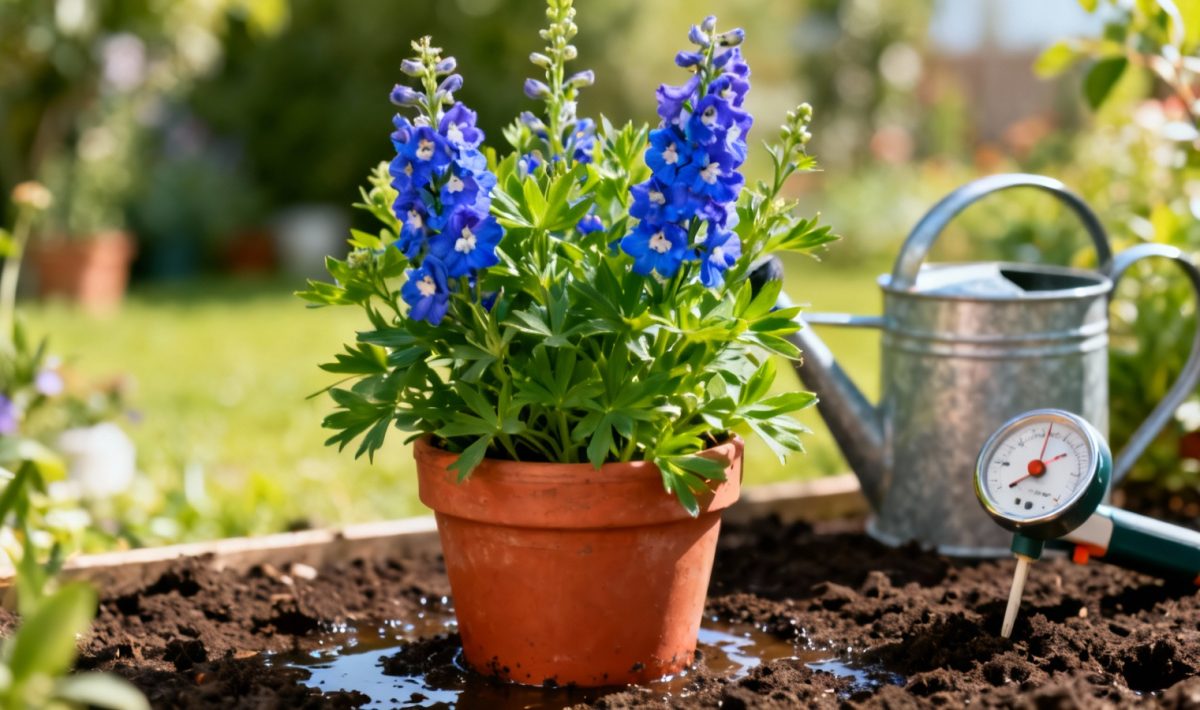
How often should you water your candle larkspur for vibrant blooms
Growing beautiful Candle Larkspur flowers requires understanding their specific watering needs. These vibrant blooms are particularly sensitive to moisture levels, and getting the watering frequency right makes all the difference between struggling plants and spectacular flower displays that will catch your eye throughout the growing season.
Understanding your Candle Larkspur’s water requirements
Candle Larkspur plants need consistent moisture without becoming waterlogged. Unlike some garden favorites, these flowers don’t develop drought tolerance as they mature. Whether you’re growing pink, red, or any other vibrant colored varieties, all Candle Larkspur plants require the same careful attention to watering throughout their lives.
The key is maintaining soil that stays consistently moist but never soggy. This delicate balance ensures that your flowers receive adequate hydration while preventing root rot and other water-related issues that can damage these elegant plants.
Seasonal watering schedules
During spring and early autumn, watering once per week typically provides sufficient moisture for healthy growth. However, as temperatures rise and summer heat intensifies, you’ll need to increase the frequency to twice weekly or more, depending on your local climate conditions.
For newly planted Candle Larkspur, aim to provide approximately one to one-and-a-half inches of water each week. This measurement includes both rainfall and supplemental watering, so adjust accordingly based on natural precipitation in your area.
How often should you water your Candle Larkspur during different seasons
Summer months demand the most attention when it comes to watering frequency. During hot weather, your plants may require water every two to three days to maintain the soil moisture they need for optimal blooming. Watch for signs that indicate your plants need immediate attention.
Winter care involves significantly less watering, especially in regions with natural rainfall. However, container-grown plants still require monitoring, as they dry out faster than those planted directly in garden soil.
Recognizing when your plants need water
Several clear indicators tell you when it’s time to water your Candle Larkspur. Wilted or yellowing leaves often signal moisture stress, while checking the soil depth reveals whether the root zone has adequate hydration.
Insert your finger about two inches into the soil near the base of the plant. If the soil feels dry at this depth, it’s time to provide water. This simple test works better than relying on surface appearance alone, which can be misleading.
Best watering techniques for optimal results
Early morning watering proves most effective for Candle Larkspur care. Watering before the day’s heat allows plants to absorb moisture efficiently while minimizing evaporation losses. This timing also helps prevent fungal issues that can develop when foliage remains wet overnight.
Apply water slowly and deeply, ensuring it penetrates the entire root zone rather than just wetting the surface. Similar to watering frequency for sycamore trees, deep watering encourages strong root development and improves drought resilience.
Watering methods that work best
Manual watering with a watering can or gentle hose setting gives you precise control over water placement and volume. This method allows you to target the root zone while keeping water off the delicate flower blooms and foliage.
Drip irrigation systems offer excellent results for Candle Larkspur cultivation. These automated systems deliver consistent moisture directly to the soil, reducing water waste and eliminating the guesswork from your watering routine.
Just as optimal watering for money plants requires consistency, your Candle Larkspur benefits from regular, predictable watering schedules that maintain steady soil moisture levels.
Avoiding common watering mistakes
Never water during the hottest part of the day, as this can cause water to evaporate before plants can absorb it effectively. Additionally, avoid overhead watering that soaks the flowers and leaves, which can lead to disease problems.
Overwatering proves just as harmful as underwatering. Constantly soggy soil prevents proper air circulation around roots and creates conditions favorable for root rot and other fungal diseases.
Container vs. garden bed considerations
Plants grown in containers require more frequent watering than those in garden beds. Container soil dries out faster due to increased exposure to air and sun, particularly during hot weather.
For container-grown Candle Larkspur, check soil moisture daily during warm months. You might need to water every day or even twice daily in extreme heat, unlike garden-planted specimens that can go longer between watering sessions.
Seasonal adjustments for healthy growth
Spring watering should begin gradually as new growth emerges. Start with weekly sessions and increase frequency as temperatures warm and growth accelerates. This approach mirrors successful watering tips for watermelon growth, where consistent moisture supports vigorous development.
Summer requires the most intensive watering schedule. Monitor your plants daily and be prepared to water every two days during heat waves. The vibrant colors of your blooms depend on adequate moisture during these critical growth periods.
Autumn watering should gradually decrease as temperatures cool and growth slows. Continue regular moisture until the first frost, then reduce frequency as plants enter dormancy.
Climate considerations
Hot, dry climates demand more frequent watering than areas with regular rainfall and moderate temperatures. Coastal gardens may require less supplemental watering due to natural humidity, while inland areas typically need more intensive irrigation.
Wind exposure also affects watering needs. Plants in windy locations lose moisture faster and may require additional water to compensate for increased evaporation rates.
Mulching benefits
Applying a two to three-inch layer of organic mulch around your Candle Larkspur helps retain soil moisture and reduces watering frequency. Good mulch options include compost, shredded bark, or leaf mold.
Mulch also moderates soil temperature and suppresses weeds that compete with your flowers for available water. Keep mulch a few inches away from plant stems to prevent moisture-related disease issues.
Monitoring plant health through proper hydration
Healthy Candle Larkspur displays strong, upright growth with vibrant green foliage and abundant flowers. Properly watered plants produce bigger, more colorful blooms that last longer both on the plant and as cut flowers for indoor arrangements.
Watch for early warning signs of water stress, including drooping leaves during cooler parts of the day, reduced flower production, or premature yellowing of lower foliage. These symptoms indicate the need for immediate attention to your watering routine.
Like smoketree watering guidelines, establishing a consistent watering pattern helps plants develop strong root systems that can better handle occasional dry spells.
Troubleshooting watering problems
If your plants show signs of overwatering, such as yellowing leaves or soft, mushy stems, reduce watering frequency immediately and improve soil drainage if necessary. Sometimes less is more when it comes to plant care.
Underwatered plants often develop brown, crispy leaf edges and produce smaller, fewer flowers. Increase watering frequency gradually rather than flooding stressed plants with large amounts of water all at once.
Long-term success strategies
Successful Candle Larkspur cultivation requires patience and observation. Each garden location has unique characteristics that affect watering needs, so adapt these general guidelines to your specific conditions.
Keep a simple garden journal noting watering dates, weather conditions, and plant responses. This record helps you fine-tune your watering schedule and identify patterns that work best for your particular growing conditions.
Remember that achieving healthy growth through proper watering takes time and experience. Start with these recommendations and adjust based on what you observe in your own garden throughout the growing year.
Maximizing bloom quality with proper water management
Consistent watering produces the most spectacular flower displays. Plants that receive steady moisture throughout their growing season develop stronger stems that can support heavy flower spikes without staking.
The timing of flower bud development coincides with peak water needs, making spring and early summer watering particularly critical for bloom quality. Insufficient water during this period results in smaller flowers and shorter bloom periods.
With proper attention to watering frequency and technique, your Candle Larkspur will reward you with months of stunning flowers that bring color and elegance to any garden space. The effort invested in understanding their water needs pays dividends in spectacular blooms that make any gardening year memorable.
Allan is a lifelong gardening enthusiast who still gets excited when the first seedlings pop up in spring. With a deep love for nature and a hands-in-the-soil approach, he shares practical tips, plant discoveries, and clever tricks picked up over years of digging, planting, and observing. Whether you’re a new gardener or have a shed full of tools, Allan writes like a neighbor who’s always happy to swap cuttings and stories over the fence.
You can find more about Allan’s work on Malt or connect with him on LinkedIn.