Prune These 7 Plants Before Mid-July or Regret It in August
Summer pruning is a critical task for gardeners aiming to maximize blooms, prevent disease, and maintain plant health. July offers a narrow window to address overgrown growth, deadwood, and structural issues before plants enter dormancy or face harsher conditions. Failure to prune strategically can lead to reduced flowering, disease outbreaks, or weakened plant resilience. Below, we break down seven essential plants requiring attention this month, with actionable guidance to ensure optimal results.
Wisteria thrives with aggressive pruning to control its vigorous growth and encourage flowering spurs. July’s warm weather allows for a light summer trim after the main spring bloom, avoiding the risk of winter sap bleeding that occurs during dormant-season cuts. This timing also prevents overcrowding and directs energy toward new flower development for next year’s display.
Pruning techniques for optimal blooms
Cut back long shoots: Trim vigorous growth to 5–6 nodes from the base to promote bud formation.
Remove suckers: Eliminate unwanted shoots at the base to focus resources on flowering stems.
Thin crowded areas: Improve air circulation by removing crossing branches, reducing fungal disease risks.
Prunus Trees: Preventing Disease and Promoting Health
Disease prevention through strategic pruning
Prunus species (cherries, peaches, plums) are highly susceptible to silver leaf infection when pruned during late spring or winter. July pruning removes deadwood and suckers while avoiding the peak pathogen activity that occurs in colder months. This reduces the risk of bacterial canker and other diseases.
Pruning steps for cherry and peach trees
Remove dead/damaged branches: Focus on branches showing signs of decay or structural weakness.
Train young trees: Shape saplings to encourage a balanced canopy, ensuring sunlight reaches fruiting branches.
Post-harvest pruning: For peaches, prune after fruit harvest to avoid disrupting next year’s buds.
Walnut Trees: Avoiding Sap Bleeding
Summer pruning to prevent sap loss
Walnut trees bleed sap profusely when cut during dormancy, which can attract pests and weaken the tree. July’s active growth phase minimizes sap flow, making it the safest time for structural adjustments.
Key pruning considerations
Remove crossing branches: Eliminate friction points that cause wounds.
Trim diseased wood: Cut 6–8 inches below infection sites to prevent spread.
Maintain air circulation: Thin dense areas to reduce fungal risks.
Tomatoes: Boosting Late-Season Yields
Maximizing fruit production through pruning
Indeterminate tomato varieties benefit from mid-summer pruning to redirect energy from foliage to fruit. July’s warm weather allows plants to recover quickly, ensuring a robust harvest before frost.
Effective pruning strategies
Remove root suckers: Eliminate shoots growing from the soil to prevent nutrient competition.
Trim joint suckers: Keep only the first sucker below the lowest flower cluster.
Improve airflow: Remove lower leaves to reduce humidity and disease risks.
Oakleaf Hydrangea: Post-Bloom Maintenance
Timing pruning after flowering
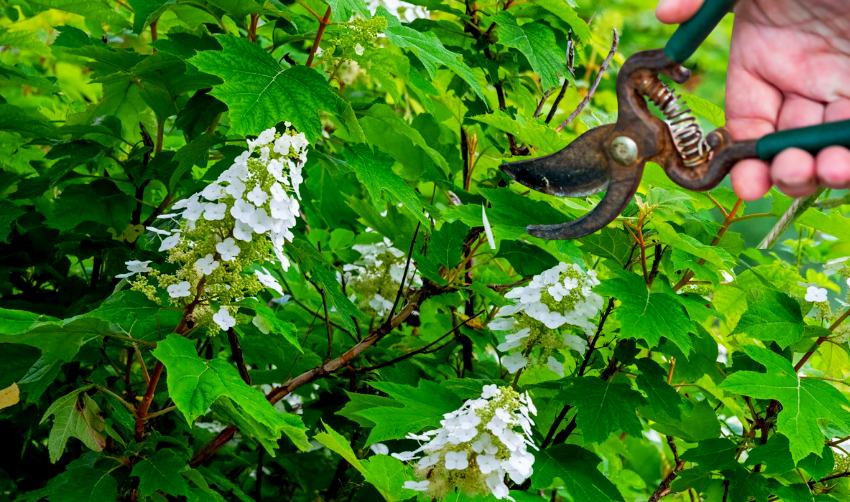
Oakleaf hydrangeas bloom on old wood, meaning next year’s buds form immediately after flowering. July pruning (after blooms fade) removes spent flowers and deadwood without sacrificing future displays.
Pruning steps for healthy growth
Cut back spent blooms: Remove flower clusters to tidy the plant.
Thin interior branches: Remove crossing limbs to enhance light penetration.
Shape for structure: Trim uneven growth to maintain a balanced silhouette.
Deutzia: Encouraging New Growth
Post-flowering pruning for renewal
Deutzia shrubs finish blooming by early July, making this the ideal time for a light trim. Pruning now allows the plant to produce fresh growth that will bear flowers next year.
Implementing the one-third rule
Trim flowering stems: Cut back spent blooms by one-third to stimulate new shoots.
Remove deadwood: Eliminate branches that no longer produce foliage or flowers.
Shape for density: Thin crowded areas to improve air circulation and light access.
Salvia varieties like Salvia nemorosa respond well to aggressive deadheading. Cutting back spent flower spikes to the base or a strong leaf node triggers the plant to produce new blooms.
Rejuvenating foliage and structure
Shear back foliage: Reduce the plant’s height by one-third to encourage compact growth.
Remove crispy spikes: Cut browned flower stems at the base to tidy the plant.
Apply post-prune care: Water and compost to support new growth.
Final Considerations for Successful Pruning
Tools and timing tips
Use sharp tools: Clean, well-maintained pruners minimize tissue damage and disease spread.
Prune in the morning: Cooler temperatures reduce stress on plants.
Monitor for pests: Inspect cuts for signs of insect activity post-pruning.
By prioritizing these seven plants in July, gardeners can avoid common pitfalls like disease outbreaks, reduced flowering, and structural weaknesses. Strategic pruning now ensures healthier, more productive plants come August and beyond.
Allan is a lifelong gardening enthusiast who still gets excited when the first seedlings pop up in spring. With a deep love for nature and a hands-in-the-soil approach, he shares practical tips, plant discoveries, and clever tricks picked up over years of digging, planting, and observing. Whether you’re a new gardener or have a shed full of tools, Allan writes like a neighbor who’s always happy to swap cuttings and stories over the fence.
You can find more about Allan’s work on Malt or connect with him on LinkedIn.
13 Replies to “Prune These 7 Plants Before Mid-July or Regret It in August”
Will do! thanks!
Just read and this is a total gardening game-changer! can’t wait to see my garden thrive by august. pruning these beauties now is a must! 🌱🌸
I get stressed with these must-do lists, and pruning timing just adds another layer. though i see how it helps plants thrive, it can be hard to keep up with everything gardening demands
Tried ignoring my hibiscus in july, and it turned into an unruly jungle by august! never skipping that early summer prune again. lesson learned the hard way.
This was super helpful! i had no idea timing was so crucial for these plants. excited to try this out before it’s too late. happy gardening everyone! 🌱
How often should i redo my pruning routine to keep my plants healthy after the initial july cut? is it something i need to check on every month or just seasonally?
Interesting take on pruning timing, but i’m not sure i buy all of it. might try with one or two plants and see how it goes. sometimes those hard deadlines feel a bit stressful.
🌿 Needless stress ಅವರuję
Last summer, forgot to prune my rose bushes till late july. they got super leggy and the blooms were sparse in august. learned my lesson for sure! always plannig to do it earlier now. 😉
Love this guide! just tackled my garden, and it made such a difference. can’t wait to see those blooms thrive! 🌿☀️ next year, i won’t miss the deadline.
Which specific plants should we focus on pruning in early summer to prevent issues later?
I once forgot to prune my roses by july and they turned into a tangled mess. learned the hard way! better to maintain than to play catch up in august 🙂



Will do! thanks!
Just read and this is a total gardening game-changer! can’t wait to see my garden thrive by august. pruning these beauties now is a must! 🌱🌸
I get stressed with these must-do lists, and pruning timing just adds another layer. though i see how it helps plants thrive, it can be hard to keep up with everything gardening demands
Tried ignoring my hibiscus in july, and it turned into an unruly jungle by august! never skipping that early summer prune again. lesson learned the hard way.
This was super helpful! i had no idea timing was so crucial for these plants. excited to try this out before it’s too late. happy gardening everyone! 🌱
How often should i redo my pruning routine to keep my plants healthy after the initial july cut? is it something i need to check on every month or just seasonally?
Interesting take on pruning timing, but i’m not sure i buy all of it. might try with one or two plants and see how it goes. sometimes those hard deadlines feel a bit stressful.
🌿 Needless stress ಅವರuję
Last summer, forgot to prune my rose bushes till late july. they got super leggy and the blooms were sparse in august. learned my lesson for sure! always plannig to do it earlier now. 😉
Love this guide! just tackled my garden, and it made such a difference. can’t wait to see those blooms thrive! 🌿☀️ next year, i won’t miss the deadline.
Which specific plants should we focus on pruning in early summer to prevent issues later?
I once forgot to prune my roses by july and they turned into a tangled mess. learned the hard way! better to maintain than to play catch up in august 🙂
Great tip! 🍃💚